
During a working visit to Copenhagen, representatives of the Belarusian Council for Culture explored the experience of Danish organizations working at the intersection of culture, research, advocacy, the protection of artists’ rights, and the development of cultural institutions. These meetings showed how Denmark builds a system of interaction between the state, independent organizations, professional communities, private foundations, and cultural institutions.
The experience of three organizations seems particularly important for the Belarusian cultural sector: the Institute for Cultural Analysis, the Danish Artists’ Council, and the platform “Danish Cultural Life”. Each of them operates within its own niche, but together they demonstrate how culture can be not only a sphere of creative expression, but also a component of democratic resilience, social policy, the economy, and civic engagement.
1.Institute for Cultural Analysis / Kulturens Analyseinstitut
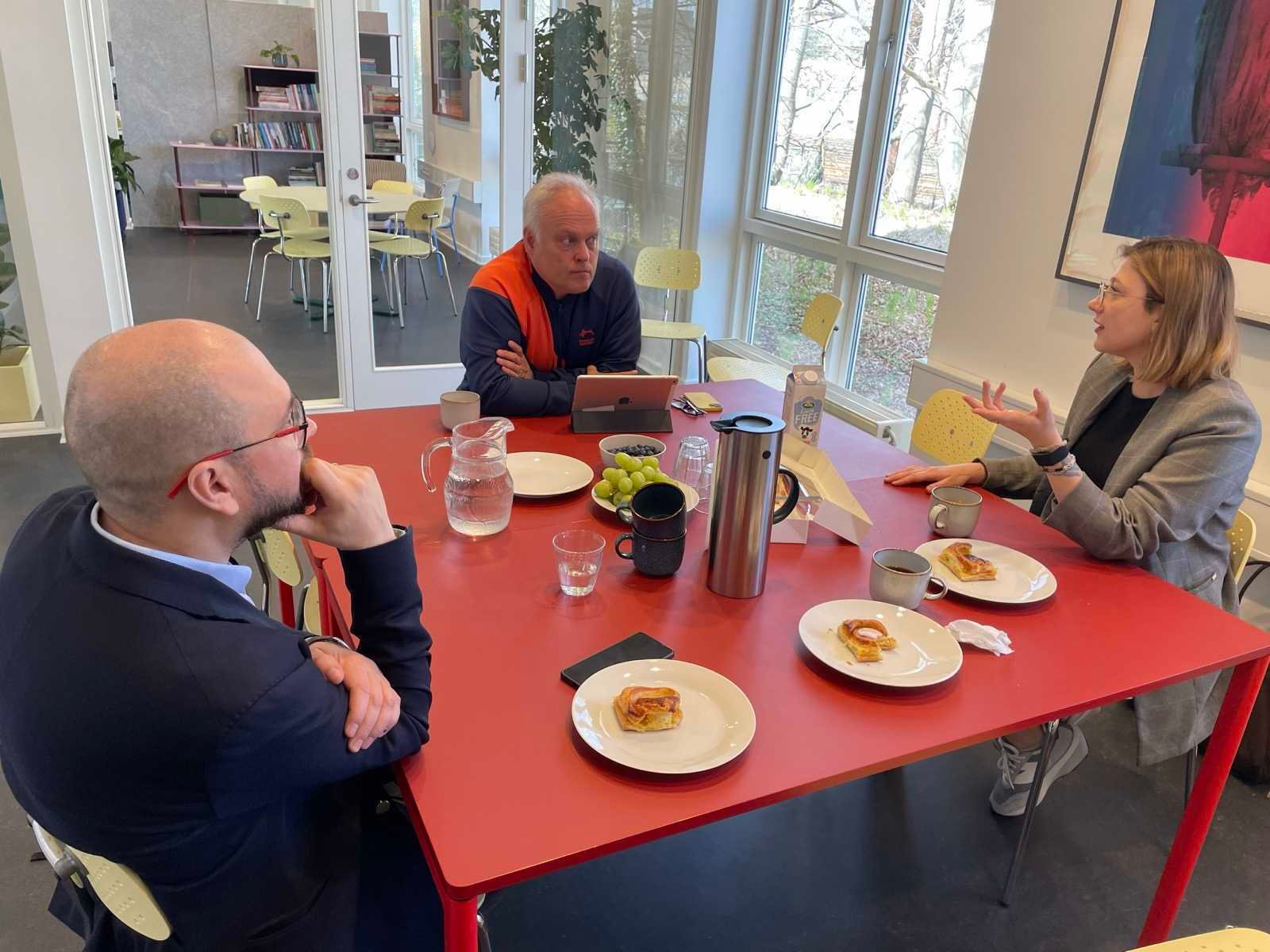
The Institute for Cultural Analysis was established by the state in 2020, during the COVID-19 pandemic, when it became especially clear in Denmark that culture is not merely entertainment or a way to spend leisure time, but an important means of maintaining connections between people, strengthening society, and influencing quality of life.
Formally, the institute’s board of directors is appointed by the Ministry of Culture, but the organization itself operates according to the arm’s-length principle. This means that the state and an independent organization exist within a framework of mutual trust: the state creates the conditions and supports the institution, but does not directly interfere in its research and analytical work.
The institute’s main task is to study the impact of culture on society. It looks at culture not only as a sector of the economy, but as a factor that influences health, social ties, democratic values, participation in political and public life, as well as economic development.
The institute’s core conclusion is that cultural life must be diverse and of high quality. These two characteristics, diversity and quality, are considered by the organization to be key if culture is to genuinely serve society.
Research on children, culture, and barriers to access
One of the institute’s priorities for the coming year is cultural provision for children. Researchers have noted that in Denmark, a very small percentage of children are involved in cultural activities, especially compared to sports. According to their observations, only about 7–8% of children are engaged in music, while around 82% participate in sports, even though both fields are subsidized. This raised the question: why, with similar state support, does culture lose out to sports in terms of mass participation among children?
Among the possible barriers are financial reasons: for example, it is cheaper to play football than to study music. There is also another barrier: entry into certain cultural practices is often linked to selection based on ability or talent. If a child wants to study music, they may encounter the feeling that they already need to have certain aptitudes. This makes culture less accessible for those who simply want to try.
Libraries as spaces for children’s engagement
The institute also works separately with libraries, which in Denmark are seen as important spaces for introducing children to culture. One of the issues being studied is how to encourage children to read in their free time.
Danish libraries have begun to actively change both their spaces and their approach to readers. They have moved away from the traditional idea of the library as a place where silence must always be maintained. In some libraries, strict divisions between groups have been removed, and children are allowed to talk, move around, and behave more freely. As a result, families have started coming to libraries more often.
The way books are presented has also changed. Instead of placing books only with their spines facing the reader, libraries began displaying their covers, using marketing research on which covers and formats attract children’s attention. This produced a practical result: the percentage of books borrowed by children began to rise.
Culture as a political argument
The Institute for Cultural Analysis proposes looking at culture not only through the lens of economic benefit. Its position is that the value of culture cannot be measured only in money. Culture can influence health, trust, solidarity, social resilience, and people’s participation in democratic processes.
The institute is trying to bring this idea to the political level. At the local level in Denmark, the impact of culture is already fairly well understood. At the national level, this understanding is also gradually strengthening. For example, during the most recent election campaign, the Prime Minister stated clearly for the first time that if Denmark needs a strong democracy, society must be able to withstand challenges, and this requires an active cultural life. At the national level, around 7–8% of the state budget goes to culture. At the local level, even more is spent on culture, and this share continues to grow.
Developing its own methodology instead of relying on ready-made answers
One of the problems the institute encountered was the lack of a ready-made methodology for measuring cultural life. The Danish statistics bureau had not previously dealt with culture on the scale needed by the institute, so researchers had to develop their own approaches.
They began with the theatre sector: they set out to describe all aspects of theatre work in the country, established contacts with organizations in the sector, began collecting information, transforming it into analysis, and presenting the results. This made it possible not merely to conduct research, but to create knowledge that can influence political decisions. One example of such influence is the development of a draft law on theatre. For the first time, such an important document was being prepared with this kind of analytical basis.
A second example is local elections. In 20 municipalities out of 100, culture became part of the election debate, and in 11 of these 20 municipalities it was a visible topic of political competition.
Funding, patronage, and private foundations
The annual budget of the Institute for Cultural Analysis is around 16 million Danish kroner, approximately 2.1 million euros: the organization receives 9 million kroner per year from the state, and another 7 million kroner from foundations.
For a research organization that works with state support and influences cultural policy, transparency of data, methodology, and conclusions is of fundamental importance.
The institute works at the national level, but is now interested in international development and partnerships, including with Belarusian organizations.
The conversation also touched on how developed the culture of patronage is in Denmark. Indeed, businesses and wealthy individuals actively participate in supporting the cultural sector. Tax incentives play an important role, as does the system of private foundations, which may be established using company funds but operate as independent structures. The banking system has an obligation to engage in philanthropy. As a result, around half of the funding for culture in Denmark comes from private foundations.
2. Danish Council of Artists / Dansk Kunstnerråd
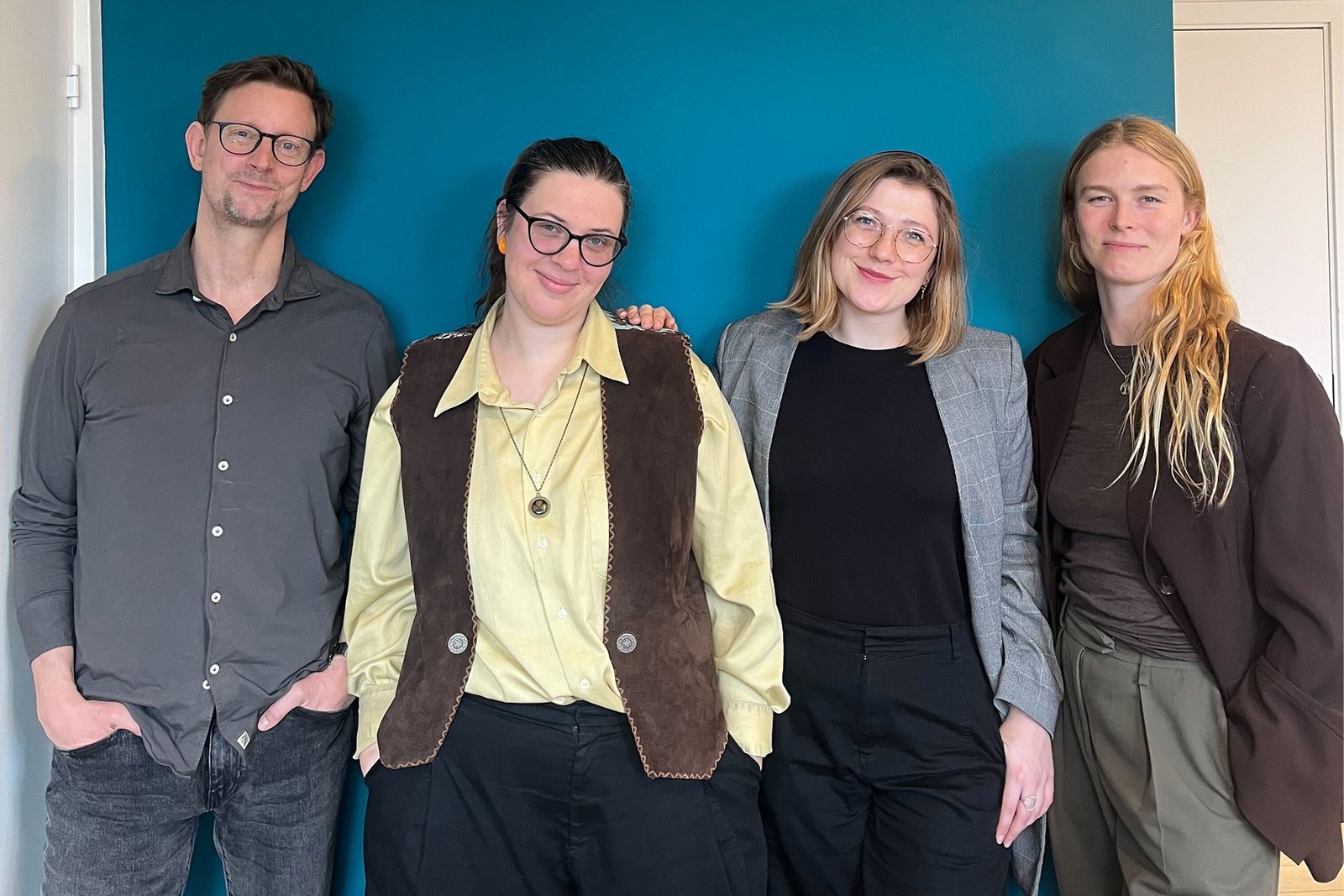
The Danish Council of Artists, or Dansk Kunstnerråd, is a non-profit umbrella organization established in 1971. It brings together professional organizations of artists and cultural workers in Denmark and works to strengthen the artistic, economic, and social position of creators in society.
The Council represents around 22–24 member organizations covering all art forms. In this way, Dansk Kunstnerråd represents approximately 18,000 people, about 75% of all professional artists and cultural workers in Denmark. The organization is governed by a board of nine people.
Its main mission is to promote the shared interests of professional creators across various areas: political, legal, economic, and social. The Council works with the Danish government, takes part in discussions on cultural policy, and seeks to influence decisions affecting the position of artists and the arts sector.
Why an umbrella organization was needed
Many small professional organizations emerged from the need to unite in order to become stronger. A separate community of visual artists, musicians, writers, actors, or other creators may have limited resources and a weak political voice. But when these organizations act together, they can influence policy more effectively, negotiate with the state, and defend shared interests.
At the meeting, representatives of the Council of Artists emphasized that previously they had tried to address all issues at once. This did not work, because resources are limited, while there are many problems in the cultural field. Today, the organization is much more focused. Among its key principles are working with data, organizational democracy, and clear prioritization of limited resources.
Policies and key issues
The organization works across different levels of cultural policy, from national to global.
Among the important issues are:
- decentralization of cultural life;
- intellectual property rights;
- regulation of artificial intelligence;
- social protection for artists;
- taxation;
- working conditions.
The Council also develops and recommends the use of guidelines: principles and recommendations for the sector. These include fair pay, sustainable working conditions, diversity, transparency, and trust.
One of the Council’s specific areas of focus is data and analysis. The organization notes that society often lacks knowledge about the real labour market for artists and cultural workers.
Funding
The annual budget of the Danish Council of Artists is around 150,000–200,000 euros. Approximately 40% of its funding comes from the state, from so-called gambling money, funds linked to gambling revenues. Around 60% of the budget comes from membership fees. The organization may also receive partnership funding and support from private foundations.
This funding structure demonstrates a mixed model of sustainability: the organization is not fully dependent on the state, but neither does it exist solely on membership fees. For Belarusian organizations, this can serve as a useful example of diversification: part of the funding comes from the community, part from institutional support, and part from partners and foundations.
3. Danish сultural life / Dansk Kulturliv
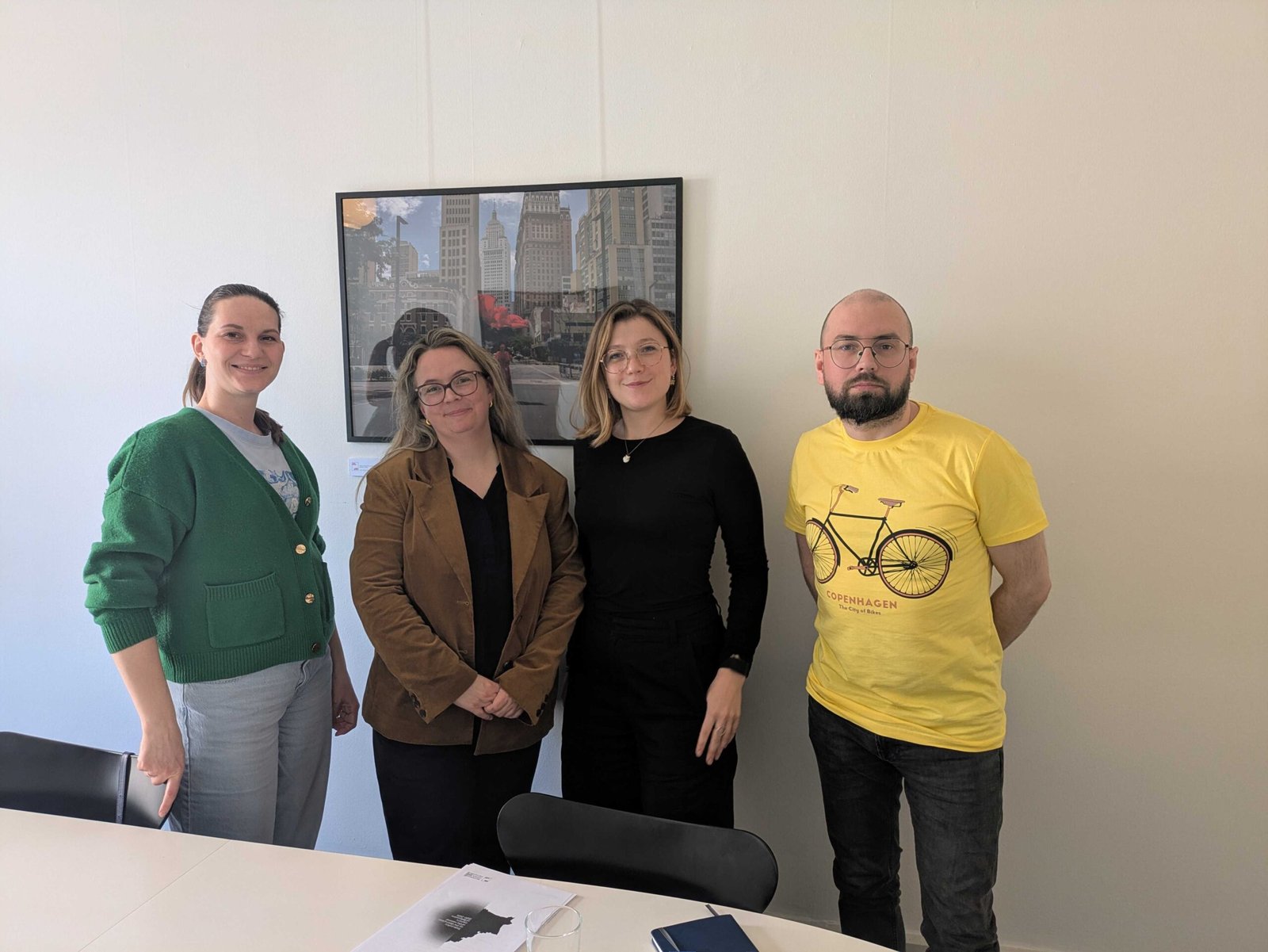
Dansk Kulturliv is an association that represents the shared interests of cultural organizations and more than 1,100 Danish cultural institutions and enterprises. The platform advocates for culture at the political level and brings together the broad cultural sector around common positions. Together, members of Dansk Kulturliv attract more than 60 million visitors each year. This makes the organization Denmark’s largest community for the exchange of experience, civic education, and democratic participation through culture.
Dansk Kulturliv proceeds from the understanding that culture and the arts are of fundamental importance to society. They strengthen democracy in a turbulent world and should be accessible to all residents of Denmark, regardless of social background, place of residence, or postcode.
Here, culture is seen not as an addition to “real” politics, but as one of the foundations of a strong democracy.
Political advocacy
One of the main functions of Dansk Kulturliv is to serve as a unified political voice for the cultural sector. The organization publishes political positions, budget proposals, including a proposal for the national budget for 2026, and common principles for its members.
The platform also actively works on the issue of artistic freedom. A recent survey among the leaders of Danish cultural institutions showed that the arm’s-length principle is still preserved in Denmark, but pressure on the cultural sector is increasing. For the organization, this has become a separate area of monitoring and advocacy. Dansk Kulturliv tracks where and how pressure on the independence of cultural institutions may arise and turns the results of this monitoring into a political narrative.
Another important area of Dansk Kulturliv’s work is children’s and young people’s access to culture. The organization has developed a joint proposal with four initiatives aimed at expanding children’s and young people’s contact with art and culture. This aspect of its work resonates with the research of the Institute for Cultural Analysis. In fact, both organizations show that children and young people should not be treated as secondary audiences. On the contrary, early experience of participation in cultural life can influence a person’s future connection with culture, community, and democracy.
Resilience, security, and tourism
Dansk Kulturliv also works on the issue of cultural resilience and security. The organization has developed proposals to strengthen the system of emergency preparedness for Denmark’s cultural life.
This resonates especially strongly with the Belarusian context, where cultural organizations have been working for several years in conditions of crisis, forced migration, repression, financial instability, and institutional vulnerability. The Danish experience shows that the security of the cultural sector can and should be the subject of a separate policy: how to preserve institutions, archives, people, competencies, connections, and cultural heritage in times of crisis.
Cultural tourism is also among the organization’s areas of work. The platform has proposed measures to develop cultural tourism in Denmark, emphasizing that the country has significant untapped potential, especially outside its largest cities.
How Dansk Kulturliv works
Dansk Kulturliv creates value through several key mechanisms:
- political lobbying;
- accumulation of knowledge through analysis and data;
- building cross-sectoral alliances;
- coordination of joint initiatives;
- development of shared principles and positions;
- representation of the cultural sector in dialogue with politicians and society.
The key logic of its work is that together, members can achieve more than they can separately. Dansk Kulturliv functions simultaneously as a political lobby, a support network, and a platform for formulating a shared vision for the development of culture.
4. More Meetings and a Lecture
During the trip to Copenhagen, representatives of the Belarusian Council for Culture took part in many other meetings, conversations, and presentations dedicated to the situation of Belarusian culture, international support, and possible directions for further cooperation with Danish colleagues. Even these very brief encounters made it possible not only to present the work of our organization, but also to emphasize once again that Belarusian culture today exists in a complex field shaped by repression, Russification, the forced emigration of cultural figures, and the need to preserve the integrity of the Belarusian cultural space.
In these circumstances, a strategic meeting with our partners in the ArtPower Belarus programme, the Danish Cultural Institute, became especially important. During an in-person conversation, we discussed the prospects for the programme’s development, its role in supporting independent cultural actors, and important vectors of further cooperation aimed at strengthening the entire Belarusian cultural field. For us, this meeting was an opportunity to look at ArtPower Belarus not only as a separate support programme, but also as part of broader work to preserve, develop, and rebuild the ecosystem of Belarusian culture both inside the country and in exile.
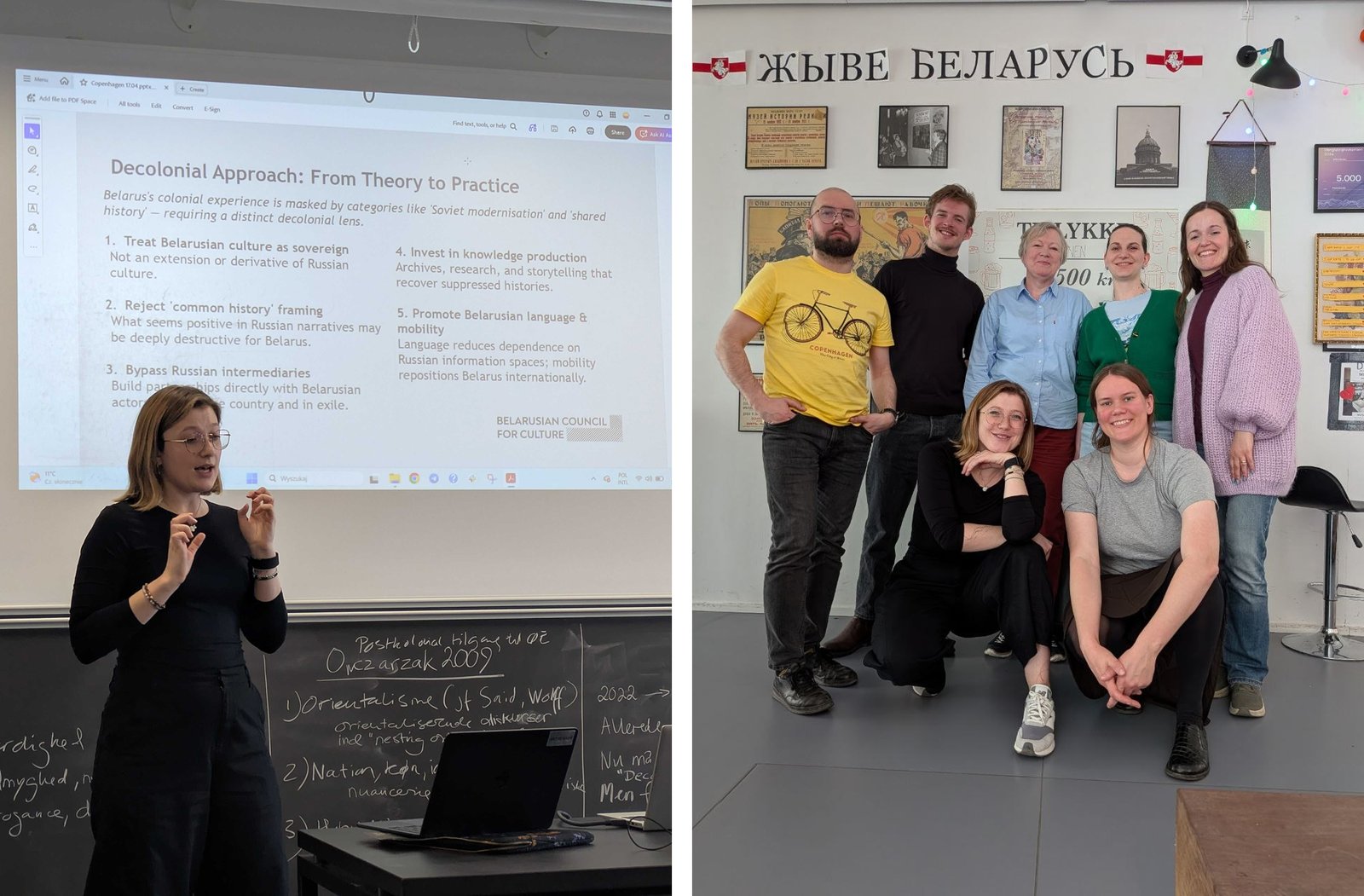
A separate and very important part of the visit was a lecture by representatives of the Belarusian Council for Culture at the University of Copenhagen, dedicated to postcolonial and decolonial perspectives on Belarus today. During the meeting with master’s students of the Eastern European Studies programme, the discussion focused on the Belarusian context of colonialism, the status of the Belarusian language, Russification, the destruction of national memory, the replacement of national symbols, and the policy of integration with Russia, which has become particularly intense since 2020.
In the lecture, we also showed how, in the Belarusian case, culture can simultaneously be an instrument of domination and a space of resistance. On the one hand, independent expression is criminalized, cultural events require state permission, symbols, colours, and language can be treated as “extremism”, and Russification functions as a geopolitical project. On the other hand, literature, theatre, music, and independent media formulate an alternative vision of society, preserve democratic values, and help restore what has been displaced or banned. In this sense, the struggle for Belarusian culture was presented as part of the struggle for sovereignty, democracy, and the right to define one’s own history, identity, and future.
In addition, meetings took place:
- At the Ministry of Foreign Affairs of Denmark. The Ministry has always actively worked, and continues to work, with the countries of the Eastern Partnership, viewing our region as strategically important. Traditionally, it has supported the strengthening of communities. Here, representatives of the Belarusian Council for Culture spoke about their work, the situation of independent culture in Belarus, and the importance of ensuring that support for Belarusian culture is raised at the international level, including at meetings in Brussels. They voiced the need to pay attention to Belarus through cooperation with independent institutions. Today, a priority for Belarusian civil society is the inclusion of our country and culture in the European space and the Nordic-Baltic community.
- At Talaka, the Association of Friends of Belarus. For our organization, this was an opportunity to better understand how Belarusian initiatives operate in an international environment, what formats of joint work are used, and where points of contact for future cooperation may emerge.
The meeting at the Nordic Council of Ministers Nordic Council of Ministers is also worth mentioning separately. There, the Belarusian Council for Culture presented its activities and the ArtPower Belarus programme. The main question raised during the conversation concerned the future prospects of our organization’s work.
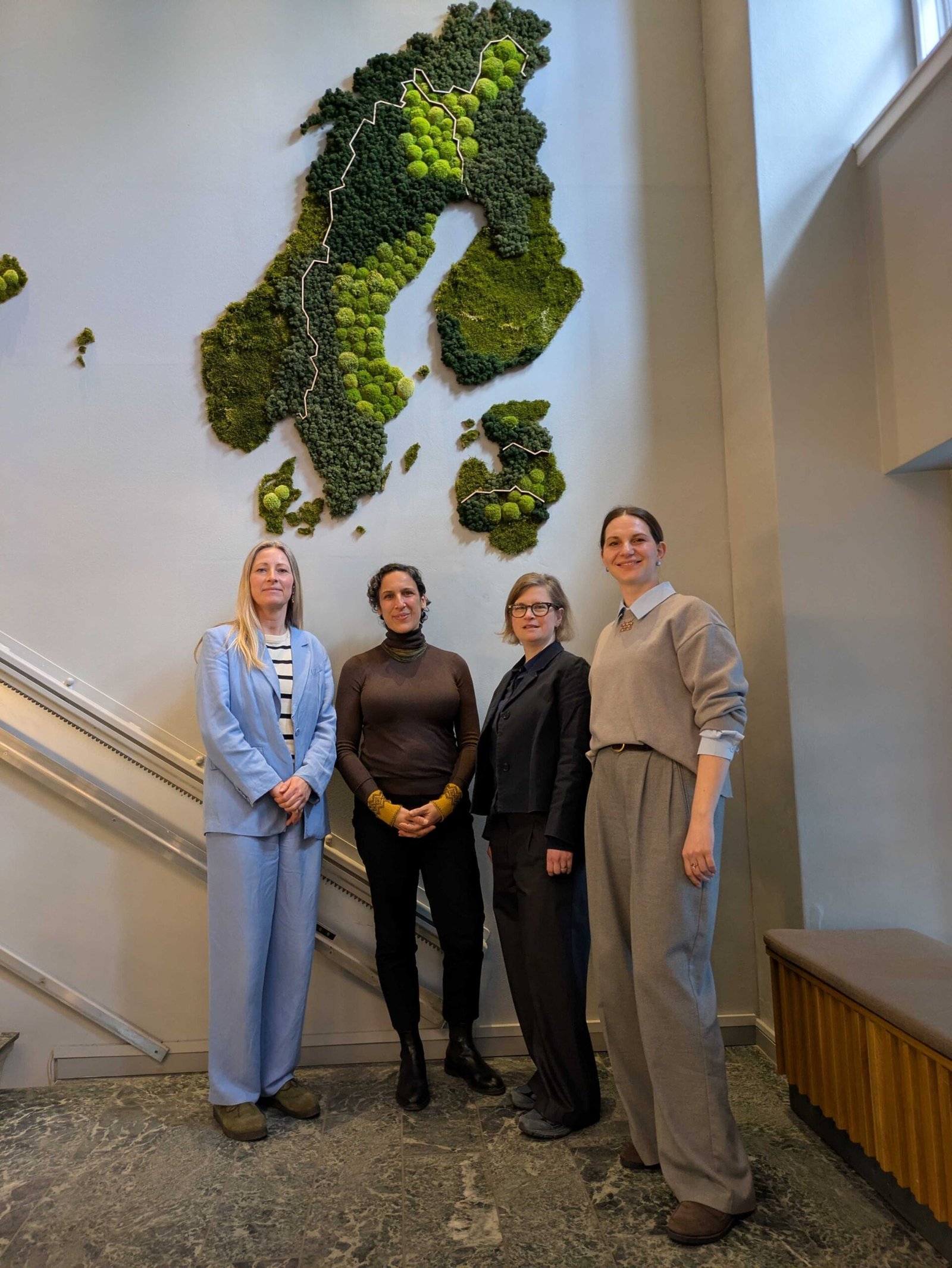
In response, representatives of the BCC outlined several priorities:
- the development of Belarusian-Ukrainian cultural projects that could foster mutual understanding between the nations through culture;
- the accessibility of cultural products for Belarusians around the world;
- support for media projects in the field of culture;
- the development of creative industries and training for actors working in this field.
Representatives of the Nordic Council of Ministers showed particular interest in the topic of cultural media projects, as the organization already actively supports the media sector, including individual projects related to culture. For us, this may become an important continuation of the dialogue, because today cultural media are not only a channel of communication, but also a tool for maintaining contact with audiences inside the country, supporting the Belarusian language, increasing the visibility of independent culture, and countering information isolation.
General conclusions
The meetings in Copenhagen showed that the Danish cultural sector is strong not only because of funding, but also because of its institutional architecture. It includes organizations that research culture, organizations that represent the professional interests of creators, and organizations that act as a common political voice for cultural life.
For the Belarusian cultural sector, this experience may be useful in several areas.
- Culture requires data. Without research, statistics, descriptions of the labour market, audience analysis, and impact measurement, culture remains vulnerable in political and financial discussions. The experience of Kulturens Analyseinstitut shows that even when there is no ready-made methodology, it can be developed independently, starting with individual sectors such as theatre, music, libraries, or children’s programmes.
- Creators need not only inspiration, but also protection of their rights. The Danish Council of Artists shows how professional organizations can unite in order to speak at different levels about the importance of fair pay, taxation, social protection, intellectual property, the regulation of artificial intelligence, and the gender income gap.
- The cultural sector needs a common political voice. Dansk Kulturliv shows how an organization can bring together more than 1,100 cultural institutions and enterprises, represent their interests, formulate budget proposals, defend artistic freedom, and promote culture as a foundation of democracy.
- Access to culture must be seen as a matter of equality. Both Danish researchers and cultural advocates pay significant attention to children, young people, regions, families, and people from different social backgrounds. For the Belarusian sector, this can be an important point of reference when developing programmes in the diaspora, online projects, educational initiatives, and future programmes inside Belarus.
- Culture must be included in the conversation about security and resilience. The Danish experience shows that cultural life needs to be prepared for crises just as seriously as other spheres of society. For Belarusians, this topic is especially relevant: keeping specialists in the profession, preserving institutions, archives, memory, connections, and cultural presence has already become part of the sector’s everyday work.
- Funding for culture can be mixed. In Denmark, an important role is played not only by public funding, but also by private foundations, membership fees, partnership funding, philanthropy, and business involvement. The example of the Institute for Cultural Analysis, with a budget of 9 million kroner from the state and 7 million kroner from foundations, as well as the example of the Danish Council of Artists, where 40% of funding comes from public sources and 60% from membership fees, shows that sustainability is often built through several sources of support.