
Literature: The book pedlar’s job requires courage
Cinema: Anonymous people and Propaganda
Theatre: The completion of the personnel revolution and scandals in the capital’s collectives
Music: The return of concerts to Belarus and international success
Art: Global victories and local losses
Literature: The book pedlar’s job requires courage
The beginning of 2026 brought the Belarusian book community another test: losses, delays and new restrictions changed the landscape of literary life. The book here is no longer just a material for reading and reflection, but also a sign of the risk it poses to the writer, publisher, distributor and reader. Against this background, it is especially clear how the official and independent literary spaces of Belarus are divided. But not everything is so sad. New editions continue to be published, and Belarusian authors are gaining recognition, including international acknowledgement as well.
Book fair against the backdrop of losses and repressions
The beginning of 2026 was very painful for Belarusian literary life: on February 10, the publisher and poet Raman Cymbieraŭ passed away. His death led to the disappearance of the publishing house “Cymbieraŭ” that Raman managed to legalize in Belarus, which is now quite difficult, and the closure of book pavilions 41 and 42 in the shopping centre “Kupałaŭski” – an important point of independent Belarusian culture on the map of Minsk (there are very few such places left). Raman was a book pedlar who connected literary universes inside and outside Belarus – now this channel of communication is cut off.
On the same day, February 10, security forces came to the “Parason” art space. At the moment, several people from the “Parason” organizers are behind bars, and the lecturers are also being interrogated. A few days later, book distributor Aleś Jaŭdacha, the head of the “Zmicier Kołas” publishing house (liquidated in 2023), and Vacłaŭ Bahdanovič, the head of the “Technałohija” publishing house, the oldest private publishing house in Belarus, were detained. On February 21, “Technałohija” ceased operations. As of mid-April, Zmicier Kołas remains behind bars. During this period, Zmicier Sańko, the editor of “Technałohija”, was detained and later released.
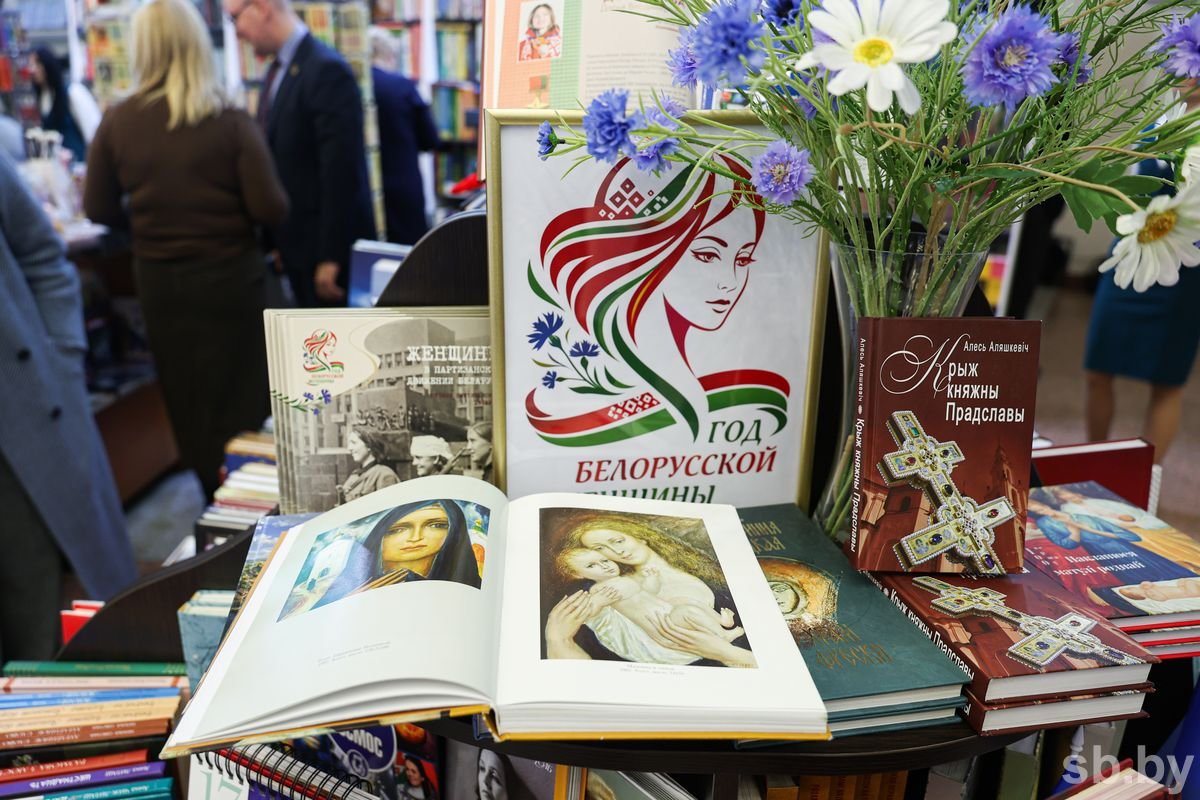
Simultaneously with the repressions against publishers, the preparation of the XXXIII Minsk Book Fair, which was held on March 17–22 at Belexpo, took place. Obviously, neither “Cymbieraŭ” nor “Technałohija” could be present. The central themes of this year’s event are the “35th anniversary of the CIS” and “Year of the Belarusian Woman”. The publishing house “Adukacyja i vychavańnie” presented the book “I did it” [Russian: “Я смогла”]: 27 stories of Belarusian women – from Jeŭfrasińnia Połackaja and Rahnieda to Ida Raziental and Łarysa Aleksandroŭskaja. The publication mentioned contemporaries who are quite loyal to the authorities – Darja Domračava and Aryna Sabalenka. The state publishing house “Belarus” published the book “Janka Kupała, Jakub Kołas and Maksim Bahdanovič in the languages of the peoples of the Commonwealth of Independent States”. On the first days of the fair, March 17 and 18, a “poetic bus” was organized from Niamiha to BelExpo, where authors of the State Union of Writers of Belarus read their own life-affirming texts, such as: “Есть надёжное плечо – ты его почувствуй, коль сегодня хорошо – завтра будет лучше” [literal translation from Russian: “There is a reliable shoulder – you can feel it, if today is good – tomorrow will be better”] (author Taćciana Šurynava). Of the foreign countries represented at the book fair, Russia was the most represented, and its most famous writers were genre writers such as the author of masculine-“patriotic” novels Andrei Rubanov or detective writer Daria Dontsova. From a distant and rather exotic world for Minsk there were stands from Venezuela, Palestine, and the Democratic People’s Republic of Korea (by the way, there was a stand from Venezuela last year). Also, for the first time, a stand of the “Black Hundred” [Russian: “Черная сотня”] publishing house appeared at the book fair in Minsk, which is quite paradoxical in the country that actively declares the fight against fascism at the state level.
Among the book events in Belarus, it is worth noting the “Review” festival, which took place in Minsk in February. Among the speeches, there was a lecture on creating a bestseller by the author of the book “To Yourself Tenderly” [Russian: “К себе нежно”] by Volha Prymačenka, a speech by Siarhiej Leskieć, dedicated to non-fiction about Belarusian whisperers, and Viktoryja Klaŭko talked about how to create a book club. A month later, on March 24, the poetic show “Eshafot”, well-known in Minsk in the late 2010s, began its season.
A bunch of fests and a group of extremists
Meanwhile, the Michaś Stralcoŭ Literary Award “Poems on the Asphalt” [Belarusian: “Вершы на асфальце”], which was launched in Minsk in 2012 and has been held in Vilnius since 2022, has moved to Warsaw this year. The festival retains its international format: in addition to Belarusian poets, this year you could hear Olena Stepanenko (Bucha), Krystyna Dąbrowska (Warsaw), Anna Julian Mendlik (Berlin) – the festival talked about the translation of her book “Pandora’s Playbox” into Belarusian (London publishing house “Skaryna Press”). Poet and translator Maryna Chobbiel held a presentation-announcement of the anthology of modern Belarusian literature translated into Norwegian “Time Within Us”. Finally, there was a presentation of Pavieł Kapanski’s collection “Besides” [Belarusian: “Акрамя”] (published in 2024) and Ihar Kulikoŭ’s book of poems “The Unseen Distance” [Belarusian: “Нетутэйшая далечыня”] (2025), as well as a completely new book of selected poetry by Nasta Kudasava. New editions appeared from the Berlin-based “hochroth Minsk”: “A Reliable Remedy for Ghosts” [Belarusian: “Надзейны сродак ад прывідаў”] by Hanna Jankuta and “The Feast of Life” [Belarusian: “Свята жыцця”] by Frydrych Samotny. Traditionally, the Michaś Stralcoŭ Literary Award ended with the “Night of Poetry” – a poetry slam: but, unfortunately, the participants of the slam mostly read their old texts.
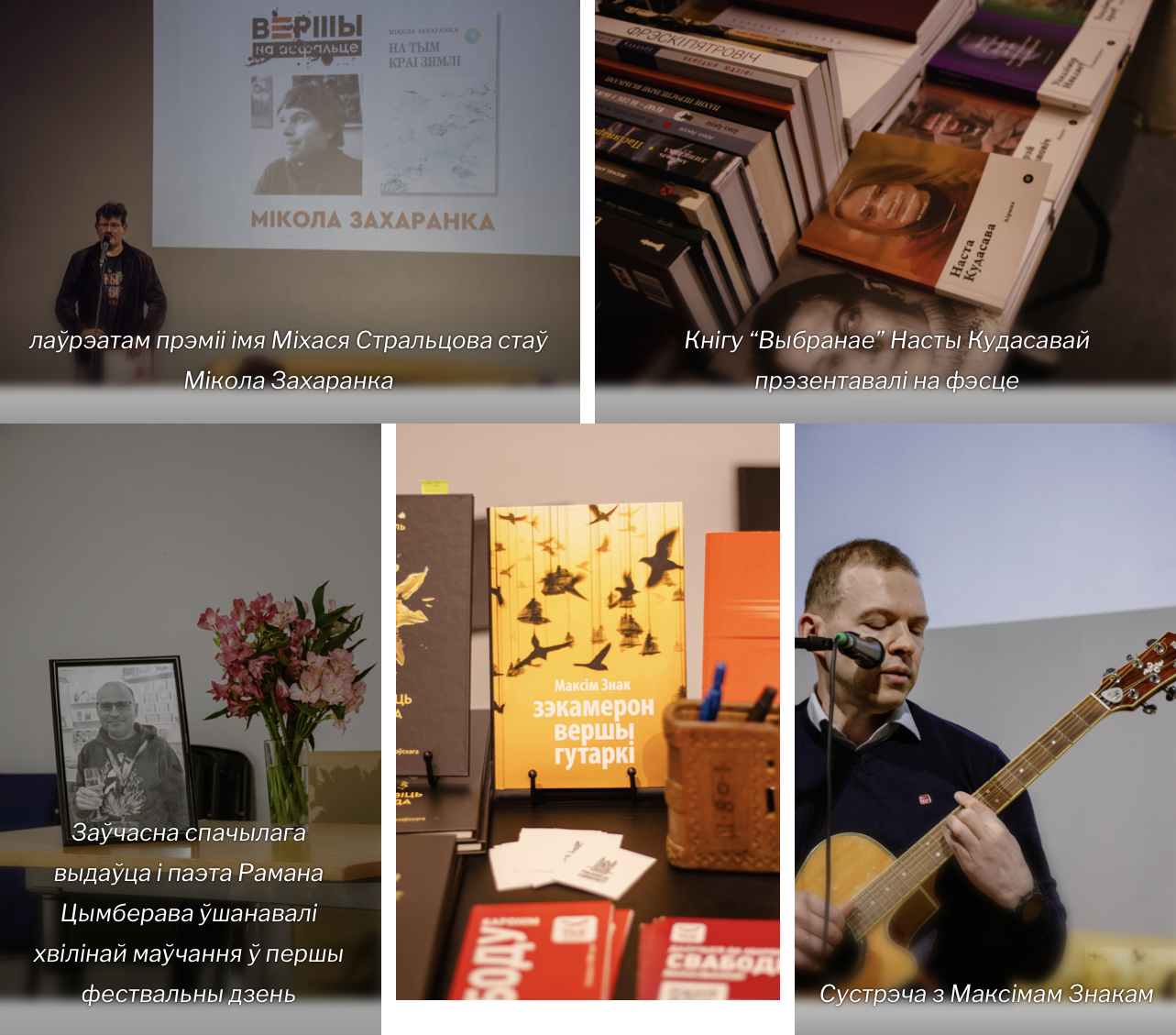
We can congratulate the publishing house “hochroth Minsk” on a successful Leipzig Book Fair: Viktar Žybul’s book “Orange” sold out immediately after his speech. At the same Buchmesse in Leipzig, meetings with Saša Filipienka, Maryja Kaleśnikava and Maksim Znak took place. After Maksim Znak was released from prison, the Belarusian PEN raised the important topic of another type of repression: all manuscripts are taken from political prisoners upon release or deportation. Maksim Znak wrote 18 works in five years and three months in prison, but only “Zekameron” reached the reader. On March 3, 2026, the Belarusian PEN issued a statement about the systematic confiscation and disappearance of the author’s manuscripts. It is also worth noting that on February 27, 2026, the Belarusian PEN was recognized as an “extremist formation”.
On March 13, Pavieł Ancipaŭ’s book “To Come Somewhere, Do Something and Leave” [Russian: “Куда-нибудь приезжать что-нибудь делать и уезжать”] – an auto-fiction novel about the Belarusian 2000s and the beginning of the 2010s and literary life between Minsk, Kiev, Moscow and Warsaw – received extremist status.
Probably the most high-profile event during the reporting period was the recognition on March 3 of the so-called “coalition of publishing houses and booksellers” as an “extremist formation”. The “coalition” was invented in the KGB decision itself as a pretext for persecution, and in discussions of this fact on social networks, parallels are drawn with the case of the “Union for the Liberation of Belarus” in 1930. The “coalition” included the Kamunikat Foundation, Lohvinau Publishing House and Andrei Yanushkevich Publishing. Two weeks before this, Gutenberg Publisher was recognized as an “extremist formation”. This “recognition” clearly has serious consequences for the Belarusian book business both inside and outside the country. First of all, it helps to draw a line between “those who left” and “those who stayed” – it’s good that we had the opportunity to read the same books that accumulate and rethink the experience of the last five years, and it’s bad that this opportunity is being suppressed. Inside Belarus, we can already see the consequences of this decision. First of all, its aim is to intimidate: people are going through their home libraries to take “dangerous” books to the village or to their summer cottage. In penitentiary institutions in Belarus, books from libraries were burned this winter – although we don’t know what kind of books these are and what publishing house logos are on them. The very fact is noteworthy that Deputy Minister of Information Dzianis Jazierski gave a comment on STV about what to do with banned books. In short, you can keep them, but you can’t distribute them (sell them, give them to others, present them as a gift).
In the coming months, Belarus is expected to experience a literary lull: a decrease in the activity of book clubs, the removal of “extremist” books or their hiding (the deputy minister’s explanation did not reassure anyone). Most likely, people will bring books from abroad in much smaller quantities, even from “non-extremist” publishers: a book in Belarusian in a backpack causes a feeling of anxiety when crossing the border, and the role of a book pedlar requires courage. A few months after the wave of repression subsides, when the degree of tension decreases, the situation will level out, but new paper copies of the above-mentioned publishers are unlikely to enter the country.
Outside Belarus, the consequences of the new repressive measures are already being felt: this is both psychological pressure on publishers (in addition to the publishing houses themselves, the pages on social networks of some of them have been recognized as extremist materials), and the impossibility of delivering books to Belarus. But “the best” is yet to come for Belarusian publishing houses abroad in the second half of the year. The publishing business is quite inertial, accordingly, at the moment what was prepared in 2025 is being published and sold, and the number of published Belarusian books and projects in 2026 will decrease due to the cancellation of a number of contracts just this spring.
At the end of 2025, Gutenberg Publisher conducted a survey among the “warm” audience. Among the important conclusions: Belarusian books are now quite often bought abroad out of solidarity, but gradually readers will increasingly focus on their own tastes. Therefore, the number and variety of offers is especially important, which, it seems, Belarusian publishers abroad are coping with. The results of the survey can be viewed here.
Let us dare to make a somewhat optimistic forecast: the demand for national identity is growing in emigration, and a book in Belarusian at home is becoming its important marker. A certain number of people in emigration have already purchased or are purchasing their own housing, respectively, a place appears where you can permanently store books. Carefully selected Belarusian books for a bookshelf or cabinet as a symbol of home – this narrative may become relevant in the next few years.
And now about new releases
Gutenberg Publisher released Saša Filipienka’s “Return to Prison” [Belarusian: “Вяртанне ў Астрог”] in Belarusian. A translation of the cult “The Gray House” [Belarusian: “Дом, у якім”] by Mariam Petrosyan was also published – sales are planned to start in April. Also at the very beginning of the year, a reprint of Jeva Viežnaviec’s book “The Path of a Little Shit” [Belarusian: “Шлях дробнай сволачы”] appeared on sale in the “Window to Prose” series. It is worth noting that Jeva Viežnaviec has become one of the most important creators and providers of meanings for Belarusians abroad: there are never any free seats at meetings with her, and the books she brings are completely sold out by visitors. In February 2026, the story “What Are You Looking For, Wolf?” [“Па што ідзеш, воўча?”] was published in Lithuanian in the translation of the poetess Jurgita Jasponytė. Thus, the book has already been translated into seven European languages. “Ko ateini, vilke?” was very warmly received at the Vilnius Book Fair, the circulation (700 copies) was completely sold out, and a reprint is being made. Now, Gutenberg Publisher is preparing to publish Jeva Viežnaviec’s new book – “Healing Hate” [Belarusian: “Гаючая нянавісць”]. The first title story recently appeared on SoundCloud in the author’s own voice.
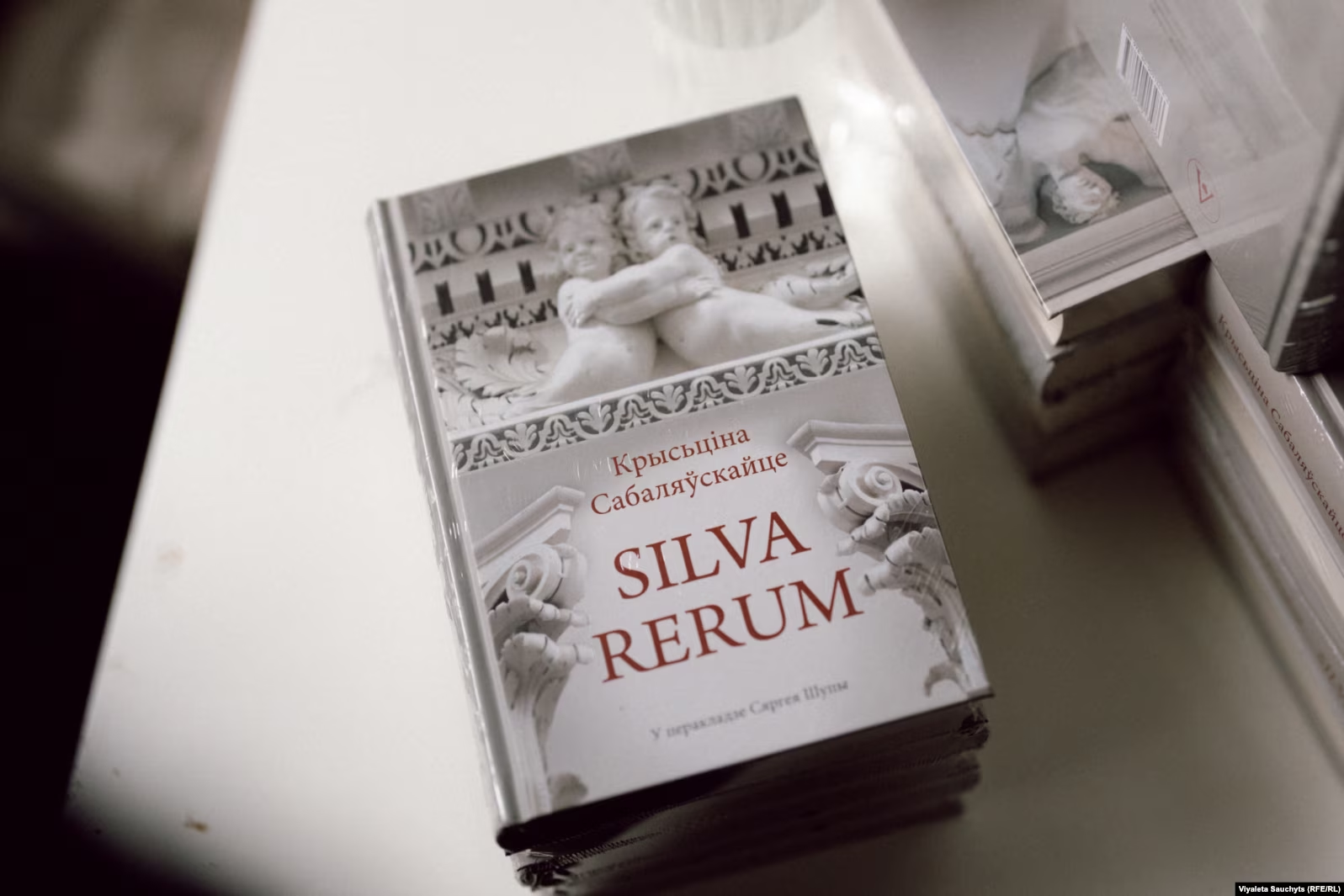
Finally, you can buy the third and fourth volumes of “Silva rerum” (Prague publishing house “Viasna”) by Kristina Sabaliauskaitė – the most successful Lithuanian literary project of the 21st century, according to its translator Siarhiej Šupa. On March 1, a presentation of the entire tetralogy took place in Vilnius with the participation of the author.
Andrei Yanushkevich Publishing also pleased us with translations in December 2025: two volumes of Borges translated by Siarhiej Šupa, “Decomposition of Memory” by Marek Torčík – translated by Siarhiej Smatryčenka, “Inaction” [Polish: “Zaniechanie”] by Zofia Zaleska – translated by Kaciaryna Macijeŭskaja. Also, “Yellowface” by Rebecca F. Kuang appeared in electronic format – it can be purchased on the “Knihauka” website.
The flagship of intellectual literature, the “Pflaumbaum” publishing house, also has new translations. The best Estonian book of the 2010s, “The Glass Child” by Maarja Kangro, published at the end of 2025, and this year’s translation of Hannah Arendt’s book “On Humanity in Dark Times” are now on sale. Among the new releases from the publishing house is the anthology “I’m Coming to You, People” [Belarusian: “Іду да вас, людзі”] with essays by eighteen contemporary Belarusian authors: those who remain in Belarus and those who had to leave and live outside its borders.
The publishing house “Mianie niama” has occupied a niche of Belarusian autofiction. In 2026, the following books have already been published: “The Blue House. My History of Viciebsk” by Alena Piatrovič, “On the Corner of Independence” by toni łašden, and “What Death Looks Like” by Dźmitryj Strocaŭ, announced at the Michaś Stralcoŭ Literary Award. Currently, Siarhiej Pukst is writing a book for the publishing house “Mianie niama”.
The new release in the publishing house “Polackija labirynty” is “Freedom as a Biography”: a collection of interviews with people who became witnesses and participants in the changes in Belarus over the past half century. At the end of 2025, the publishing house “Kamunikat” re-released “Ears of Rye Under Your Sickle” by Uladzimir Karatkievič. A video about Uladzimir Karatkievič was released on the YouTube channel “Zahlanie sonca” [Literally in English: “The sun will peek through”]: it is good that the channel will exist and be filled with content thanks to Saša Ivulin, who decided to continue the educational work of Mikita Miełkazioraŭ.
The last of the literary part of the review: the original edition of the Statute of the Grand Duchy of Lithuania was brought to Belarus. Now the purchased statute will be stored in the park “The Grand Duchy of Sula”. There was also news that researcher Volha Šutava found a previously unknown copy of the “Psalter” in Weimar, published by Francysk Skaryna in Vilnius in 1522. The book was hidden in the collections under an erroneous description. Today, only four similar copies are known in Western European countries – the Weimar one became the fifth.
Cinema: Anonymous people and Propaganda
Belarusian cinema has established itself in the European film community through filmmakers in the diaspora. The regime in Belarus wants to use cinema exclusively as propaganda and engages in repression. Small formats of Belarusian filmmaking are gaining more influence.
Berlinale Again
The world cinema season begins, as is known, in February at the Berlinale. It is here that the Belarusian presence has been felt most strongly in recent years. Last year, in the parallel programme “Forum” at the Berlin IFF, the international premiere of Juryj Siamaška’s film “The Swan Song of Fedor Ozerov” took place. This time, there were no such high-profile breakthroughs. Nevertheless, Belarusian filmmakers took part in one of the three most famous film festivals in the world.
Permanent resident of Germany, director Alaksiej Pałujan was selected to participate in the Berlinale Talents Lab platform with his feature project INCUBATOR. The plot of the future film is directly related to the latest events – repressions in Belarus and the war in Ukraine. The prestigious international Berlinale Talents Lab was held for the first time this year. It is intended for 20 participants of the previous Berlinale Talents, a support programme and creative laboratory for young filmmakers, which takes place annually as part of the Berlin Film Festival. The Berlinale Talents Lab included consultations led by individual mentors, group sessions and a public presentation of projects in front of a professional audience.
Four years ago, Alaksiej Pałujan participated in the Berlinale Talents programme with his previously planned project – his full-length feature debut “Heritage” [Belarusian: “Спадчына”]. The latter is expected to finally go into production soon. And in 2021, Alaksiej Pałujan’s full-length film “Courage” was screened out of competition at the Berlinale, dedicated to the activities of the Belarus Free Theatre and the events of 2020.
Pavieł Mažar, also a permanent resident of Germany, was included in the Berlinale Shorts short film programme with his new documentary “With a Kind Regard”. Unlike previous films, which focused on events in Belarus and Ukraine, this time the author turned to the recent history of Germany and the problems of deindustrialization in modern society.
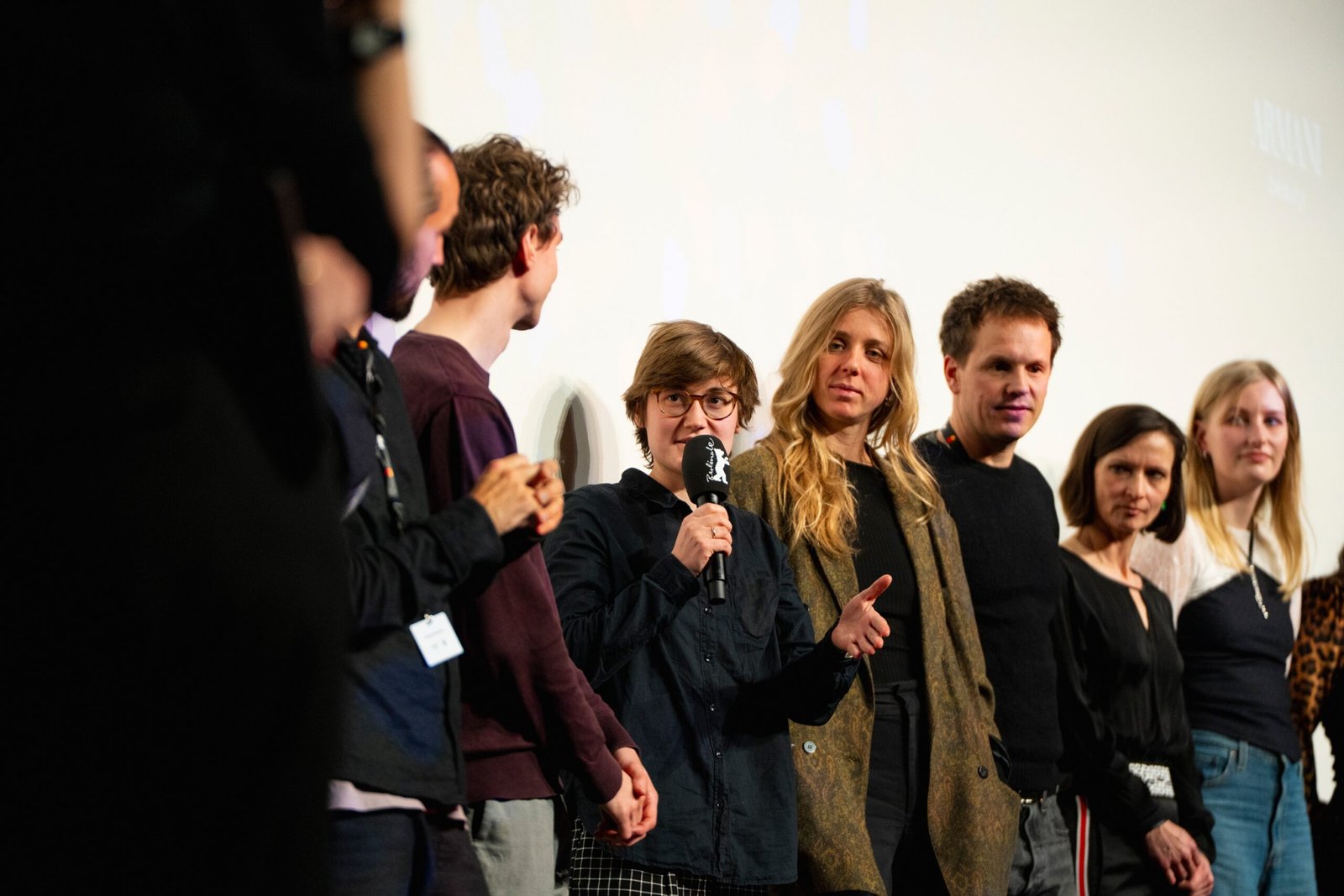
The names of other Belarusians were announced during the Berlinale 2026 industry programme. With the help of the Belarusian Independent Film Academy (BIFA), three feature and three documentary projects by Belarusian filmmakers in various stages of production were pitched on February 14. Under the auspices of BIFA, a special stand was set up at the Marriott Hotel during the Berlinale 2026 film market, where one could learn about the Academy’s activities and meet representatives of the Belarusian independent film community.
Anonymity as a feature of time
It is significant that among the participants of the BIFA pitching there were two projects whose authors decided to remain anonymous. One of the authors did not even publish the name and topic of his project.
The Belarusian part of the jury of the film critics’ award “Red Heather” also decided to remain anonymous – about half of all the jury members. The same applies to the short list of the film award. Among the titles and names of the laureates there were also several anonymous ones.
The “Red Heather” award, founded by film critics and cultural figures Taras Tarnalicki and Irena Kaciałovič, is awarded every two years. The award ceremony for the winners of fifteen nominations of the third edition of the “Red Heather” took place on February 28 at the “Luna” cinema in Warsaw. Films and TV programmes by Belarusian authors produced in 2023-2024 participated in the competition. Among the winners of the main nominations, predictably, are “Under the Grey Sky” by Mara Tamkovič, “Homeland” by Hanna Badziaka and Alaksandr Michałkovič, “Blood and Karaoke” by Juryj Siamaška, and “Processes” by Andrej Kašpierski. The “Discovery of the Year” nomination was won again by an anonymous author.
It should be noted that the awards were not given to the newest films. But many of them have not yet been seen by most Belarusians, both in the country and abroad. Those that can be seen online are listed here. Some have received a large audience in the national programme of the Northern Lights festival. The festival has been taking place in a hybrid format for several years, online and in cinemas in various European countries.
In mid-March, the State Security Committee of the Republic of Belarus recognized the “Northern Lights” film festival as an “extremist formation”. A little earlier, on January 19, a Viciebsk court added the website of the “Northern Lights” and the social networks of the founder and director of the festival, Vola Čajkoŭskaja, to the republican list of “extremist materials”. Perhaps this is a kind of revenge from the regime against the famous producer and director for her full-length documentary “Not Made for Politics”. One of the heroines of the film is Sviatłana Cichanoŭskaja. The premiere of the film, which tells about the political challenge of Belarusian women to the patriarchal regime, took place last autumn at film festivals in Tallinn and Lübeck.
Window to Europe
For many Belarusians, the “Northern Lights” festival was originally a real window to Europe. After all, the festival began with a programme of films from the countries of Northern Europe and the Baltic neighbours of Belarus.
Now, many former Belarusian visitors to the “Northern Lights” themselves live abroad, and the national programme of the festival has become an opportunity to maintain their own identity. And for some, the festival is even becoming a launching pad for a personal film career.
Emigration also brings positive results to Belarusian independent cinema. Never before have Belarusian filmmakers been so closely integrated with international, at least European, film structures, had the opportunity to attend industry events, participate in pitching, and find European producers and distributors. In a certain sense, Belarusian cinema is gradually becoming a natural part of the European film space.
Professional events are also taking place in the EU. On March 13-15, Warsaw hosted the third BarCamp+ by the Belarusian Filmmakers’ Network (BFN), supported by the ArtPower Belarus programme with EU funding. The agenda was set by the participants themselves. During the barcamp, meetings and lectures by professionals were held, and beginners could get useful information about implementing their own projects. It is said that it was within the BFN low-budget project incubator that Juryj Siamaška’s film “The Swan Song of Fedor Ozerov” was born, and two more feature-length projects are currently in preparation.
The festival “Unfiltered Cinema”, well-known to Belarusian fans of DIY creativity, has also moved from Minsk to the territory of the EU. Its twelfth edition took place from March 28 to April 25. “Unfiltered Cinema” offered several dozen films, combined into several festival programmes. It is noticeable that the major part of the programme now consists of films by Belarusian authors.
Mara’s fulfillment
So far, the successes of Belarusians in Europe are quite modest. Among the examples of good integration into European cinema, we can first recall “Under the Grey Sky” by Mara Tamkovič. The prototype of the main heroine of the film, Belarusian journalist Kaciaryna Andrejeva, was released from prison on March 19 and taken outside Belarus. Mara Tamkovič’s film, of course, contributed greatly to the publicity of the story of Kaciaryna Andrejeva and her husband Ihar Iljaš (he remains behind bars at the end of March). “Under the Grey Sky” was nominated for the European Film Academy Award, the film continues to be shown at film festivals, and it can be watched on streaming services.
Mara Tamkovič herself has become a public figure, at least in Poland. At the end of February, a public discussion between the author and world-famous director Agnieszka Holland took place in one of the cultural centres in Warsaw on the topic “Cultural Revolution. Does Poland Need Political Cinema?”. And on March 28, “Under the Grey Sky” and its creator became laureates of Script Fiesta 2026, a Polish film script festival, in the “Best Produced Screenplay” nomination.
Among other film events of the beginning of the year, it is worth noting the success of the new film “Forever Together” by documentary filmmaker Anastasija Mirašničenka in the programme of the Artdocfest festival in Riga, which took place in early March. The film, which last year won the main prize at the prestigious festival in Sheffield, was honoured with a Special Mention by the jury at the Artdocfest.
Are we stalling?
Despite the relatively modest successes of independent filmmakers abroad, their activities appear to be quite fruitful against the backdrop of the state-run film machine in Belarus, which is stalling. In the first three months of 2026, not a single new full-length feature film of national production was released in the country. State propaganda had to turn again and again to the ephemeral triumphs of last year’s Belarusfilm premieres – “Class Teacher” and “The Turning Point”. The filling of cinema halls at the screenings of the latter was achieved with the help of voluntarily-forcibly “organized” masses of state employees and students.
The modern Belarusian regime sees cinema as nothing more than a means of propaganda. However, the new work from Belarusfilm that has nevertheless appeared on screens within the country fully fits this definition.
Perhaps the most symbolic event of the period under review was the premiere of the film by the freak king of state television, Ryhor Azaronak, “The Soul of a Defender”. The propaganda video of television quality dedicated to the security forces was presented with pomp in the country’s main cinemas. The audience for Azaronak’s film was provided according to the same “organized” scheme. Its important element is the obligatory photo report of happy viewers on the social networks of the educational institution or organization.
However, this is how they provided the attendance at absolutely all screenings of other new films by the National film studio. The documentary-fiction propaganda “Constitution of the Republic of Belarus”, the animated didactic “Right Rules” – the films with titles that speak for themselves, are also far from the demands of the modern viewer.
Against the backdrop of such eloquent premieres, “Belarusfilm” announced another script competition. The topics of the competition are also eloquent – among other “rural detectives” there are “life and work in agro-towns”, “large families with multiple children”, and, of course, “heroes of Belarusian sports”. At the same time, the Minister of Internal Affairs Ivan Kubrakoŭ unexpectedly announced a “24-episode series dedicated to the 110th anniversary of the Belarusian police” (2027). The inspiration for the planned super project is clearly the Soviet police series “Born by the Revolution”. It is not yet known whether the new epic will be created on the basis of the National film studio, or one of the Belarusian television companies will take care of it. The management of the latter has long been eager to receive budget funding for the creation of the film.
Empire Cinema Appendix
Meanwhile, it is also impossible to say that Belarusians actively go to the cinema to see films from other producers. The modest repertoire of Belarusian cinemas is 100% dependent on Moscow distributors, who mainly try to promote their own films. At the same time, the main box office hits in Belarus have always been the releases from Hollywood majors, which sharply reduced their activity in the Russian-speaking market after the start of Russia’s large-scale invasion of Ukraine.
Against this background, the postponement by Russian distributors of the premiere of the third part of James Cameron’s “Avatar: Flame and Ashes” from the end of December 2025 to the middle of January 2026 could be a very unpleasant surprise for our distributors and viewers. Those Russian “blockbusters” that were offered to Belarusians in return obviously did not agitate the audience in our country. As a result, “Avatar: Flame and Ashes” was still released in Belarus on January 1, while in the Russian Federation the film was at the cinemas only after the end of the Christmas holidays.
A more sad story was the attempt to distribute a Hollywood historical film with the loud title “Nuremberg”. In Russia, its distributor predictably did not receive a distribution certificate. In Belarus, no one cancelled the screening at first – the Minsk city film distribution even advertised the film on social networks with the phrase “Banned for distribution in the Russian Federation”. But closer to the premiere date of March 19, “Nuremberg” advertising and all mention at Belarusian cinemas quietly disappeared.
But it wasn’t even Hollywood cinema that suffered the most. The reduction in screenings of world art house films and films with original sound and subtitles in Belarusian cinemas was a direct result not only of the poor repertoire, but also of a sharp reduction in the corresponding audience. The segment of the so-called festival cinema in Belarusian cinemas at the beginning of 2026 was practically absent as a whole. To attract the viewer, distributors offer well-known, hyped classic films, and recordings of theatrical performances. To attract a solid, thinking audience, private cinema chains organize thematic screenings with speeches by psychologists, “coaches”, and experts in various fields. Meanwhile, lectures and meetings for schoolchildren are held in state cinemas almost every day. Lots of such meetings are devoted to the same propaganda.
The new film “Draniki”, directed by Minsk resident Maksim Maksimaŭ, previously best known as the producer of the film “Forbidden Zone”, is also perceived as the same propaganda, albeit Russian. A striking example of colonial thinking, the film, shot in Belarus with Russian actors and Russian realities (such as corresponding car license plates), was loudly presented at the end of February, but did not find much interest or friendliness from the public on either side of the Belarusian-Russian border.
But what really aroused great curiosity among Belarusians, and not only in the capital, was the author’s version of the voice-over for “The Lord of the Rings”. The trend towards nationalism, which is clearly visible now in the excitement in the capital’s cinemas, has also been clearly confirmed in the film distribution. The regime also notes the curiosity of Belarusians for content in their own language. Literally in parallel with the distribution of Peter Jackson’s film in Minsk, the author of the famous “Kinakong” initiative, Andrej Kim, was arrested.
Small Halls Theory
The most interesting things in the capital’s environment, at least, are now happening in small, sometimes practically unadvertised venues. Belarusian film lovers gather in a narrow circle for informal screenings of non-standard auteur films, which now very rarely make it to the big screens of regular cinemas. Sometimes such screenings are not even advertised on social networks. In small, mostly private cultural spaces, discussions, amateur film clubs, and intimate educational meetings dedicated to the history and practice of cinema are held, in which active professionals also participate.
A separate long-awaited gift for the Minsk audience was the start of the season of film screenings “Kinomechanika” from the initiative “Cinemascope” in the museum-workshop of Zair Azhur.
Any educational events in the field of cinema are still perceived with great enthusiasm. A new generation of Belarusian filmmakers is gradually growing up, and their first attempts sometimes make it onto the big screen. For example, on February 6, the premiere of the full-length film “Echo” by horror genre enthusiast Andrej Jahoraŭ took place in the Minsk “Pioneer” cinema. While having no formal film education, the young director makes films that cannot be blamed for amateur vision.
In January-February, the same “Pioneer” as part of the “49” project hosted screenings of short films by graduates of the film faculty of the Belarusian Academy of Arts.
Loss
Anatol Zabałocki, the cinematographer of some of the best classic Belarusian films – “Alpine Ballad” by Barys Sciapanaŭ, “Christ Landed in Harodnia” by Uładzimir Byčkoŭ, “Across the Cemetery” by Viktar Turaŭ, passed away on January 17. Anatol Zabałocki, as a cinematographer, shot one of the most popular Soviet films “The Red Snowball Tree” [Russian: “Калина красная”] directed by and starring Vasily Shukshin.
Theatre: The completion of the personnel revolution and scandals in the capital’s collectives
The beginning of 2026 has been a contrasting one for the Belarusian theatre. On one side of the scale are endless repressions and scandals that are tarnishing the reputation of the Janka Kupała National Academic Theatre and the National Academic Grand Opera and Ballet Theatre of the Republic of Belarus (although there have been no illusions about them for a long time). On the other side are publications of thematic books, the revival of the capital’s troupe and the émigré Institute of Theatre, as well as new premieres abroad.
“Recent” layoffs
In mid-2024, in one of our previous reviews, we counted the theatres that had not had a change in management over the previous four years. Now we have updated this statistic – and we are even more upset.
In domestic collectives – there are 28 of them in total – there are directors, as well as artistic directors and/or chief directors (some theatres have one of these positions, others have both). Previously, there were five theatres where no one in the management had changed, now there are only three: the Hrodna Puppet theatre, the Slonim Theatre and the Palieski Theatre, which operates in Pinsk.
If we talk separately by category, only eight theatres have their former directors remaining in their positions (in 2024 there were 12). Moreover, five of them manage collectives in regional cities, where it is extremely difficult to find a specialist of this level.
Creative leaders – artistic directors and/or chief directors – have not changed in only seven theatre groups (last time there were nine). It is obvious that their number may soon decrease. For example, the artistic director of the Belarusian State Academic Musical Theatre Adam Murzič is turning 85 this year, and the chief director of the same group Michaił Kavalčyk is 83. The contract with a specialist at such a respectable age may not be extended at some point.
Of the new layoffs, the most disappointing is the departure of the chief director of the Brest Drama Theatre, Cimafiej Iljeŭski, who worked in his position until the last days of 2025. An original creator who has been on staff since the beginning of the 2000s, he staged 30 performances in his collective. In the early 2020s, his “Alesya” was shown in Minsk. The events of the eponymous story by Alexander Kuprin took place in Paliessie, which Iljeŭski successfully played out: the inhabitants of the village where the main character came spoke the Paliessie dialect. This allowed him to not deviate far from the state course on Russian classics, but at the same time show the authenticity of the region.
Iljeŭski treated the position of chief director as they did before: unlike most colleagues, he worked on one, Brest site, without being tempted by other offers, and – as far as possible in the current conditions – maintained the level of the troupe. He remained one of the last heads of large theatres that had retained their position since the “pre-revolutionary” times. We will leave out the loyal traditionalists Siarhiej Kavalčyk and Alaksandr Jafremaŭ (and the aforementioned heads of the Musical Theatre). Therefore, perhaps the only exception to the rules is Aleh Žuhžda, who, by the way, is also on staff at the Russian Ryazan Puppet Theatre in parallel with his work in Hrodna.
Iljeŭski’s departure is not the only high-profile change. Natalla Bašava became the director of the New Drama Theatre. Her appointment corresponds to two trends at once.
The first is to appoint women to such positions. Out of 28 Belarusian theatres, only seven have male directors. But in the “Year of the Woman”, declared this year in Belarus, there is no reason for celebration. Such statistics only indicate that culture (and theatre in particular) is poorly funded. This forces men, who in Belarus are traditionally expected to provide financial support for their families, to leave for other areas (however, a similar situation is observed in the education system).
The second trend is to combine positions, as is typical of modern Russia (there are many examples before our eyes: from Valery Gergiev to Sergei Bezrukov). So Natalla Bašava – the artistic director of her own Chamber Drama Theatre – did not refuse this position. A similar story has already happened in Belarus. But Viera Palakova got out of it simply: she actually added her private TriTeformaT to the Theatre of Young Spectators, which she headed – she introduced the actors of the latter into the composition of the TYS troupe, and her performances into the TYS’s poster. Therefore, the result of the next combination of positions will be understandable only in the future.
If we return to the layoffs, then, of course, not all examples are related to politics. Someone died, retired due to health reasons, etc. But globally, in six years, a personnel revolution has taken place in the theatre world, which is almost finally completed. Most of the active players in the theatre field were thrown out of it (some emigrated to the West, others began to work in the East or left the profession entirely).
If we return to the dismissals, then, of course, not all examples are related to politics. Someone died, retired due to health reasons, etc. But globally, in six years, a personnel revolution has taken place in the theatre world, which is almost completed. Most of the active players in the theatre field were thrown out of it (some emigrated to the West, others began to work in the East or left the profession).
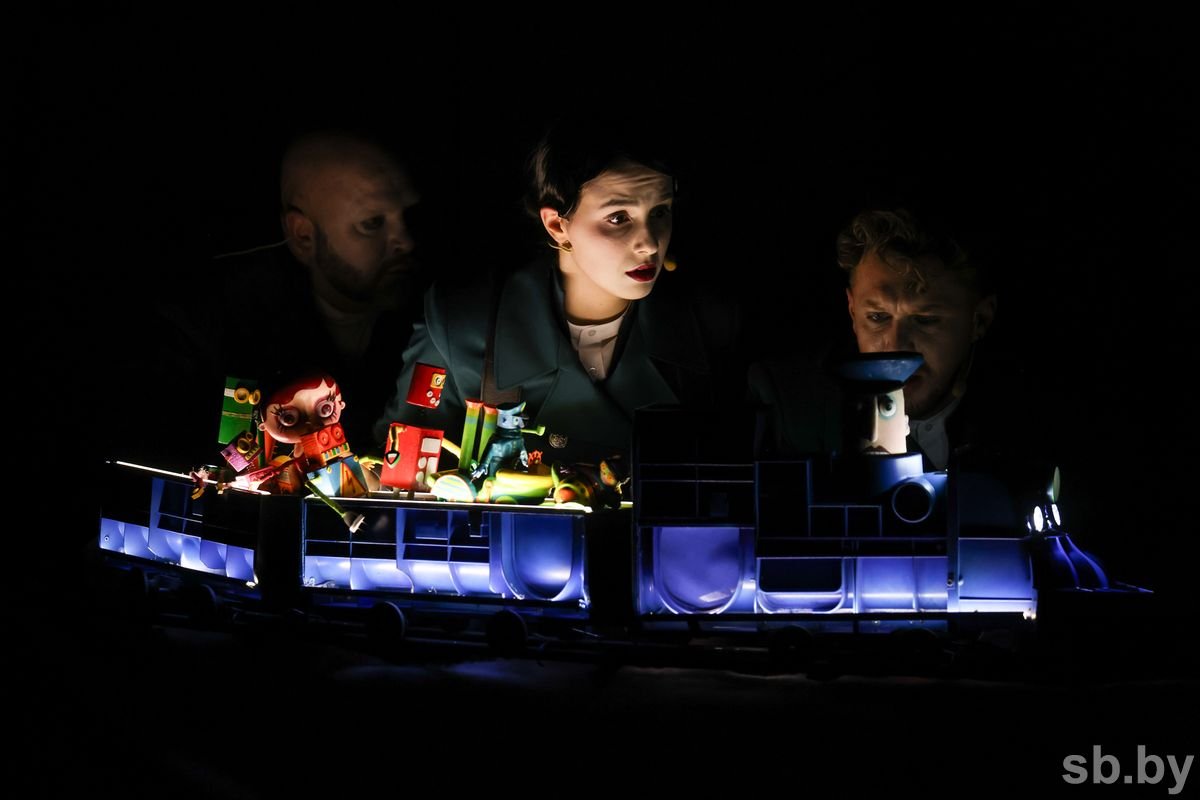
A minority remained in the ashes. Naturally, we will put aside Jaŭhien Karniah – in the past he did not have an administrative position, but was part of the first echelon of directors. After last year’s ban on his production of “The Sisters Grimm”, the creator released a new play, this time a children’s play – “The Magic Journey” based on “The Blue Arrow” by Gianni Rodari. Like previous Karniah’s premieres, it is selling out.
However, when we talk about theatre in Belarus, we are mainly talking about creators who were previously in the second or even third echelon, and now, due to the forced “disappearance” of their colleagues-competitors, have a chance for realization. By the way, there is nothing new in this. It is precisely the same mechanism when people were replaced in positions during the era of Stalin’s Great Terror in the USSR.
However, this opportunity has not been particularly used: so far, it has not been heard that domestic productions have gained publicity and recognition at least in neighbouring countries (the invitation of the RTBD to a festival in China is rather an exception). Naturally, one can mention, for example, the invitation of the play “Marriage. Phantasmagoria” by the Mahilioŭ Drama Theatre to the St. Petersburg forum “Meetings in Russia”. But the concept of the latter provides that the event poster will present the productions of each post-Soviet republic.
Naturally, new directors are also entering the profession: life does not stop. But they are forced to focus on the existing level (or, at best, try to surpass it), and not the one that existed in 2019. Such conditions are not encouraging to discover something new.
Scandals in the Janka Kupała National Academic Theatre…
The Janka Kupała Theatre does not forget to remind of itself, getting into scandals. First, the actor Illa Kruk, who is originally from Brest, boasted on social networks that he has been playing in the “famous “Paŭlinka” for five years, making a grammar mistake in the title ending in Belarusian pronunciation. Therefore we see another evidence that not only the invited Russian actors, but also the Belarusian strikebreakers, do not speak Belarusian well. Later it became known that the Janka Kupała Theatre will show “Lessons for Monica”. Previously, this venue has already hosted similar tours or festival screenings, but cheap enterprise comedies have not yet “dominated”.
But the biggest scandal was caused by the appointment of the Russian director Dmitry Akimov, who had already staged the Janka Kupała Theatre performances “Uncle’s Dream” and “The Dawns Here Are Quiet”, as the artistic director of the collective. It is interesting that in mid-February, actress Tamara Mironava acknowledged two problems in an interview. The failure of the middle generation of actors (“we can’t stage a classic where everything is written about this age – 50+”), as well as “staff directorial hunger”: “Our artistic director Volha Niafiodava nagged us to death, asking to find the main director. They just can’t find such a person”.
So, Niafiodava was looking for someone to direct plays: she herself, as an actress, was not good at it. Eventually, such a person was found, but he took her position.
In the past, The Janka Kupała Theatre was headed by creators from Russia for a while. But now our country has its own worthy directors and its own school. There is no need to invite a “Varangian”. Moreover, until relatively recently, our national theatre was not just producing performances, but also creating new Belarusian meanings, thus continuing a century-old tradition. This allowed us to look at the world through the eyes of Belarusians and taught the audience to think in our language. Dmitry Akimov does not know the latter, he has not lived in Belarus. He is a person alien to Belarusian culture, he does not understand our context and realities. And he also comes to the ashes – the layoffs of almost the entire troupe in 2020 is well remembered.
A small plus is that until now the theatre has been managed by Volha Niafiodava, an actress, and not a director who did not have relevant experience. Akimov is still a professional director who can better organize the process and at least invite his colleagues from Russia (they are unlikely to come to us from elsewhere). But he will not have a Belarusian view of plays, theatre and life. Quite the opposite. “We must understand what it [The Janka Kupała Theatre – author’s note] should be in all respects: creative, economic and socio-political”, Akimov noted during his appointment. Judging by his quote, we can conclude: he clearly understands what his employers expect from him, and intends to continue to create an ideologically sound team.
… and in the National Academic Grand Opera and Ballet Theatre of the Republic of Belarus
The Opera and Ballet Theatre was not without scandals either. Its management was accused of plagiarism. Russian dancer and choreographer Oleg Gabyshev proposed the idea of a ballet about Marc Chagall. After a conversation with the general director Kaciaryna Dułava and the chief choreographer Ihar Kołb, he was offered to write the libretto in detail. He sent the text to Minsk, as well as visual proposals for the scenography. After some time, the premiere was announced, but Kołb would stage it.
After Gabyshev, choreographer Ksienija Zvierava also shared her story on social media. She planned to stage a ballet in Minsk dedicated to Uładzimir Mulavin. Zvierava was asked to develop sketches of the scenography, costumes, video content, and lighting. The work was in full swing, but Dułava stopped contacting her and eventually blocked the production (the artistic council officially voted against it).
Finally, the third person to speak out was choreographer Volha Kostel. It turned out that the previous management of the Opera and Ballet Theatre had commissioned her to stage the ballet “The Idiot” to Mahler’s music. The premiere did not take place in 2022, its date was postponed every time. As a result, three years later, Kołb announced that there would be no premiere, since a play with that title is being performed at the Gorky Theatre (by the way, the coincidence of names is a completely normal situation for Minsk, which is rich in spectators), and no one knows Kostel herself. In reality, this choreographer’s productions of “Metamorphoses” and “Love and Death” were successful at the Opera and Ballet Theatre. But Kołb’s “The Nutcracker” turned out to be a failure – after a negative reaction from the audience, the management closed comments on the team’s official social networks.
In response, Dułava gave an interview to one of the state media outlets, where she vaguely responded to these accusations, without saying anything of substance and without naming any of the three choreographers. Thus, under the leadership of this director, the Opera and Ballet Theatre lost three potentially interesting choreographic premieres. Dułava herself forces the subordinates to publish her photos on the theatre’s social networks, clearly processed either through Photoshop or with the help of artificial intelligence.
Restoration of the “Alpha Theatre” and new books
Other events within Belarus will be mentioned more briefly.
Taćciana Toŭścik, who had been leading the team since 2024, resigned from the post of director of the capital’s Puppet Theatre. Later, they commented that Toŭścik decided to return to teaching at the Academy of Arts. It is hard to believe this version, but there is no other one yet. At the time of writing this review, her successor has not yet been appointed.
In the last days of December 2025, the RTBD hosted the premiere of “The Boat of Despair [Belarusian: “Ладдзя Роспачы”] based on the work of Uładzimir Karatkievič (directed by Sviatłana Navumienka). Its biggest plus is the spectacular costumes (designer Taćciana Lisavienka). However, the ideas meant by the writer remained largely unchanged. But in the mystical musical “The Master and Margarita”, staged at the Belarusian State Youth Theatre, director Uładzisłava Arciukoŭskaja changed the concept beyond recognition. “I wanted the victory of good to be more unambiguous, so in our performance I was faced with the task of turning the plot so that in the finale we all came to God”, she said.
Another International Youth Theatre Forum “M.@rt.kontakt” took place in Mahilieŭ. Its programme included 17 performances – one of them from Kazakhstan, the rest from Belarus and Russia. A typical situation for the present time. It is noteworthy that along with Karniah’s “Khutor”, which was in demand among the audience, the showbill included “The Queen of Spades” by Aleh Žuhžda – a gorgeous performance, which, however, was staged 16 years ago and has been repeatedly shown at festivals (including Belarusian ones) since then. Obviously, the organizers did not have much choice.
And now for the positive news. After a break, the capital’s “Alpha Theatre” has resumed its activities – in our difficult times, an extra comedy (it is this genre that the team specializes in) will not hurt. “Alpha Theatre” does not have its own website, but mentions of visiting its performances can now be found on the Internet.
But the main thing is that three new publications have reached readers at once.
Alena Malčeŭskaja wrote the book “10 Questions about Theatre”. The publication is addressed to children, and for this age audience such a product is a rarity.
Iryna Łapo published the study “Free Kupałaŭcy. National Theatre in Exile” [Polish: “Wolni Kupałowcy. Teatr Narodowy na Wygnaniu”]. This is the first major work dedicated to the troupe “Free Kupałaŭcy”. The text is written in Polish, which makes it accessible to specialists from this country.
Nastaśsia Pankratava published the book “(Not) Crossed out: Belarusian Theatre 2015−2025. Selected Pages”. In it, the author collected her best texts, which were published over the course of ten years, and also wrote thorough generalizing articles for the book. This allows us to form an idea of the theatrical process in the specified decade, as well as to return the names that have been erased from history.
A play based on the KGB denunciations database and female playwrights
Abroad, Belarusian creators remain faithful to two strategies: independent development or collaboration with foreign institutions.
The first is traditionally associated with “Free Kupałaŭcy”. At the end of March, the premiere of the play “The Minsk Sea” (directed by Wojciech Urbanski) took place in Warsaw. It was based on the database of denunciations to the KGB, published in 2024 by “Cyberpartisans”. The troupe also continues to perform other plays. “Zekameron” toured in Wrocław and Krakow. “Suitcase” [Belarusian: “Валізка”] was shown in Warsaw.

The phenomenon of the émigré theatre was the creation of three non-political performances that appeared in Vilnius. Last autumn – the comedy “Let’s Go to My Place” [Belarusian: «Пойдзем да мяне»] (directed by Emilija Pranskute), in February – the fairy tale for adults “The Devil’s Daughter” [Belarusian: «Чортава дачка»] (Siarhiej Zdarankoŭ), in March – the comedy “Full Uproar” [Belarusian: «Поўны вэрхал»] (Uładzimir Ušakoŭ; he once staged it at the capital’s Contemporary Art Theatre). The premiere of the latter was launched by the Baltas Teatras collective. But we can talk about a common core in relation to all the productions: three involve former actors of the capital’s theatres, Maryna Zdarankova (ex-RTBD) and Dźmitryj Račkoŭski (ex-Puppet Theatre), and two involve Siarhiej Toŭścikaŭ (ex-New Drama Theatre). The comedies are performed in Russian (the fairy tale is in Belarusian), which allows them to attract both a wide émigré audience and local Russian-speaking residents.
Among other performances, we would like to mention “Tales from the Castle” – this performance was created by Andrus Praha and first performed for his cellmates in the Valadarka detention centre. The dolls were created from notebooks in a cage, the scenery was made from boxes of washing powder – he managed to take them out of the detention centre. After the creator’s release, “Tales” were shown in the Vilnius Museum of Occupation and the Fight for Freedom.
The Belarusian Institute of Theatre, which had been on hiatus for more than a year, returned with the “Dramatyzacyja” competition of Belarusian drama. 66 plays took part in it, of which 10 were included in the long list and five in the short list. In the latter case, we are talking about the works “The Red Squirrel” by Chasia Kornieva, “Limb” by Renata Tałan, “The Real” by Ksienija Štalenkava, “The Last Witness [of Old Hrodna]” by Amalia Riznich, and “Any Place Where Traces Remain” by Maryja Bialkovič (by the way, a theatre performance based on the play by Riznich has already been created). In April, these plays will be presented in the format of performative readings at the festival in Warsaw. It is interesting that only female authors made it to both the short and long lists. However, this, unfortunately, is fully consistent with the trend we mentioned above.
Belarusians continue to adapt to foreign realities through collaboration with local institutions. Last year, the BY Teatr Foundation held a laboratory in the Lublin Cultural Centre. The results of its work resulted in the play “Moja Miłość” (English: “My Love”; directed by Maciej Harčynski), dedicated to the situation in the queer community of Belarus and the attitude of authorities to it.
Director Mikita Ilinčyk staged the play “The Doll” by Bolesław Prus at the Drama Theatre in Warsaw. And actress Alena Zuj-Vajciachoŭskaja came to the Warsaw Syrena Theatre as a prompter. According to her, the payment depends on the number of hours and she receives the minimum salary by local standards. But this is still more than she was paid in Belarus. But now Alena Zuj-Vajciachoŭskaja has experience working with Polish creators and a hypothetical opportunity to move to the position of actress in the future.
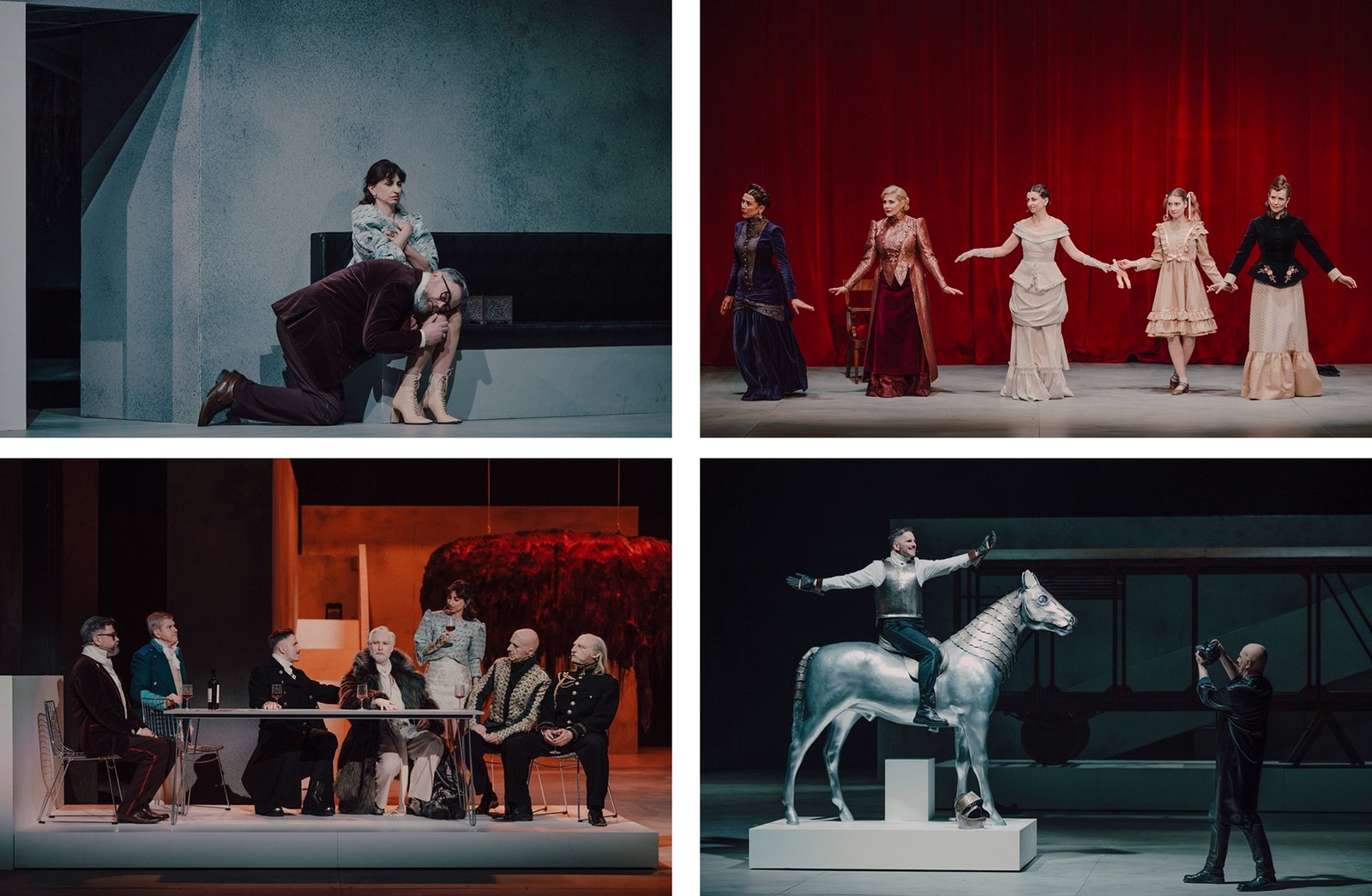
It is nice that the work of Belarusians is duly recognized in the world. The Belarus Free Theatre was awarded the British OffWestEnd “Offies” Awards 2026. The production “KS6: Small Forward”, starring former basketball player Kaciaryna Snycina, became one of the six winners in the Creation nomination.
Music: The return of concerts to Belarus and international success
Belarusian music got off to a very good start at the beginning of the year. Maks Korž continues to conquer stadiums in Europe, “Molchat Doma” won gold in the US for their “Судно”/”Sudno” [literally in English: “Bedpan”], and cool concerts began to take place one after another inside the country.
International success in the western direction
Belarusian music continues to expand its geographical boundaries in 2026. The most famous Belarusian-speaking post-punk band Nurnberg went on a European tour of 17 cities. During the tour, the musicians presented their new EP “Razlad”.
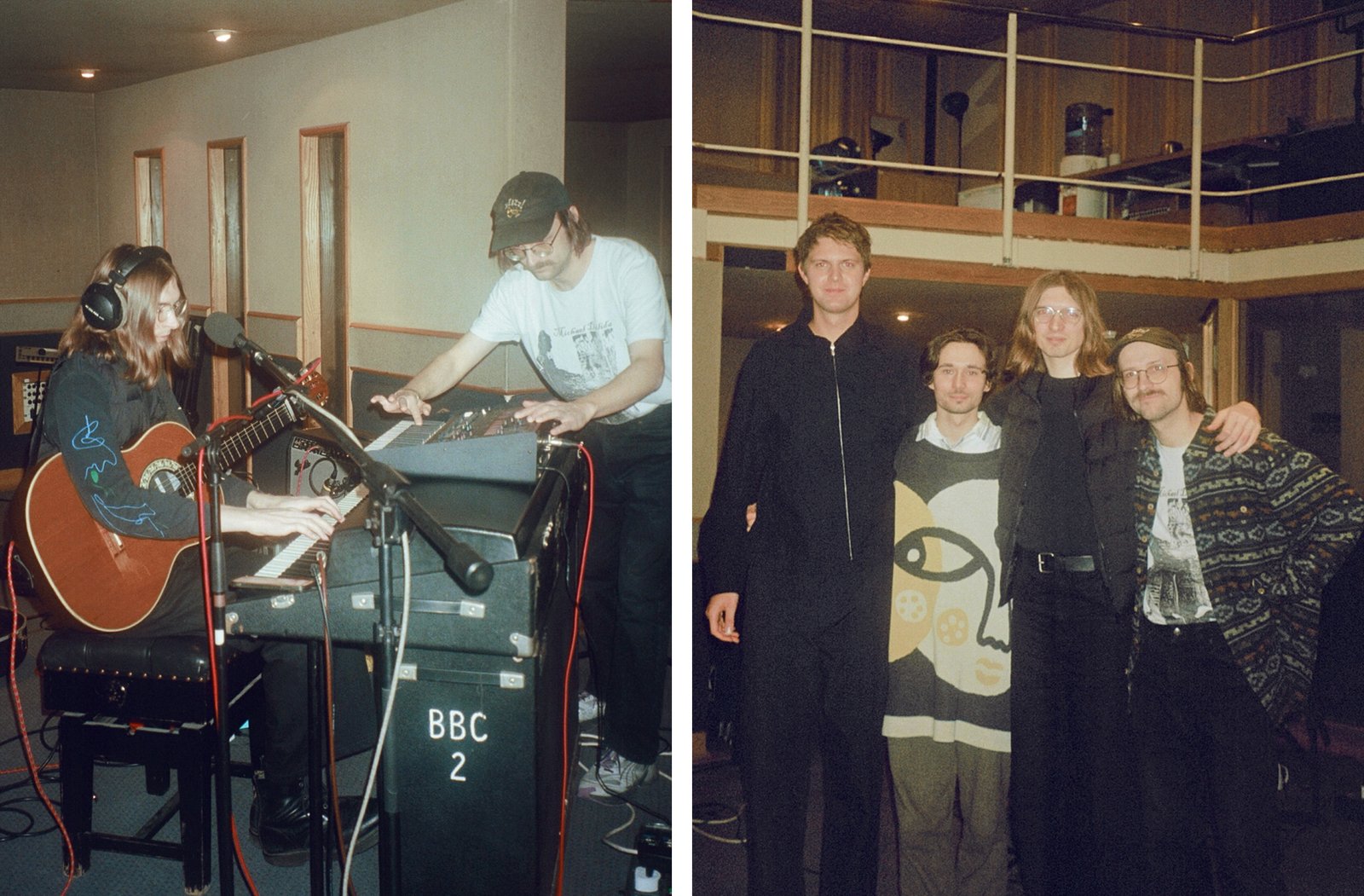
The band “Soyuz” [“Союз”] also had a European tour, presenting their latest album “Krok”. The band also performed live on BBC Radio 6 Music. They were invited there by influential British DJ Gilles Petersen. The radio’s audience is about 2.7 million listeners per week.
Belarusian folk music was played in a London vinyl record store. Polish dub artist Violinbwoy reinterpreted the Belarusian song “Shto y pa moru” [Belarusian: “Што й па мору”], performed by the female project Laboratorium Pieśni, in his own way. And it was played in the LionVibes store, which specializes in selling vinyl dub and reggae records.
Rapper Kepskey is participating in the camp of Kazakh artist Scryptonite. Thanks to him, the guy started writing 10 tracks a day and earned respect from the famous artist.
The Belarusian post-punk trio “Dlina Volny” have signed a publishing deal with the UK-based TRO Essex Music Group. The company will represent the rights to the band’s entire catalogue. TRO Essex is one of the most well-known independent publishers, with songs by “Pink Floyd” and “Black Sabbath” in its catalogue. For “Dlina Volny”, this means more opportunities for their music to appear in films and advertisements.
“Molchat Doma” received a gold plaque award for the song “Sudno”. This means that the Belarusians sold 500 thousand copies of their track in the US. And this is the first case when a Belarusian band received RIAA certification as a main artist.
The Belarusian-Australian trio Kapela Kotra released their debut album “Zialony Haj” and immediately went on a European tour with it.
Veterans of Belarusian metal “Gods Tower” also went on a European tour. It became a unique one for the musicians, as vocalist and band leader Lesley Knife was not allowed on the plane to Cyprus. They had to find a way out and play an unusual concert. As a result, the artist was in Warsaw and sang online, while the musicians performed live on the Cypriot stage.
Funk artist ANDROMEDA became the most streamed on Spotify Belarusian in Poland. The musician broke the 6 million streams mark.
Maks Korž continues his stadium tours around the world. The artist announced two more concerts for this year: in Istanbul on June 6 and in Düsseldorf on June 26.
Former member of “LSP” Piotr Klujeŭ recorded a joint track with People’s Artist of Ukraine Alexey Gorbunov.
The awakening of concert life and crises
Belarusian musical life within the country still follows parallel courses. On the one hand, it has the official part, on the other, the underground one – independent. At the beginning of the year, the festival “Beresteyskie Sani” [literally in English: the “Brest Sleigh” Festival] was held in Brest, the headliner of which was Alaksandr Saładucha.
The band “Drazdy” released a joint track with the Russian band “Balagan Limited”, trying to get to the sacred Belarusian meal – draniki [potato pancakes]. Vital Karpanaŭ also announced the band’s European tour. The band plans to perform in Montenegro, Moldova, and the Czech Republic.
Russian artists still dominate the country’s concert scene. Vanya Dmitrienko’s concerts have caused a stir among Belarusians. The singer will tour Belarus – tickets for his concerts were sold out in just a few days.
Despite this, Belarusian concert life has also woken up. After the crisis, the iconic Minsk club “Reactor” resumed its work. The first large and successful concert at the club was a joint performance by “Kukly”, “Broneparovoz” and “Torf”.
At the end of March, the club was packed with “Metal Mania”, headlined by “Extermination Dismemberment”, the most famous Belarusian metalheads in the world today.
Other Belarusian artists have also announced their solo albums. For example, rapper Laitovy [Belarusian: Лайтовы] presented a new album. The artist presented a new programme, which he does not plan to perform on stage again.
The band “Borisovskiy trakt” played their first solo album at “Re:public”. On the same day, “Zvonku”, local rockers “Srazu May”, Voŭka Plumbum and “Negative Zero” performed for the first time in Brest.
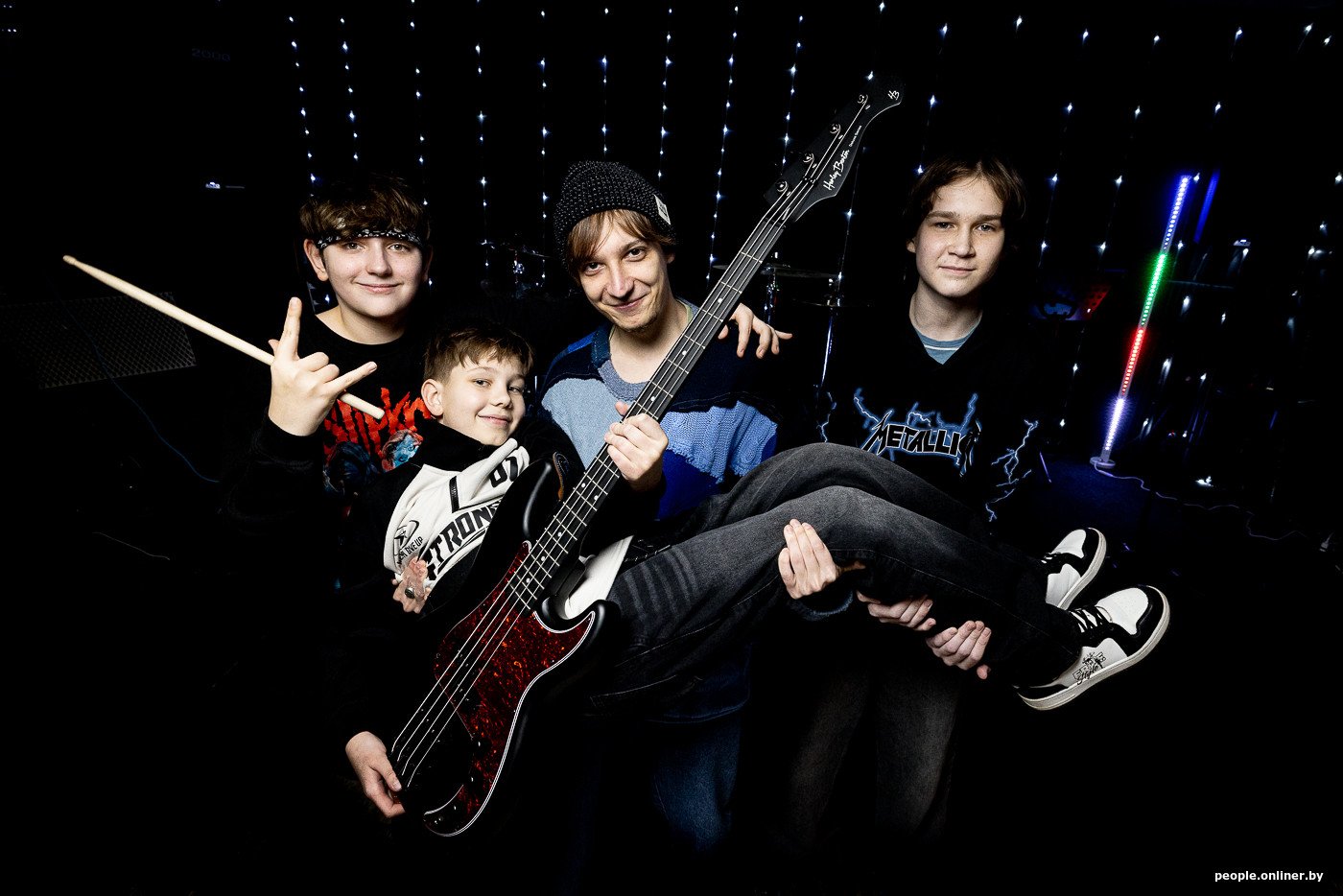
One of the most striking events in the country was the emergence of the band “Nerzhaveyka” [literally in English: “Stainless steel”], consisting of teenagers. The guys have been looking for a vocalist for a long time, and journalist and music blogger Saša Manitu became their temporary vocalist.
But not everything is so rosy in the concert and party life of Belarus. Blogger Diana Advocat released a video in which he talked about the crisis of nightlife in Minsk. The reasons were the lack of good performers, the economic component and the possibility of banning the event on the day of its holding.
Some institutions continue to literally fight for survival. For example, the famous Minsk club “TNT” reported a serious situation. The club is currently unable to work after 23:00 and is asking for help.
Painful losses, high-profile conflicts and new challenges
Unfortunately, the first quarter of 2026 was not without its losses. Prominent Belarusian folk musician Aleh Chamienka was sentenced to 3 years in a penal colony for participating in “extremist” activities. In addition, the artist was fined 20,000 rubles.
Ina Radajeva, producer of Dziadzia Vania, has died at the age of 57.
Belarusian music continues to be outlawed. The Lieĺčycy District Court declared the song “I Shot a Policeman” by the band “Krambambula” to be “extremist”.
In addition, the blacklist of musicians whose songs cannot be sung in karaoke in Belarus has been updated. “NaviBand”, “Lyapis Trubetskoy”, “Leprikonsy”, “Litesound”, etc. were included.
Belarusians have also been affected by Russian censorship. After the introduction of a new law on drug propaganda, Roskomnadzor began blocking songs about illegal substances. Some artists succumbed to censorship and removed parts or entire songs that did not comply with the new law. The Belarusian rap band “UNNV” did not do this, and its tracks began to disappear from Russian streaming services.
Belarusian music has not been without conflicts, and later losses. Blogger and artist Lera Jaskievič could not come to an agreement with her manager Hanna Navickaja. The conflict was resolved radically: by removing all tracks and albums from streaming services. Later, the artist began to return some of her releases on her own, and the cooperation with the manager ended.
The festival life of Belarus has also suffered losses. Lidbeer will not take place this year. Last year, the festival featured “Borisovskiy trakt”, “Police in Paris”, and “Parade of Planets”. Another major Minsk festival is missing. The organizers of Festiwow, which was held at the Dynamo stadium for two years in a row, officially announced that the festival will not take place in 2026. The reason is the inability to obtain a tour certificate, although preparations for the event were almost complete.
After the breakup of “Petlya Pristrastiya”, the vocalist of the band Illa Čarapko-Samachvałaŭ returned to his other projects. Together with the group Polyn, he is preparing a new album. Work is also underway with “Kassiopeia” [Russian: “Кассиопея”]. The artist has also conceived a solo project, which he plans to release during 2027.
Belarusian electronic artists “Intelligency” returned home from the USA and in 2026 are planning to release an album in Belarusian.
Rapper Nkeeei became a mentor of the vocal competition “FactorBY”. At the same competition, a Belarusian girl performed a song in Ukrainian.
Conclusions
Belarusian music actively showed itself in the first quarter of 2026. Several strong and noteworthy albums were released in the same period. The pioneers of Belarusian post-metal “Relikt”pleased us with the new album “Ramantyzm”. Another pioneer, this time of pagan metal “Znich”, also released a new release “Hramnicy”. The song of the artist Domsun was heard in an Adidas advertisement.
The situation with concerts also looks not so bad, considering the conditions in which Belarusian musicians have to exist. Despite the dominance of Russian stars and the complete absence of Western imports, Belarusian artists do not despair and continue to organize performances. And this is bearing fruit.
For example, after their spectacular performance in Minsk, the Homieĺ band “Torf” decided to please their fellow countrymen as well. The guys played in the city’s cultural centre, ironically presenting their band as a vocal-instrumental ensemble. The musicians even organized a red carpet before the performance.
In the first quarter of the year, there was a slight feeling of relief. Musicians who were previously banned from performing in Belarus were finally able to do it. Blacklists still exist in the country, and even loyal bands like “Drozdy” or “Bez Bileta” cannot play a concert in Minsk.
Nevertheless, there have been fewer unexpected cancellations of concerts, and this cannot but please.
Art: Global victories and local losses
The beginning of 2026 shows the Belarusian art scene as a space of stark contrasts. On the one hand, Belarusian artists, curators and projects are gaining increasing international visibility and are included in key cultural events. On the other hand, domestically, the artistic field is facing institutional constraints, losses and increasing political pressure. This combination of successes and vulnerabilities determines the current state and direction of development of the artistic community.
A surge of international attention
The beginning of 2026 was marked by widespread international interest in Belarusian fine arts. Several Belarusian group and individual projects immediately caught the attention of major international institutions.
One of the most notable cases is the exhibition Sense of Safety. The project, organized by the Embassy of Culture, Antiwarcoalition.art and the Kharkiv YermilovCentre, became one of the four finalists for the Shevchenko Prize, Ukraine’s main cultural award. This recognition underlines the importance of the joint efforts of Belarusians and Ukrainians.
In the field of photography, individual achievements of the authors are particularly notable. Belarusian documentary photographer and filmmaker Ksienija Hałubovič was among the 20 winners of the international Female in Focus competition, organized by The British Journal of Photography. Her work “Reflection of the Past”, filmed in front-line Kharkiv, became one of the strongest artistic statements on the theme “On the Border”.
Among the bright names is photographer Saša Vialička. Since the beginning of the year, she has been officially represented by the Jednostka gallery in Warsaw, and the artist herself has become the winner of the international Foam Talent competition. Soon her project about political prisoners will be shown at the Amsterdam Museum of Photography.
The publication of Belarusian artist Lesia Pčołka Descent into the Marsh has been shortlisted for the prestigious Henri Cartier-Bresson Foundation award. The Belarusian photo book compares the tactics of resistance in Hong Kong and Belarus, considering them as examples of horizontal revolutions of modern times.
Installations and new media are also not inferior to photography. In Berlin, Belarusian artist Uładzimir Hramovič was nominated for the Neuköllner Kunstpreis with his installation “People of Salt”, in which he illuminates the theme of Belarusian uprisings through a modern art form. In Wrocław, Ała Savaševič’s work “Ghost” entered the collection of the National Museum. And the Museum of Modern Art in Graz, Austria, showed 225 kg of Belarusian soil – in the project “Ziamliačka” by Ciemra.
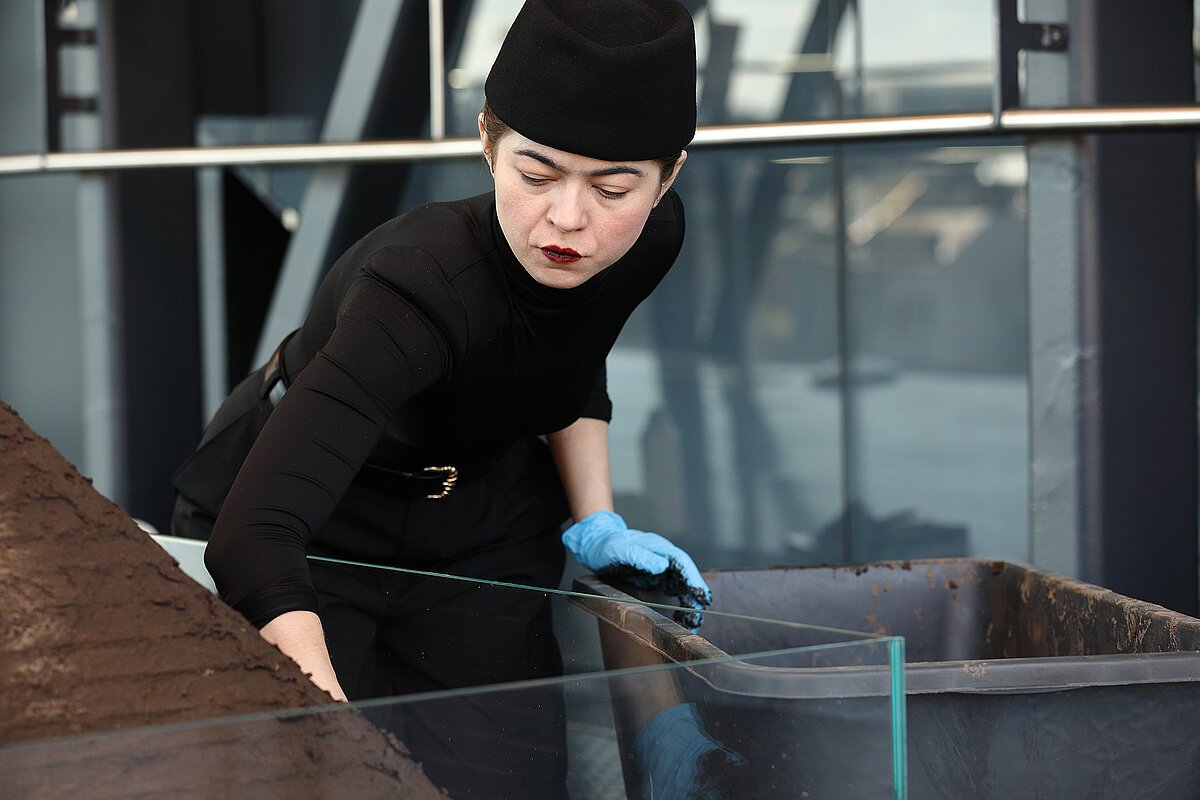
Belarusian curators are also noted for their international successes. For example, jeweller and curator Alena Karpiłava took part in the main event of the jewellery world – Munich Jewellery Week – as a speaker and lecturer from the world’s leading jewellery magazine “Art Jewelry Forum”.
Among the events that have only recently been announced, but are already of great importance for the Belarusian art community at the announcement stage, we can single out, for example, the participation of Maryna Napruškina in the official programme of Manifesta’16 – one of the most important events in contemporary art, which will take place this year in several cities in the Ruhr region of Germany. At the same time, an independent group of Belarusian artists with the project “Official. Unofficial. Belarus” (curators – Belarus Free Theatre) will take part in the parallel programme of the Venice Biennale. And in the fall we will see an exhibition curated by Alaksiej Barysionak for the special project The Path / Takas [Belarusian: “Шлях”] within the framework of the international contemporary art fair ArtVilnius’26.
Big returns and big losses
In parallel with the international activation, work with cultural memory is increasingly evident in Belarusian art. In conditions of institutional instability and limited resources, individual initiatives and events take on a special role. In this context, two important processes have emerged in the first months of 2026.
One of the first important events of the year was the partial restoration of the Photoscope.by web archive, access to which was lost after the death of photographer Uładzimir Parfianok. In the 2000s-2010s, this resource played a significant role in shaping the critical discourse around photography as an art form and remains an important part of professional memory.

The second example of the return of cultural heritage is associated with the MALDZIS initiative. The team recently purchased 30 original lithographs by Napaleon Orda. These works, depicting landscapes from the territories of Belarus, Ukraine, Lithuania, and Poland, have already been presented at the Free Belarus Museum.
At the same time, the period under review was also marked by tangible losses. Several significant figures of Belarusian art passed away: art critic and founder of the Chaïm Soutine space in Smilavičy Jury Abdurachmanaŭ, artist and one of the founders of the Viciebsk watercolor school Fieliks Humien, and a famous representative of the Belarusian avant-garde, artist Uładzimir Akułaŭ.
At the same time, pressure on fine arts is also increasing. One of the most high-profile cases was the recognition of the fictional country “Veyshnoria” as an “extremist formation” and the inclusion of Aleh Łaryčaŭ, the organizer of the large street art festival Urban Myths and an artist, in its ranks. He is currently in pre-trial detention. In addition to Łaryčaŭ, the wave of detentions also included artist Viktoryja Bahdanovič and photographer Andrej Lankievič. Viktoryja was one of those detained during the roundup of Belarusian booksellers. At the time of writing, she has been released. It is also important to note the detentions in the cultural space “Parason”, which also organizes events about Belarusian fine arts.
The sale of paintings from the private collection of Viktar Babaryka remains a separate topic. During the period under review, the authorities again tried to put the works up for auction, but this time with a “big discount”. The state website offered works by Jaŭhien Zak, Michaił Kikoin, and Vosip Lubič. Only the painting by the latter managed to sell, and then without additional bids. The site for the sale of seized property indicates that only one buyer claimed the painting. It is unknown who that person is.
The contradictory dynamics of art institutions: inclusion, expansion, but also total Russification
Amid the general transformation of the art community, state institutions also continue to participate in the cultural process. For example, the National Art Museum is developing educational and inclusive projects – from lectures on art history to the “Listen to Art” programme for people with visual impairments. Moreover, the museum is trying to find new points of contact with different audiences through children’s guides and the halls and “animated paintings” right in the centre of Minsk. The planned reconstruction with the development of the museum square looks like an equally important step, which may open up new opportunities for work.
On the other hand, these initiatives coexist with the general trend towards active Russification of national culture. Moreover, we are not talking about isolated cases, but about a sustainable process in which the Russian cultural narrative is taking an increasing place in state institutions.
One of the most striking examples was the exhibition “Sergey Yesenin. The Endless Legend” at the National Art Museum, organized with the participation of Russian partners. The project included not only an exhibition, but also an extensive public programme with the participation of official delegations. Even within the framework of the celebration of the Mother Language Day, the central attention of the country’s main art museum was paid to the theme of the “poetic battle” of Russian creators – Yesenin and Mayakovsky.
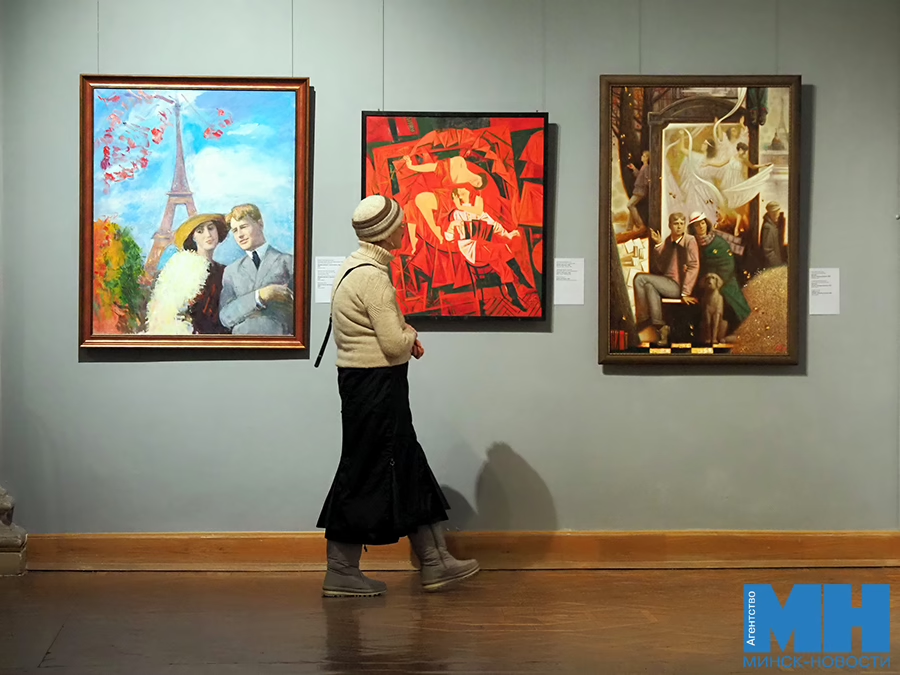
In parallel with the exhibitions, a global rapprochement with Russia is also observed at the institutional level. Since the beginning of 2026, Belarusian cultural institutions have been actively implementing joint projects with Russian colleagues and signing new official cooperation agreements with institutions. As a result, Russification is manifested not only in the themes of exhibitions and events, but also in a broader understanding of the cultural system.
Conclusions
Thus, in the first quarter of 2026, Belarusian art continues to develop in several directions. The most dynamic part of the field is related to the international scene. Outside the country, Belarusian authors and initiatives are increasingly strengthening their voice and position, gaining recognition and opportunities for development, even despite the huge lack of resources and internal conflicts.
Within the country, the situation appears more contradictory. On the one hand, institutions are preserved and even partially developed, educational and inclusive practices are emerging, and attempts are being made to modernize the infrastructure. On the other hand, these processes are not accompanied by a significant renewal of content and do not create conditions for the full development of art.
An additional factor in art is now working with memory, which is gaining increasing importance against the backdrop of losses. The revival of archives and the return of cultural values are taking place in parallel with the departure of key figures and the breakdown of ties between people. At the same time, pressure on the cultural sphere is increasing and the practice of criminalizing artistic initiatives is expanding. At the same time, the tendency towards Russification is becoming more and more pronounced, which is manifested both in exhibition policy and in institutional cooperation. All this makes the work of updating and popularizing independent cultural developments especially vital today.
Cover on the main page:
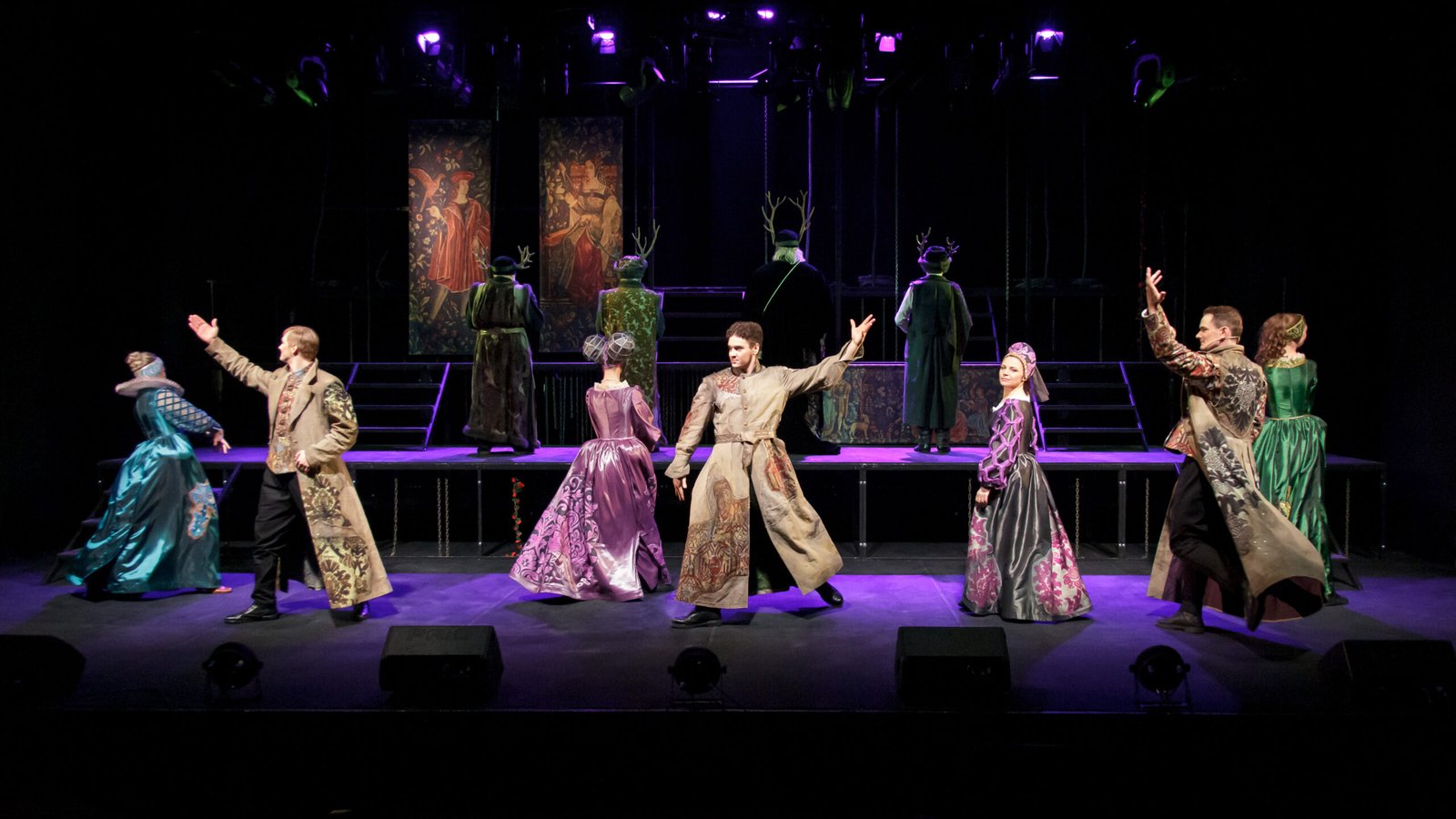
Scenes from Mikita Ilinchyk’s performance “The Doll.” Source: https://teatrdramatyczny.pl/
The reviews are prepared with the support of the ArtPower Belarus programme and the European Union.