
We continue our series of interviews with projects supported by ArtPower Belarus with funding from the European Union.
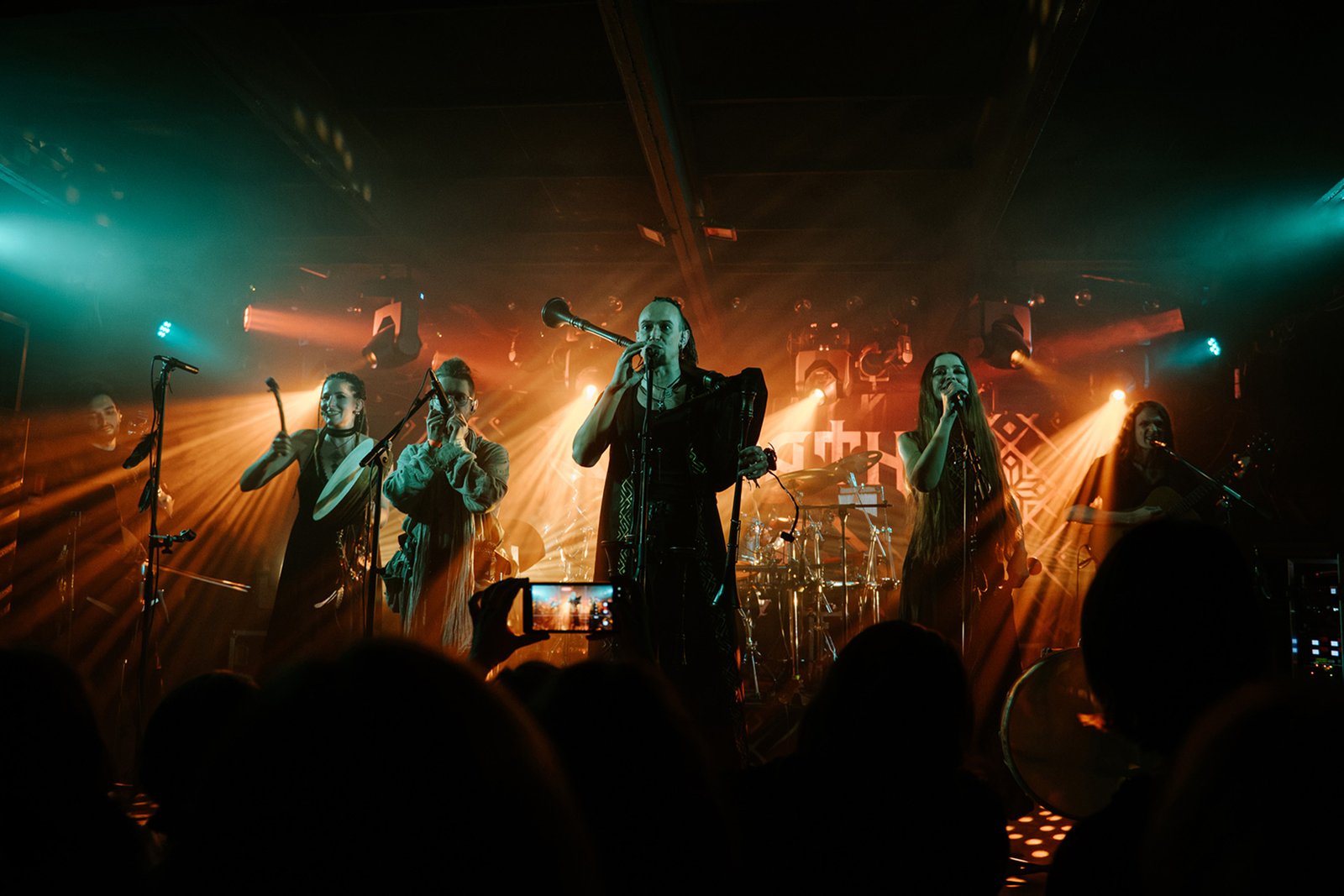
The band Irdorath emerged in Hrodna from street performances featuring bagpipes and drums. Then came studio albums, concerts across Europe, tens of thousands of kilometers traveled in a tour van, and appearances at major festivals where Belarusian music had rarely been heard before.
“We grew from playing on the streets for tips to performing at Wacken, becoming the first Belarusian band to appear at the world’s largest metal festival,” recall the band’s founders, Nadzeya and Uladzimir Kalach.
At first, Irdorath worked primarily in the format of a medieval music ensemble, performing ancient European melodies. But the more they toured Europe, the more clearly they understood that it was important not to repeat what already existed there, but to speak in their own voice.
“The more we toured Europe, the more interested we became in Belarusian elements within our own work. For Europe, we wanted to be more Belarusian rather than a copy of what already existed there. We wanted to place greater emphasis on our uniqueness, language, and culture.”
This gradually led to the idea of Bestiarium, an album that could introduce European audiences to a different, almost unknown layer of Belarusian culture through Belarusian mythology.
An Idea Interrupted by the Pandemic, 2020, and Prison
The concept of Bestiarium took its final shape back in 2019. The band wanted to create a project that would introduce the world of Belarusian mythological creatures to European audiences, since Europe was where Irdorath performed most often.
Work began, but was soon interrupted. First by the pandemic, then by the events of 2020. Because of their participation in peaceful protests and neighborhood marches, the musicians lost both their jobs and their studio, a place that was not merely a workplace but a creative home.
“We never planned to end our career. We were waiting for everything to pass and looking for ways to continue. But we were essentially dismissed from our own studio. We lost the place where we could rehearse.”
In 2021, part of the team ended up behind bars. After their release in 2023, Nadzeya and Uladzimir were forced to leave Belarus, first moving to Poland and later to Germany. Within the first months after their release, they recorded the song Zorami, which had been written in prison.
“It existed outside the context of Bestiarium. It was a social statement that needed to be made. The song was written in prison and is about political prisoners not being rescued. We are there, everyone feels sorry for us, but nothing happens.”
Instead of taking time for a full rehabilitation after imprisonment, the band returned to music.
A New Life in Berlin and a Return to Bestiarium
Over three years in exile, Irdorath effectively rebuilt its entire infrastructure from scratch. In Berlin, the musicians created a new studio, assembled a new lineup, and transformed the band into an international collective. Today, Belarusians perform alongside a Canadian, a German, and an Armenian musician.
“In three years, on completely new ground, we built our own music studio in Berlin from scratch and assembled a band that has now become international.”
During this period, the team regained its concert form, relearned how to work together on stage, and returned to Bestiarium. Part of the album was written while in prison: Nadzeya worked on the music and lyrics, while Uladzimir focused on visual concepts, sketches, and the project’s graphic language.
However, in Europe the band encountered a completely different economic reality. While concerts in Belarus could at least cover the band’s expenses and sometimes even their living costs in exile everything became significantly more expensive.
“In Belarus, concerts could at least cover the band’s expenses and sometimes our daily needs. In Europe, it’s the exact opposite. Everything here is very expensive.”
It was at this point that the opportunity to apply for ArtPower Belarus emerged.
Why ArtPower Belarus Was Needed at Exactly This Moment
For Irdorath, the grant was not simply additional support. It became a condition without which a project of this scale would likely never have happened. The musicians admit that the very idea of applying for grants had once been psychologically difficult.
“We used to think of grants as ‘please give us money.’ As if we were simply asking for funding for our own self-realization. But when we looked deeper into it, we realized that many donors are actually looking for people who can bring their ideas to life. And we seem to be exactly those people.”
This understanding changed their perception of grant support not as a request for help, but as an alignment of goals. If a donor wants to support Belarusian culture and artists are able to create projects that strengthen it, then it is not dependency but partnership.
“If someone wants to fund the development of Belarusian culture, we have the same goal. We want to contribute to the development of Belarusian culture through a specific project, but we need funding to make it happen.”
What the Support Made Possible
Originally, Bestiarium was conceived as a music album accompanied by an extended booklet with English translations. However, between the submission of the application and the start of implementation, the project grew significantly.
“From the moment we applied to ArtPower until the project actually began, it evolved from a music album with an extended booklet into a fully-fledged audiovisual and literary project.”
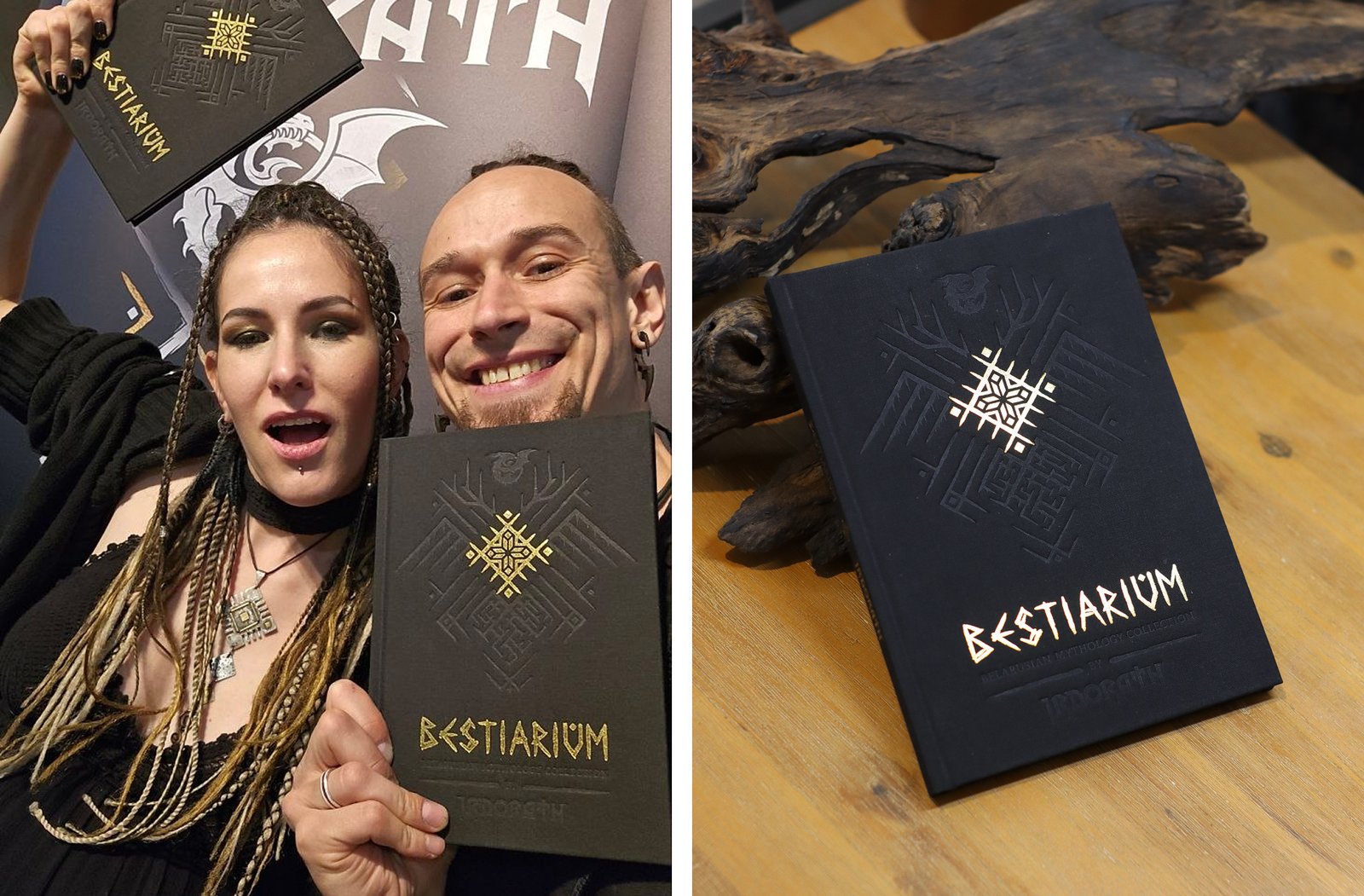
As a result, Bestiarium came to include:
- a Belarusian-language album featuring 10 tracks and a bonus track;
- a bilingual book in Belarusian and English;
- original illustrations;
- Belarusian myths and cultural context;
- personal commentary from the band;
- lyric videos with translations and animation.
The book became much more than an addition to the album; it turned into an independent art object. Its purpose was to open a door into Belarusian culture for people who do not understand the Belarusian language. Yet during the process, the band realized that the format was needed not only by international audiences.
“We realized just how little Belarusians themselves know about their own mythology when even the Belarusian members of our team kept asking questions: Who is Loyma? What is Rusal Week? It became clear that this project wasn’t only for Europeans. Belarusians themselves also want to discover something new.”
For that reason, Bestiarium speaks to two audiences at once. For Europeans, it introduces a largely unknown world of Belarusian mythology. For Belarusians, it returns familiar images and meanings through a contemporary musical form.
“The Book Became an Artifact of Belarusian Culture”
The band emphasizes that without grant support, the project would have been much simpler, cheaper, and almost certainly delayed for years.
“If we had made the book at our own expense, it would have been a paperback because we simply wouldn’t have had the resources to make it beautiful. And if we had done everything ourselves, it probably would have taken another five years. The hardest thing in exile is buying back the time you need just to survive.”
The support made it possible to create the project not in a stripped-down version, but in a form that could genuinely represent Belarusian culture.
“We’re incredibly grateful to ArtPower because the result now feels like a golden artifact of Belarusian culture. If it accidentally ends up in the hands of a European, it already has value simply because of how it is made.”
Returning to the International Stage
The project was not only recorded but also presented through a concert tour. Irdorath introduced the album, the book, and a completely new live program. According to the musicians, the outcome exceeded even their own expectations.
“We did it successfully. More successfully than we had even imagined when writing the application.”
The first responses have followed two main lines. First, audiences consistently comment on the quality of the live show. Second, both Belarusian and European audiences see Bestiarium not merely as a concert product but as a cultural project with a clear mission.
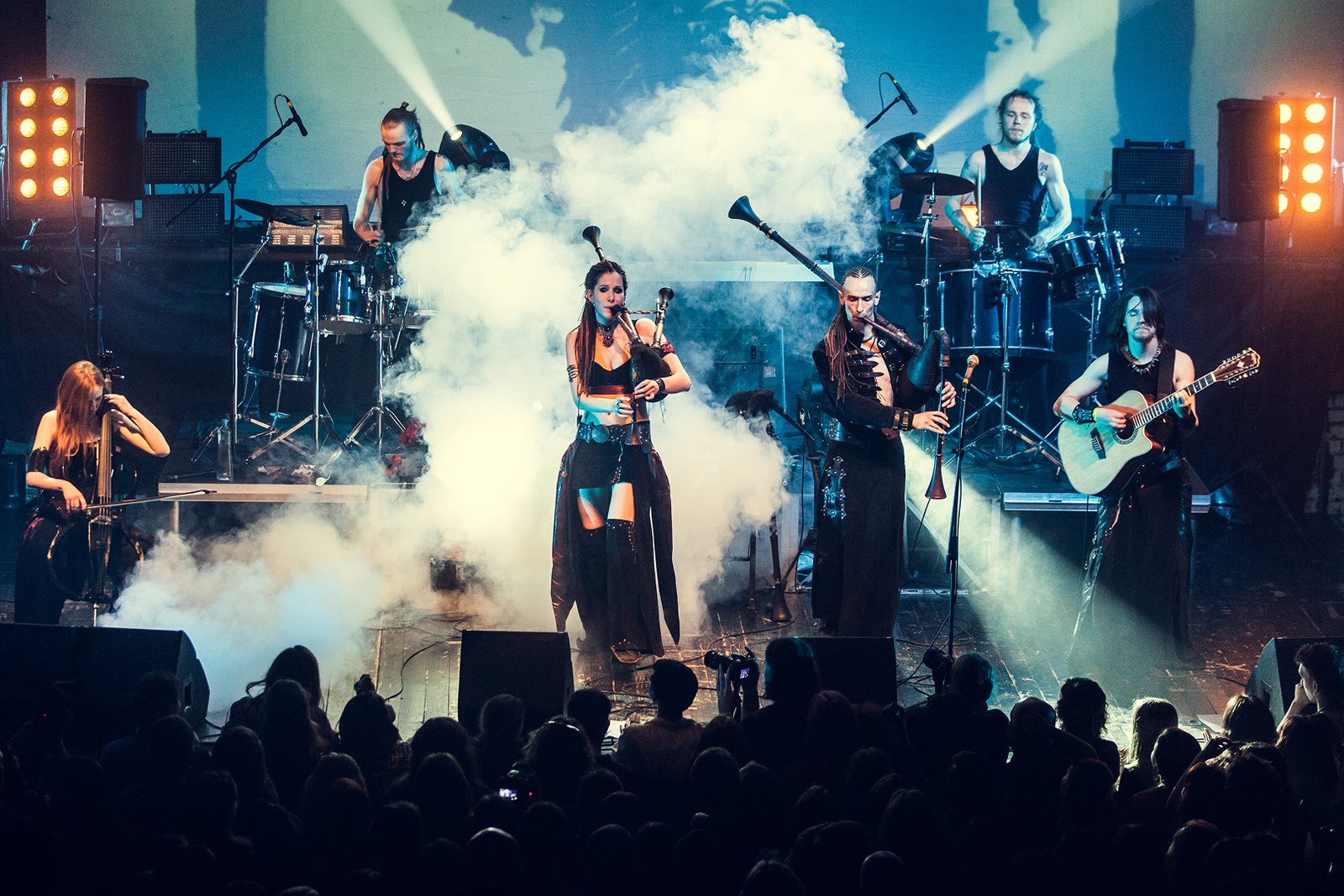
“The first thing we hear is comments about the incredible quality of the show. The second is respect for a project that turned out to be genuinely needed by Belarusians. It became another link connecting Belarusians in exile with one another and with Belarusians still in Belarus.”
According to the band, European audiences had also long been looking for a deeper understanding of Belarusian culture.
“It seems to us that Belarusian culture is barely represented in Europe. Everyone knows something about Irish culture, Scandinavian culture, Vikings but almost nothing about Belarus. This project helped satisfy that curiosity.”
When Two Projects Strengthen Each Other
An important part of the story was the collaboration with Aliaksandr Charnukha’s media project Ministry of Sepulculture. Together, they created an online show that allowed people who could not attend the concerts to experience Irdorath’s work.
“It turned into a really powerful interaction between two initiatives that strengthened one another. On our side, a European audience discovered a channel dedicated to online concerts by Belarusian artists. And for Belarusians in Europe, Charnukha’s project introduced them to us.”
This was especially meaningful for the band because, despite their active presence on the European stage, they often remain outside the core Belarusian diaspora circles.
“By accident, we became ambassadors of Belarusian culture in Europe. Yet within the Belarusian diaspora itself, it sometimes feels as though we don’t exist. We don’t live in Warsaw, we’re not part of those circles. For some Belarusians in Europe, Charnukha’s project introduced us, while for Europeans we introduced Charnukha.”
Free Entry for Former Political Prisoners
For the second consecutive year, Irdorath has offered free admission to former political prisoners during its tours. The initiative began during the band’s first European tour, when they had no additional funding but still wanted to do something tangible for people who had gone through experiences similar to their own.
“We thought we had to do something. So we decided that former political prisoners, people like us, would be able to attend for free even if it meant losing money ourselves.”
According to the musicians, this is about much more than a concert ticket. It is an attempt to reduce the distance between those who have experienced prison and those who have not.
“Sometimes people who have been through Belarusian prisons feel abandoned, especially when they’ve been forced out of the country for no reason. What free people and emigrant communities often fail to understand is the gap that exists between us and ‘ordinary’ people. Any initiative that brings us together helps narrow that gap.”
What’s Next
For now, the band plans to temporarily pause its touring activities: Nadzeya and Uladzimir are expecting a child. However, the life of Bestiarium will continue online.
The team plans to create lyric videos for every track on the album, release a dedicated music video, publish live recordings from the Berlin concert, and present a collaboration with a European band.
“We have ten tracks about mythological creatures, and we want to find a way to create lyric videos for all of them. To really do it properly.”
Irdorath plans to return to live performances in 2027.
Advice for Those Considering Applying for a Grant
Nadzeya and Uladzimir clearly identify what they see as the main barrier: the language of grant applications is often too complicated for artists.
“To write a grant application, you have to speak not in our normal human language, but in project language. And that’s genuinely difficult.”
The musicians advise people not to begin by immediately writing an application. Instead, they recommend first understanding how the grant system works: attend information sessions, read the guidelines, ask questions, and connect with people who already have experience.
“My main advice is not to start with writing a project proposal, but with trying to understand how the mechanism works. And most importantly, don’t stay alone with that difficulty. Nobody has to go through it on their own. You can ask for help to better understand the language of grantmakers.”
For Irdorath, this approach worked.
Bestiarium became much more than an album. It evolved into a large-scale Belarusian cultural project about mythology, memory, humanity, and finding one’s way back to oneself after inhuman circumstances.