
Literature: Waiting for great prose
Cinema: Victory in Krakow and the ubiquitous “extremists”
Theatre: The leadership is dominated by security forces, and the repertoire is war. But there is also something good
Music: Сancellation of major festivals and emergence of new ones
Art: From targeted changes to institutional dismantling
Traditional culture: Kupalle, detentions and the district police officer/folklorist
Literature: Waiting for great prose
Belarusian literature has continued to live between two realities in recent months. In Europe and the world, it is increasingly visible – authors are nominated for awards, translations are published, fairs are organized, new publishing houses are opened, but within Belarus the field remains under the restrictions of censorship, repression, and the inaccessibility of independent opinions.
The main trends of the period: the expectation of great prose about the experience of 2020, the emergence of former political prisoners on the literary scene, a surge in the development of children’s and translated literature, as well as the increasingly strong role of the diaspora in preserving Belarusian books and their presence in the European cultural space.
Awards and translations: Belarusian literature in the world
A period of literary awards for 2025 has begun. First of all, poetry: in April, the full list of the Natalla Arsieńnieva Award was announced. The shortlist included Illa Kulbicki’s books “Chronicle of the Denial of Emptiness”, Ihar Kulikoŭ’s “The Unseen Distance” [Belarusian: “Нетутэйшая далечыня”] and Maks Ščur’s book “Tea Collection. Selected Post-Poetry 2007–2025”. The laureate was Ihar Kulikoŭ with the wording “for metaphysical courage in working with language and creating a coherent artistic world”. We can also congratulate Ihar on the release of his new book “City. N.”, which includes poems from 2024–2026 (Andrei Yanushkevich Publishing).
At the end of June, a long list of nominees for the Jerzy Giedroyc Award, the main award in the field of Belarusian prose for the last decade, was announced. The long list includes at least three (since some participants are encrypted) debut books: “Euphoria” by Maryja Parchimčyk, “Cold Lands” by Alaksandr Karnaŭch and “Pentaquantum” [Belarusian: “Пентаквантар”] by Arciom Šukanaŭ. According to this long list, we can conclude that authors who were previously unknown in the Belarusian literary community and came to literature from other spheres are appearing, as well as the emergence (finally!) of high-quality genre prose. Among the favourites for the award is Alaksiej Pravałocki with the book “Train to Poznan” – this is his second book.
At the beginning of June, the shortlist for the Francišak Bahuševič Award, which is given for books and projects that explore Belarusian memory, language, history and contemporary experience, was also announced. This year, the shortlist is quite diverse: it includes a report, a field study of musical folklore, a literary podcast and several anonymous participants. Julija Cimafiejeva’s book of poetry “Blood Circulation”, which is also on the list, won the German literary award Hilde-Domin-Preis in April. It is awarded every three years to a writer who works with the theme of exile. Meanwhile, the Ukrainian translation of Alhierd Bacharevič’s novel “Alindarka’s Children” has been shortlisted for the House of Europe Award, translated by poets Lesyk Panasiuk and Daryna Gladun.
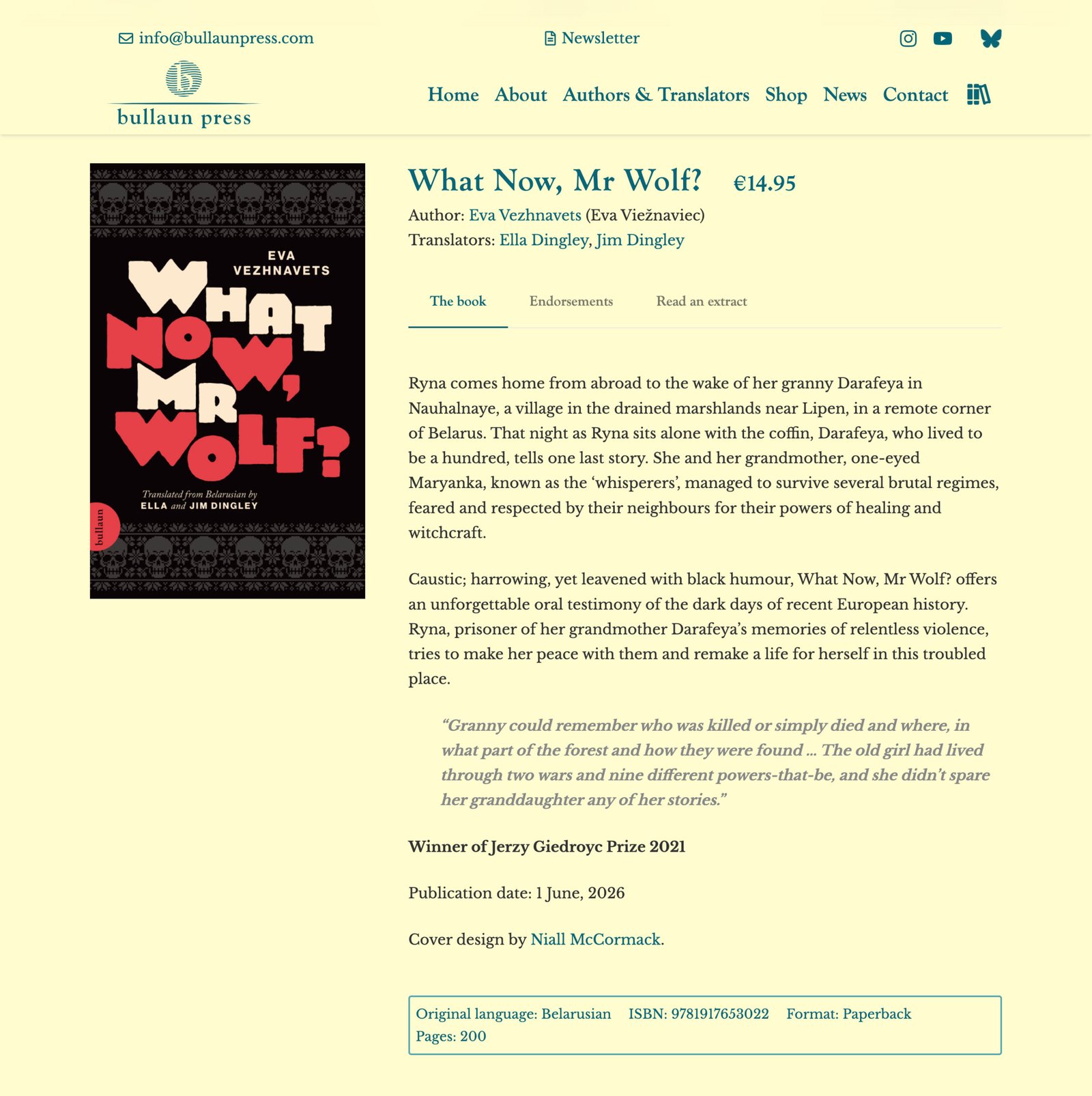
At the end of June they announced the longlist of the prestigious Wrocław Angelus Award for writers from Central Europe who, in their prose, raise the most important themes of modernity and deepen knowledge about the world of other cultures. In different years, the laureates of the prize were Sviatłana Aleksijevič, Jury Andruchovič, Siarhij Žadan, Marcin Połak and Milenka Jerhavič. Alhierd Bacharevič with his “Magpie on the Gallows” [Belarusian: “Сарока на шыбеніцы”] was shortlisted once. This year, the full list includes “Dances in the City. Three Stories” [Polish: “Tańce nad miastem. Trzy opowieści”] by Uładzimir Arłoŭ, translated by Bohdan Zadura, and “What Now, Mr. Wolf?” by Jeva Viežnaviec [Polish: “O wilku mówiono w izbie”], translated by Małgorzata Buchalik. “What Now, Mr. Wolf?” is also published in English, translated by Ella and Jim Dingley, by the independent Irish publishing house “Bullaun Press”.
When talking about the functioning of Belarusian literature at the international level, we should also add that the period under review was rich in publications of Belarusian literature in other languages. On June 14, Valzhyna Mort gave a lecture “Long Lines, Long Days” as part of the poetry festival in Berlin, which was later published as a separate book in English and German by the “Wallstein publishing house”, and at the Milosz Festival in Krakow she presented “Songs for the Dead and the Resurrected [Polish: “Muzyka dla martwych i zmartwychwstałych”] in Polish. Hanna Jankuta’s “Constitution” is also published in Polish by the “Warsztaty Kultury” publishing house. Also, “Search in the Museum” [Polish: “Przeszukanie w muzeum”] by Alhierd Bacharevič was published in the translation by Bohdan Zadura. The collection of contemporary Belarusian poetry has been published in the British online magazine Matter and in the Austrian Zwischenwelt, and meanwhile, a book of selected poetry by Jaŭhienija Janiščyc “Un ocell feréstec” [“Untamed Bird”, “Непрыручаная птушка” in Belarusian] has been published in Barcelona in Belarusian and Catalan, translated and compiled by Francisco Ruiz Soriano, who previously published Janiščyc in Spanish. The independent Roman publishing house WriteUp has published a Belarusian-German-Italian collection of poetry by Aleś Razanaŭ Sumus ne simus.
It is very important that thanks to the work of the cultural diaspora, Belarusian authors are translated into other European languages and find their foreign publisher and reader.
Reflection and awareness
In April, a book fair was held in Białystok, where several Belarusian publishing houses were represented, and in the last days of May, the International Book Fair was held at the National Stadium in Warsaw, where a joint stand of independent Belarusian publishers “Free Belarus” was organized. The highlight of the fair were meetings with Aleś Bialacki and the presentation of the book about him “Aleś”, released by the publishing house “Polackija labirynty”, as well as a meeting with Viktar Babaryka and the presentation of Sabina Bryło’s book “The Case of Viktar Babaryka”. On the last day of the fair, a meeting with Alaksandr Fiaduta “A Literary Scholar in Prison” was held, at which, among other things, his book “Lexicon of «Ears of Rye under Your Sickle»”, written in a pre-trial detention centre, was discussed.
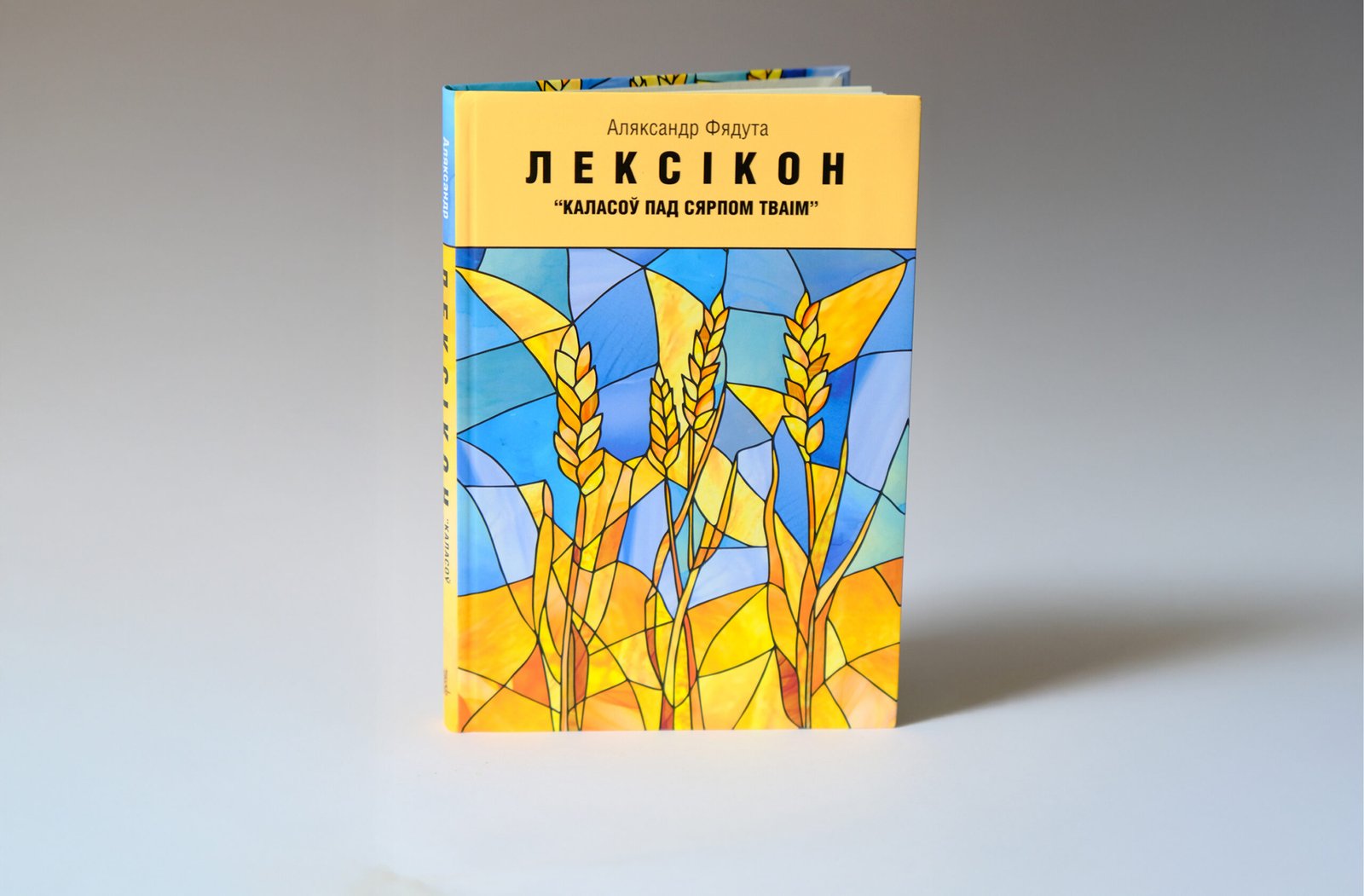
It is worth noting that now former political prisoners are entering the literary arena, having managed to write a book behind bars and release it, or, in more favourable conditions after their release, to reflect on their own experience, as well as the events in Belarus in recent years. In May, Pavieł Sieviaryniec’s book “Belarus is Sacred” [Belarusian: “Беларусь – гэта святое”] was published, the presentations of which took place in Vilnius and Warsaw; in June, Maksim Znak announced the completion of a new book “Colonists”; Alaksandr Fiaduta presented the aforementioned book about “Ears of Rye under Your Sickle” and gave lectures in Warsaw and Krakow about Philomath and Philaret societies. It is important that these literary events are woven into the general context of Belarusian events abroad.
Publisher and translator Zmicier Kołas continues to remain behind bars.
The crisis in which Belarus and Belarusian culture find themselves continues. At the same time, enough time has passed since its beginning to look at the events of recent years from a short distance. If in August-September 2020 there were many poems, then diaries (by the way, one of them – “When I Get Out of the House” by Hanna Komar – was recently published in English), now we are waiting for great prose that will comprehend what was happening at the proper artistic level. The most convenient and popular form for this is autofiction, for which we have the publishing house “Mianie niama”. It recently announced the release of the book “While I Was Looking for the Right Words” by Jula Arciomava, already known for the story “I Am the Revolution” (publishing house “Pflaŭmbaŭm”). The same publishing house is planning to release selected texts by culturologist Maksim Žbankoŭ “ShockingCult. Book of Changes” in July.
Festivals and book releases
June can be called the month of children’s festivals. The integration Belarusian-Lithuanian festival “Under the Magic Sky” was held in Viciebsk Street in Vilnius, organized by the Association of Belarusian Parents in Lithuania, in which Lithuanian and Belarusian writers participated. In Krakow, from June 27 to July 6, a nine-day children’s book festival was held, organized by the “Knižny vyraj” [Belarusian: “Кніжны вырай”] initiative.
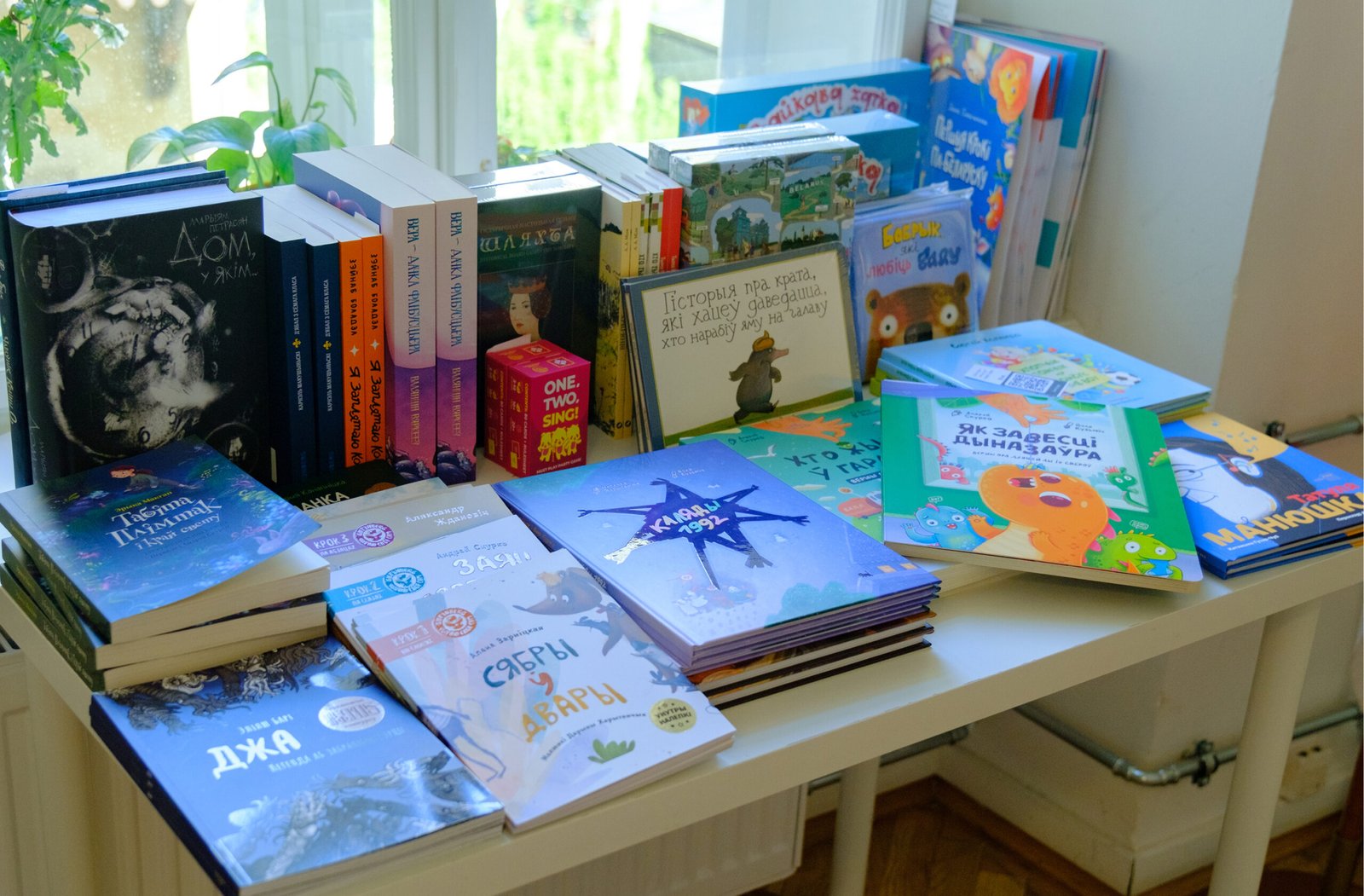
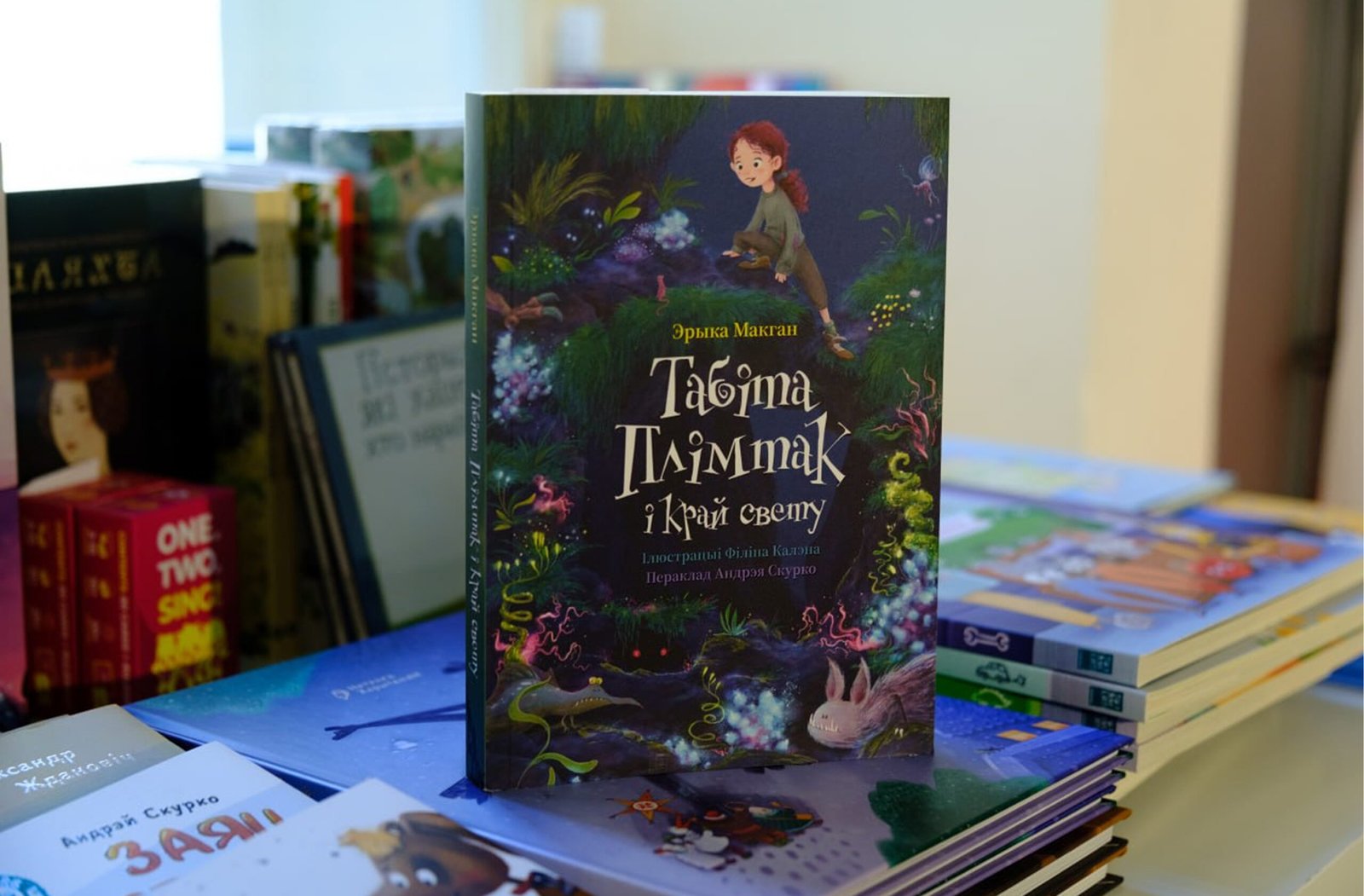
The programme included creative master classes, a performance by the “Cud” [Belarusian: “Цуд”] theatre, and meetings with illustrators and writers. The festival began with a meeting with Andrej Skurko, who spoke about the new “Gutenberg Publisher” edition – a book for children Tabitha Plimtock and the Edge of the World by Erika McGann. In general, this spring, “Gutenberg Publisher” pleased us with translations for children: “The House in Which…” by Mariam Petrosyan for an older audience, “Braids Take a Day” by Zainab Boladale and “Pate Plays Soccer” by Timo Parvela.
The “Pflaŭmbaŭm” publishing house has released a new translation into Belarusian of Sviatłana Aleksijevič’s “Second-Hand Time”, made by Kaciaryna Macijeŭskaja; the “Andrei Yanushkevich Publishing” has released a translation of Ayn Rand’s dystopian novel “Atlas Shrugged”; and the publication of the translation of Ray Bradbury’s “Dandelion Wine” has been announced for mid-summer.
In the last review, we did not mention the translation of Jean-Paul Sartre’s essay “Existentialism is Humanism”, which appeared in the London publishing house “Skaryna Press” at the end of March – we are correcting this omission now. Also in the spring, “Skaryna Press” launched the “Vilnius Series”, in which it is planned to publish the works of Belarusian authors from Vilnius. The first book in the series was Halina Vojcik’s memoirs about Vilnius “Where I am not” [Belarusian: “Там, дзе мяне няма”]. In May, the publishing house released the collection “Spiritus flat ubi vult. Poems 1945–1947” by Łarysa Hienijuš, the manuscript of which the poet created shortly before her arrest and deportation to the USSR in 1948. The manuscript was found 41 years later and prepared by Arnold McMillin and Alexander Nadson, and was published as a typewritten edition in 1992. The book that is being published now (compiled by Ihar Ivanoŭ) imitates the printing method and illustrations of the single copy that Łarysa Hienijuš put together and bound.
Meanwhile, in Warsaw, a new Belarusian point has sprung up at 6 Oleandrów Street: the offline bookstore Kamunikat Shop has opened. In May, a large-scale hacker attack took place on the Kamunikat website, the online library’s servers were wiped clean at night, and Belarusian special services claimed responsibility for it. Fortunately, the website and the library’s archive were restored. In early July, the publishing house released Viktar Šadurski’s monograph “Land Under Grey Wings” [Belarusian: “Зямля пад шэрымі крыламі”] about the coexistence and conflict between authoritarian rule and civil society in Belarus from 1996 to 2020.
Meanwhile, a new Belarusian publishing house, Bukinist:ka Press, has been established in Warsaw. The first book of the publishing house will be “You Have Such a Cute Accent” by Kaciaryna Oaro, about the experience of emigration and life of Belarusians in different European countries. Belarusian readers may recall Kaciaryna’s once-notorious book “Magpie Radio”, which deals with the inner workings of independent Belarusian media.
Outside Belarus, an extremely large number of diverse books are now being published, the number of publishing houses and their activity is impressive, but the question remains: how to make these books reach the Belarusian reader in Belarus? Due to the extremist status of most publishing houses and the ban on distribution, they remain inaccessible within the country. So far, there is only a Belarusian audience in exile, and ways are being sought to reach another, foreign audience. It should be noted that the translations of Belarusian authors into foreign languages, which we wrote about above, are largely the merit of both individual cultural figures and publishing houses that are trying to organize the literary process in rather unfavourable conditions.
Belarusian literature in Belarus
The publishing house “Mastackaja litaratura” released the 23rd volume of the collected works of Uładzimir Karatkievič, prepared by the editor Piotr Žaŭniarovič. Piotr can also be congratulated on the collection of poems “A Varied Interview” [Belarusian: “Размаітае сумоўе”]. From the authors of the older generation – Vasil Zujonak wrote poems about birds for the book “Winged Joy of the Earth: A Photo Story about the Birds of Belarus” with descriptions and photo portraits of birds. A new book of poetry “Tear and Stone” [Belarusian: “Сляза і камень”] was published by Ihar Babkoŭ, and a presentation is expected in July.
Among the unusual novelties within Belarus is “To Go with a Shot. The Kitchen of Belarusian Writers” [Belarusian: “Пад шот. Кухня беларускіх літаратараў”] – a recipe book by Kaciaryna Barysienka: sour pancakes by Andruś Horvat, potato pizza by Illa Sin, and Karatkievič-style coffee by Adam Hłobus. Hłobus himself published a book of essays “Stars. Words about Masters of Culture” about the fates of famous creative figures from Shakespeare to Bartkievič. It is also worth noting several children’s books: “Tales of an Old Summer House” [Belarusian: “Казкі старога лецішча”] by Maryja Vajciašonak, “Adventures in the Enchanted Castle” by Darja Mandzik, and a book of folk tales “Baj Was Walking” [Belarusian: “Ішоў Бай”] edited by Juryj Paciupa and artistically designed by Maja Piejchvaser.
In April, the National Library hosted the two-day XXII International Bibliographic Readings, a scientific conference dedicated to the history of book culture. However, there is very little information about the full list of participants, reports, and topics discussed in the public domain. This is quite telling: any media attention to book events in Belarus is undesirable, which creates the illusion of cultural life being put on hold.
Thus, this spring, children’s literature, essays, and poetry were published in Belarus, but there is no long-form prose. One hopes that authors in Belarus are now writing it “for the drawer” because they cannot express themselves about certain things here and now.
Cinema: Victory in Krakow and the ubiquitous “extremists”
A Belarusian creator won at the famous festival. Film censorship is rampant in the country. The Russian industry is absorbing Belarusians.
The end of spring and the beginning of summer were marked by rich cinematic events – both in Belarus and in the diaspora. Another thing is that there were very few premieres among these events. Mostly on the news – screenings, competitions and participation in film festivals. Let’s start with the latter, because Belarusians receive high-profile international awards very rarely.
Festivals and competitions
Belarusian Alexandra “Sasha” Kutsen received the “Złoty Lajkonik” [“Golden Hobby Horse” – literally] prize in the Polish competition of the Krakow Film Festival (31.05. – 07.06.2026), one of the most prestigious and oldest film festivals in Europe. The fourteen-minute film “Wszystkie miały na imię Anżelika” (“They were all called Angelica”) was awarded by the jury with the wording: “For a colourful and honest story that is moving, a story about how the pressure of success is a prison, and freedom is the right to make mistakes”.
“They Were All Called Angelica” is the second film by Alexandra “Sasha” Kutsen as a director and screenwriter. Her debut in cinema was the academic work “Przegryw” (“Loser”) (2024). The author graduated from three courses of the Warsaw Film School in directing and editing classes, is engaged in photography, collage art and animation, had several exhibitions, and creates music videos. “They Were All Called Angelica” is “a portrait of today’s reality, told through a simple female story”. The film was created in the most modern visual language and became the first winner of the Krakow Film Festival for the Warsaw Film School.
It should be added that the value of the Krakow Prize is also in the fact that the festival is a qualifying event for the further participation in the application for the most prestigious prizes of the American (“Oscar”) and European Film Academies.
While the film by Alexandra “Sasha” Kutsen was created by a Polish team, the eight-minute “The Final Test” [«Апошні экзамен» – Belarusian] was made exclusively by Belarusians – director and screenwriter Jaŭhien Łytkin, producer Dzianis Ivanoŭ, actors Aleh Harbuz, Sviatłana Zielankoŭskaja and Alaksiej Burnasienka. At the end of May, the film took part in the short film competition of the 23rd famous regional film festival Neisse Nysa Nisa, which takes place in the tri-border area of Germany, Poland and the Czech Republic. The film about a school teacher who finds herself faced with a difficult moral choice was shot in Poland, but its production is marked as joint: “Belarus – Poland”.
Belarusians from the diaspora are increasingly becoming part of international filmmaking teams. For example, Siarhiej Kałasoŭski and Jahor Jafimaŭ worked in the team of the Ukrainian feature-length documentary “We Are Going Home” [“Jedziemy do domu”] (2025) (directed by Siarhei Marchyk, Marchello Production). In April, the film was presented at the representative festival Visions du Réel in Nyon, Switzerland. Previously, it participated in the programmes of the famous festivals DOK Leipzig and Mastercard OFF CAMERA in Krakow, and was also presented in the IDFA Docs for Sale industry programme in Amsterdam.
Three Belarusian films participated in the GoEast festival in Wiesbaden, Germany, in April, a film festival focusing on the post-socialist space and where Belarusians are traditionally present. The film “I Was Called to the Ball” [«Мяне запрасілі на баль» – Belarusian] (2005, independent studio “Tatjana”), dedicated to disappeared Belarusian opposition politicians, and “Handbook” [«Нататнік» – Belarusian] (2021) by Pavel Mozhar, which tells about the torture of protesters in Belarus in 2020, took part in the Symposium programme. And Vera Shysh’s animation “Transmission” on the topic of political prisoners was shown in the goShorts – Revolutions per Minute section.
Grants and crowdfunding
Belarusians are also actively participating in industry events, seeking cooperation and funding for their projects. Over time, these efforts have begun to bear fruit.
The NO PROBLEMO MUSIC Award in the Doc Lab Poland programme of the Krakow IFF and 10,000 PLN for consultations and acquisition of copyrights for music were received by Janusz Hawryluk, the creator of the Polish Belarusian film festival “Bulbamovie” and the editor of BelsatDoc, for the project “The Last Dog”. Just a few weeks before this, Janusz Hawryluk’s social networks were recognized by the Minsk regime as “extremist”.
Belarusians are also actively participating in industry events, seeking cooperation and funding for their projects. Over time, these efforts began to bear fruit.
Andrej Kašpierski and Alaksiej Pałujan received funding from the Polish Film Institute (PISF) for their upcoming feature-length projects “Judgment of the Dead” [«Суд мёртвых» – Belarusian] and “Legacy” [«Спадчына» – Belarusian]. For filmmakers in the diaspora, these decisions by the PISF became an important precedent, as Belarusians had not previously received such strong support.
Alaksiej Pałujan also received the Berlinale Talents Lab award for his project about the war in Ukraine and surrogacy, “Incubator”. The Belarusian author, who lives in Germany, was personally presented with the award in May by the German master of auteur cinema director Tom Tykwer. This happened in Cannes, during the film festival.
Other Belarusians still have to try to find financing. For example, the team of the future film organized a big event in one of the Warsaw cafes. The goal was to raise funds and launch a crowdfunding campaign to shoot a film about Minsk photographer Johnny Cosmic (Ivan Smalar). The director of the project, a famous documentarian Maksim Švied, and his team hope to shoot a large-scale feature film about the changes that are happening to Belarusians in emigration with the help of caring sponsors.
Premieres
However, Belarusians are not always only recipients of aid. On April 8, the Vilnius art cinema Skalvija hosted the premiere of the documentary film “Bialаcki / Unbroken” by Lithuanian director Ejmantas Bialitskas. The film tells the story of Belarusian human rights activist and former political prisoner Aleś Bialacki. It was created by a Lithuanian team of filmmakers based on a script by Belarusian journalist Aleksandryna Hłaholeva and was released with the support of the Art Power Belarus programme.
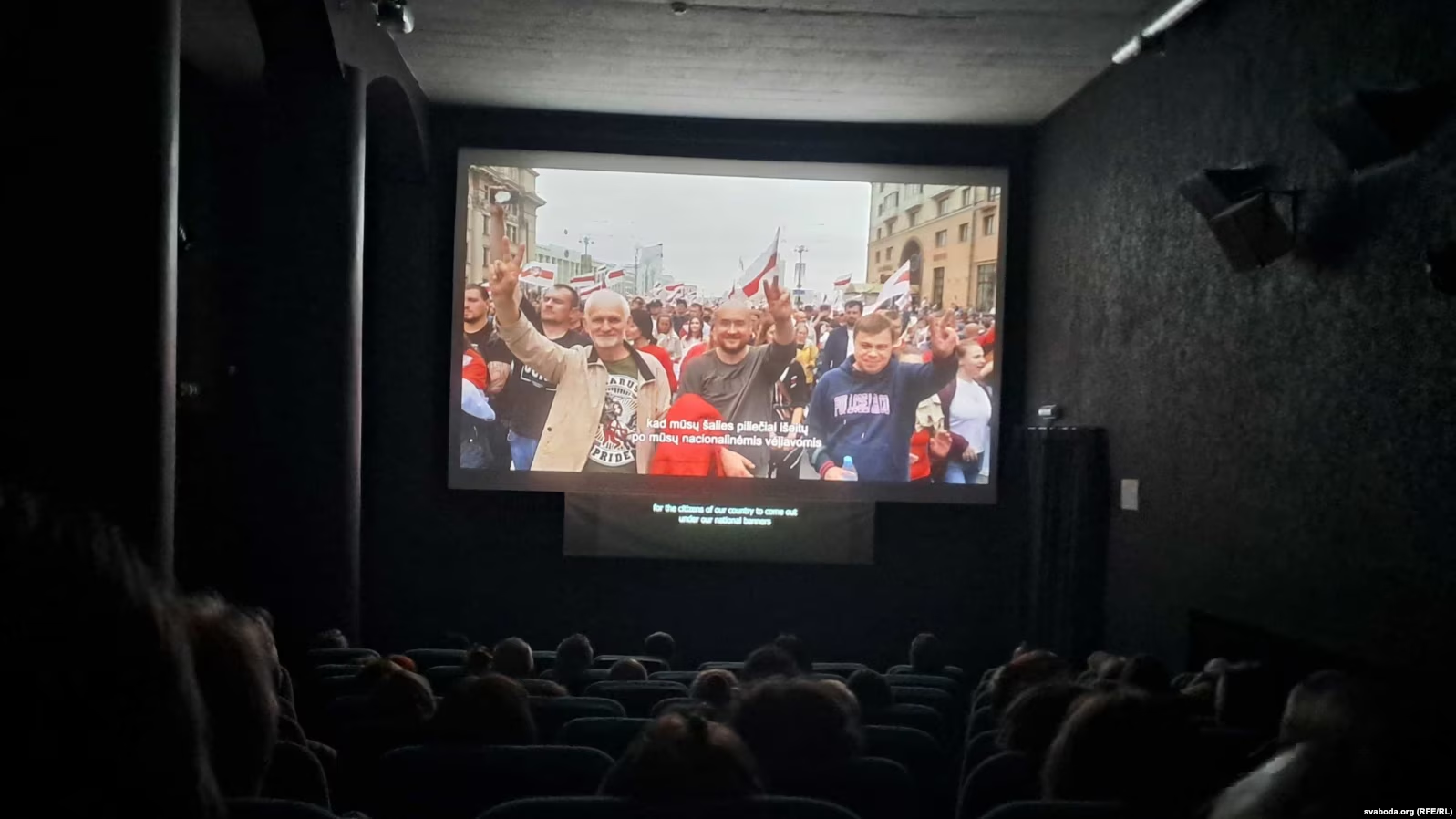
Another premiere project supported by ArtPower Belarus – Taćciana Haŭrylčyk’s documentary “Language Partisans” [«Моўныя партызаны» – Belarusian] – can be viewed on the VODBLISK online cinema page. The platform continued its work on showing independent Belarusian cinema after a break. Taćciana Haŭrylčyk’s film tells the dramatic story of Belarusian activists Alina Nahornaja and Ihar Słučak.
The next online presentation is entirely his own – after last year’s premiere in the out-of-competition programme of the documentary film festival in Igláva, the Czech Republic, Mikita Łaŭrecki posted a ten-hour montage film “Ulysses” online, composed of public video diaries by Minsk director Rusłan Zholič.
It should be noted that for the filmmakers cut off from the possibility of filming in Belarus itself, creating films edited from Internet videos is, to some extent, a way out.
The most high-profile and advertised in pro-government media premiere in Belarus was the Belarusian film “One for Two” [“Одно на двоих “ – Russian] by director Ivan Paŭłaŭ. This biopic tells the story of Belarusian military pilots who tragically died in a plane crash in May 2021. The film tries to promote the propaganda image of a “man in uniform” who is always ready to sacrifice his life in case of official necessity.
The security forces are in charge
Meanwhile, it is from the security forces that threats and accusations are being made against Belarusian filmmakers.
On June 16, the YouTube project “ChinChinChannel” and its social media accounts were recognized as an “extremist formation”. In addition, the Instagram account of Michaś Zuj, one of the project participants, was declared “extremist materials”. By the same court decision, the Instagram account of the founder of the Bulbamovie festival and BelsatDoc editor Janusz Hawryluk was also added to the list of “extremist materials”.
The following films were included in the list of “extremist materials”: “The Road to Kurapaty” [«Дарога на Курапаты» – Belarusian], filmed back in 1990 by Michaił Ždanoŭski at the “Letapis” studio of the National Film Studio “Belarusfilm”, and the Polish film by Krzysztof Lukaszewicz “Viva Belarus!” [«Жыве Беларусь!»] from 2012. Both are available online and have long been under the de facto ban of the Belarusian authorities. A number of other films and TV programmes dedicated to Belarusian history have also been included in the definition of “extremism”.
The unreasonable and unexpected ban of the successful continuation of the Hollywood franchise “Scary Movie 6” to be released in Belarus seems absurd. Despite the fact that even in Russia its release (pirated, like all the films of major Hollywood companies after the start of the full-scale war in Ukraine in 2022) started on time and is making a good profit at the box office.
“Never hinder the work” of propagandists
Television functionary and Minister of Information Marat Markaŭ, who unexpectedly replaced actor Rusłan Čarniecki as Minister of Culture of Belarus on April 9, has promised, like his predecessors, to pay special attention to cinema. This was allegedly ordered by Alaksandr Łukašenka himself upon his appointment. The new minister promises to “never hinder the work of creators”. How this promise fits in with the desire to see Belarusian filmmakers as exclusively fighters of the ideological front is completely unclear.
So far, state-owned Belarusian documentary cinema is marked by propaganda campaigns such as “National Anthem of the Republic of Belarus”, “Chernobyl. The Living Land”, which were released in April-May and are shown at special lectures for students and state employees. And feature films were marked by the release of the aforementioned “One for Two”.
As for new works, the competition of the National Film Studio “Belarusfilm” for film projects for 2027–2028 is ongoing. As can be seen from the list of desired topics, which potential authors are limited with, with the exception of children’s films, we are talking about agitation and propaganda films.
The state policy of propaganda in cinema is confirmed by the Ministry of Culture with its script competition. According to the plan, the future feature film will be dedicated to the “110th anniversary of the Armed Forces of the Republic of Belarus”. Among the options for topics that authors can choose is such a symbolic one for our time as “Deployment of a group of Belarusian troops on the western borders to prevent potential aggression by NATO countries in 2020”. The goals of propaganda have completely taken over the production of state genre cinema. For example, the series “Classics in Retirement” is dedicated to the “Year of Women” declared by Alaksandr Łukašenka, and its shooting is being conducted by “Belarusfilm” together with the ONT channel.
The creators of the “mystical fantasy” series “Voice of the Heart”, which the National Film Studio is already filming together with STB, are much more ambitious. The channel’s executives promise “the level of Netflix”, and in parallel they have plans for another series, this time “on a military topic”. Only the young Kirył Chalecki stands out from the general patriotic-ideological row. The author of the ideological fable “Class teacher”, which was promoted by the state media last year, has started work on the film “Afghan Box” based on the children’s book by the modern Belarusian author Andrej Fiedarenka.
The influence of Russian industry is growing
Meanwhile, according to the Russian resource “BK-Media”, Belarus with a box office of 5.29 million dollars and 1.53 million viewers is one of the largest markets in the region after Kazakhstan and Kyrgyzstan. 2025 was noticeably more difficult for the country than 2024: revenue fell by about 17%, and attendance by 15.5%, returning to the level of the beginning of the decade. The top 30 releases are formed by a mix of Hollywood and Russian content with an almost complete absence of national cinema.
It is not surprising that many ambitious and energetic Belarusian filmmakers are increasingly in demand not by state propaganda, but are trying to merge with the Russian film market.
Thus, the creators of last year’s colonial-style comedy “Draniki” – Minsk residents Andrej Lipaŭ and Maksim Maksimaŭ – have begun shooting a new film about break-dance “Salta Morali” in Minsk, which involves both Russian and Belarusian actors. Work has also begun on the second part of the successful film “My Dad is a Bear”, produced by the same Minsk residents. Their company “KinoCeh” has recently begun a frenzy of activity in creating cheap, primitive stories made according to standard Hollywood templates.
On June 25, the family comedy “Unpacking” was released in Russia, starring the extremely popular Russian-language blogger from Belarus, Uład Kabiakoŭ. The portfolio of Minsk producers also includes a new film “Not Alone at Home 3”, directed by Belarusian Mitry Siamionaŭ-Alejnikaŭ. However, the latter for some reason did not get into Belarusian distribution. Mitry Siamionaŭ-Alejnikaŭ, meanwhile, began shooting the fairy tale film “Pig Funtsik”, designed for the Russian market.
Minsk producers are shooting a cheap product, completely focused on the undemanding Russian audience. There is no national component in their films, and the films themselves are positioned as exclusively Russian productions.
The current dependent state of Belarusian cinema and film education in the country is also demonstrated by the decision of the Russian authorities to recruit students to a separate Belarusian workshop at the All-Russian State Institute of Cinematography (VGIK) in 2027–2028. This effectively returns to the practice of the USSR, when “national” workshops were organized at Russian creative universities, preparing personnel for the provinces of the Soviet empire.
As for cinema in the country itself, which is not dependent on state funding, in June events of the Kinokollider, Synopsisfest and “Kinoclub 49” initiatives were held in Minsk, with great interest from those present and almost no advertising. And from June 12 to July 31, the Memorial Museum-Studio of Z. Azgur will host traditional screenings of world film classics of the cultural and educational project “Kinomekhanika”, developed by the «Cinemascopeby» project.
Thus, Belarusian filmmakers in exile have been actively working in recent months, mainly on Belarusian political and social issues. At the same time, they are gradually, albeit slowly, integrating into the general European and world film process. Filmmakers do not rely only on help from the countries in which they work, but are looking for international funding. Belarusian independent cinema and cinema about Belarus is also successfully financed with the help of the ArtPower Belarus programme.
In the country itself, there is almost no space for free creativity. The state sticks to its guns of turning cinema into an appendage of the propaganda machine. Meanwhile, the Belarusian film space and creative resources are actively used by the Russian industry.
Theatre: The leadership is dominated by security forces, and the repertoire is war. But there is also something good
Already in four major capital collectives, people from the police and the KGB have become directors or their deputies. New productions about the Second World War are constantly appearing in the repertoire. It is becoming increasingly difficult for young domestic creators to make their way in their homeland. But after a long break, director Ihar Kazakoŭ was allowed to stage plays in Belarus, Belarus Free Theatre reached Paris, and a festival of modern Belarusian drama was held in Warsaw.
The security forces are in charge
The domestic theatre is increasingly coming under the control of the security forces. Until recently, the only person who came from these institutions – and with a public biography – was ex-military man and ex-member of the Council of the Republic Ihar Hiedzič, who headed the Hrodna Drama Theatre as a director in 2012-2025. But recently, more and more details have begun to emerge that show how systematically the authorities have taken over the theatre sphere.
In 2023, police lieutenant colonel Vadzim Martysievič became the deputy director of the Opera and Ballet Theatre. It was he who tried to organize a trip of the theatre’s ballet troupe to occupied Crimea last year. However, fortunately, thanks to publicity, this tour did not take place.
In 2024, the position of deputy director for security, regime and personnel of the Gorky Theatre was taken by Juryj Pietrašeŭski, a police lieutenant colonel who was the deputy head of the internal affairs department of the Miadzieĺ District Executive Committee. In the same year, a similar position at the Belarusian State Puppet Theatre was taken by Viačasłaŭ Leanienka, a police major who previously worked in the security sector. This year, he was appointed director of this popular collective.
The media drew attention to two more security officers. First, another deputy director of the Opera and Ballet Theatre (this time for ideological and social work) is Dźmitry Kisły. In the past, he was the head of the centre for cultural and educational work of the Ministry of Internal Affairs, another lieutenant colonel of the police. Apparently, he took up this position in February 2026. By the way, Martysievič remained in his chair, so today there are two security officers in the leadership of this team.
Secondly, Lieutenant Colonel Viktar Druzik, formerly the head of the KGB’s own security department, became the deputy director of the state Janka Kupała Theatre. Thus, four major capital theatres (the Opera and Ballet Theatre, the Janka Kupała Theatre, the Gorky Theatre and the Puppet Theatre) are already run by the people who have come from the police and the KGB. We can say that theatres are turning into a sinecure for former security officers. And this, unfortunately, clearly reflects the atmosphere of the era. It is noteworthy that in the 1990s the Opera and Ballet Theatre was a breadbasket for retirees from the Ministry of Culture – as they say, feel the difference. So far, the authorities have started with individual capital theatres. In the future, it will be clear whether other domestic theatres will face a similar fate.
Kazakoŭ is back, but other Belarusians won’t make it
This time, personnel changes took place only in the New Drama Theatre. The recently appointed director Natalla Bašava made Juryj Papoŭ, until recently unknown to anyone in Minsk, the artistic director. Relatively recently, he moved to our capital, became a course master at the Academy of Arts, and also staged the play “Circles on the Water” at the Chamber Drama Theatre (a private project of Bašava). He had previously staged a production with a similar title in Seversk, Russia, in the Tomsk region.
The rhetorical question arises again: why does Belarus need another Russian director when we have our own specialists? Even the New Drama Theatre has Lizavieta Kalinoŭskaja (formerly known as Lizavieta Maškovič) on staff. Director Alaksandr Barodka was also there. Apparently, he was fired to make way for Popov – there is no mention of him on the website.
Against this background, Belarusian Alaksiej Dziamidčyk, who worked in Russia for some time and received a decent education there, complained on social media that – despite his attempts – he was unable to receive invitations to prepare productions in domestic theatres.
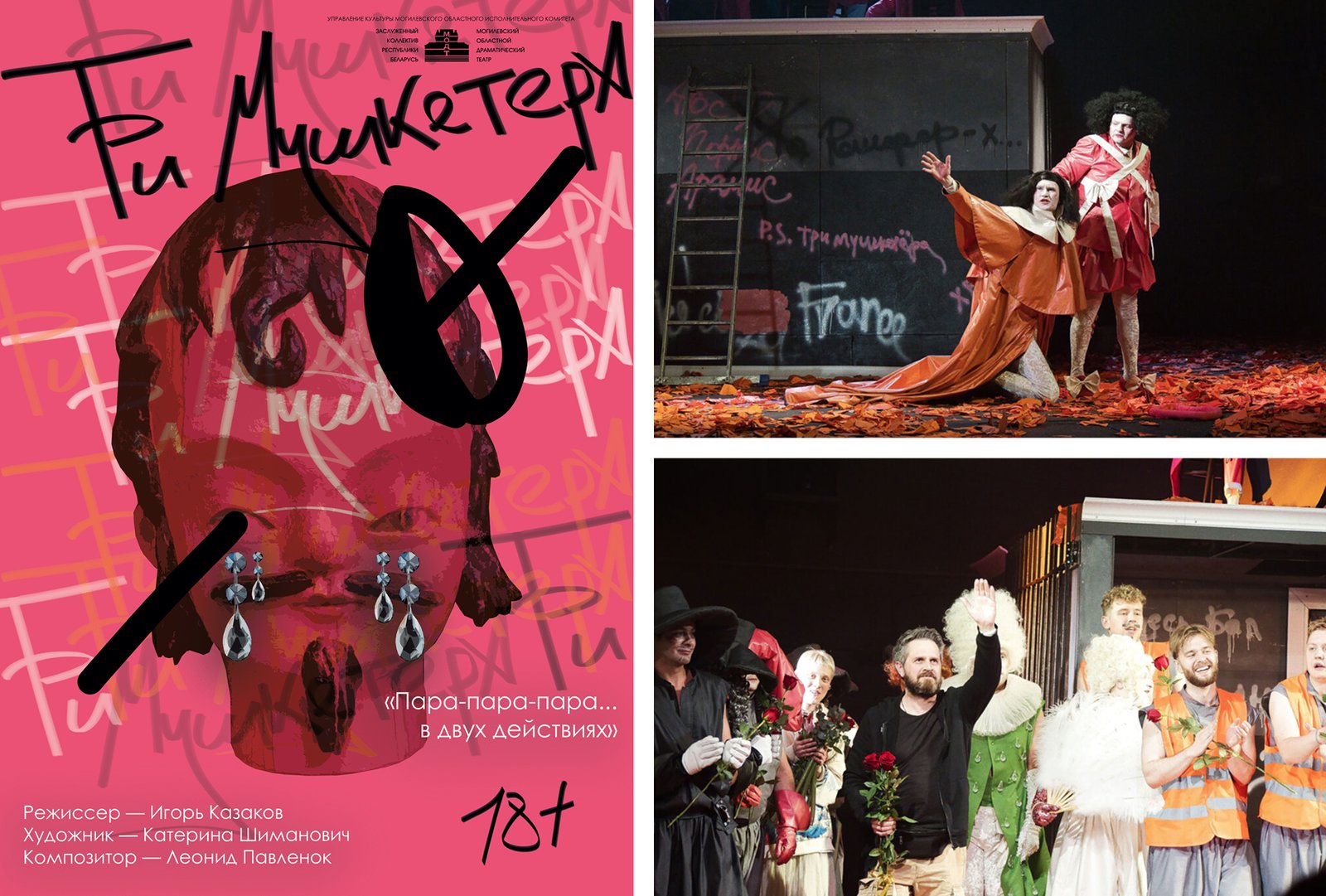
Naturally, there are also pleasant exceptions. For example, director Ihar Kazakoŭ, one of the stars of the 1990s, who had been forced to work in Russia for the past five years, has returned to the Belarusian theatre scene. In April, he staged “Uncle’s Dream” at the Brest Puppet Theatre, and in May, the farce “The Three Musketeers” at the Mahilioŭ Drama Theatre. In the latter case, the artist Kaciaryna Šymanovič worked with him on the production. She also made a name for herself in the 1990s, collaborating with the Janka Kupała Theatre, and also disappeared from domestic posters for a long time. One would like to hope that they – and not only they – will receive new invitations. And Kazakoŭ’s return in itself means the return of competition – until recently, the monopolist Jaŭhien Karniah actually tried to outdo himself, which did not always benefit both himself and, globally, the entire Belarusian theatre.
Returning to the parallel with the Dziamidčyk, we state: Ihar already has a name, Alaksiej does not yet. But how to win it over, if the theatre management chooses the “Varangians”, is unclear. Although, it is obvious that there are no orders to invite representatives of Russia to their place. This is exclusively the initiative of the management. As a result, it is extremely difficult for locals to break through.
Imagine that you were asked to mention the names of domestic directors who were talked about (or at least whose work began to be discussed) precisely in the twenties. But who should you mention? Choreographer Kirył Bałtrukoŭ. Director Kamila Chusainava (she was born in Kazakhstan, but returned to Belarus as a child). Students of Siarhiej Kavalčyk at the Gorky Theatre. Perhaps someone else (we keep in mind that Tatiana Sambuk from the Youth Theatre is Russian). But (almost) all the others began to stage in the 2010s or even earlier, they are far from being nonames.
However, it happens that creators also fulfill their potential outside the state system. For example, we are talking about the Puppet Batlejka Theatre “House of Dreams” [«Дом з марамі» – Belarusian], which already has five performances in its repertoire. True, they are lucky in that they are newcomers. But the famous Viačasłaŭ Inaziemcaŭ – even though he denied the information about the closure of his theatre group “Inzhest” – has not been able to show performances for a long time.
No way without war
“There are heroic-patriotic creative works in the repertoire of every Belarusian theatre,” states the newspaper “Kultura”. Indeed, domestic groups are forced to remain true to the course of depicting the events of World War II. And in practice, everyone is getting out of it as best they can.
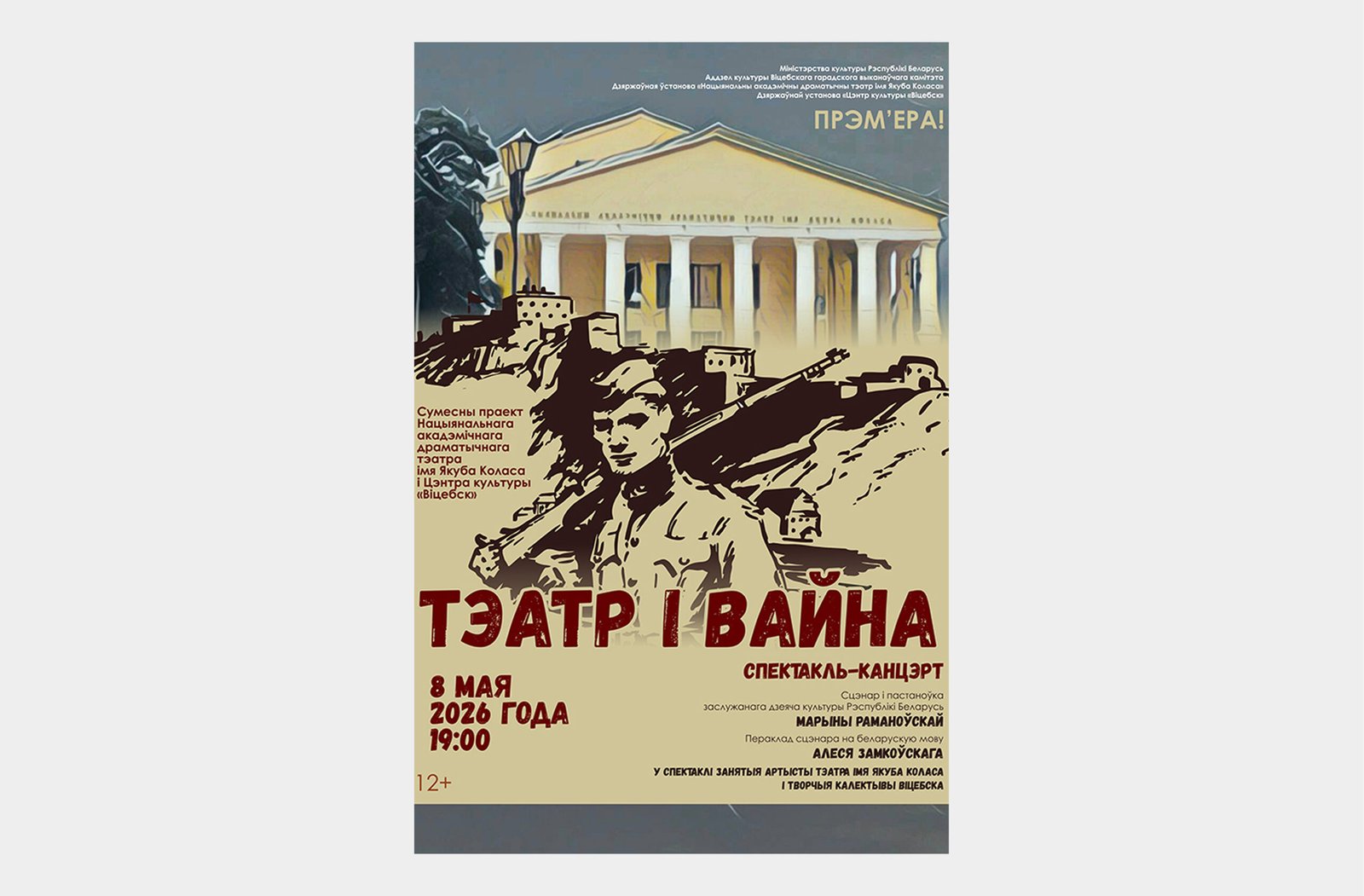
Natalla Bašava is moving the classic of socialist realism – “The Young Guard” by Alexander Fadeev – to the New Dramatic Theatre, and she has previously staged it at the Academy of Arts. The Mahilioŭ Regional Drama Theatre is staging “Tribunal” by Andrej Makajonak, while the Viciebsk Kolas Theatre is linking the military theme with the 100th anniversary of the collective in the performance-concert “Theatre and War”. In the Gorky Theatre, a production of “We Are from the Future”, based on a popular Russian film in the 2000s, is being prepared. In Babrujsk, a spectacle based on a play by modern writer Taćciana Siviec was staged, etc.
One can only guess about the attitude to this topic. Modern Belarus is not the place where such thoughts can be voiced. That is why it is so interesting to watch teenagers who are not yet familiar with the rules of the game. At the end of May, the capital’s theatre of the Belarusian army hosted a performance of “Don’t Leave Me”, dedicated to the events of World War II. Ninth-grade schoolchildren were herded there, who as a result actually disrupted the performance. The ill-mannered behaviour of certain teenagers and the lack of an appropriate response from teachers influenced this. And such a performance is the least suitable for celebrating graduation. But it remains to be stated: the events of the war in the form in which they are depicted on the stage of domestic theatres are not interesting to children.
Compared to World War II, Belarusian themes (speaking of national classics, other historical events) are unfortunately addressed much less frequently. “We see romanticized images. Yes, they are related to the Belarusian village, but there was no goal of delving into the national context here, because a love triangle came to the fore”, writes “Zvyazda” about the premiere of “People on the Swamp” at the Youth Theatre (directed by Tatiana Sambuk). It is a rare case for the state press when problems in the production are openly addressed.
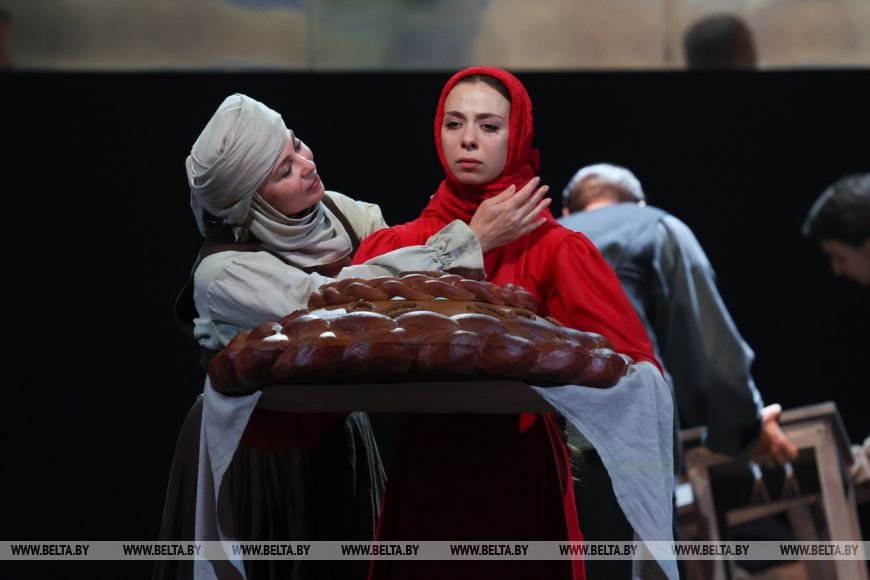
But at least this performance is in Belarusian (as is “The Black Castle Alshanski” in the state Janka Kupała Theatre, based on Uładzimir Karatkievič’s novel). The opera-ballet, dedicated to ancient national history, is still being prepared for the performance at the Opera and Ballet Theatre. But it is already known that the libretto will be in Russian, and the text of the latter, the author of which was unexpectedly the rector of the Academy of Public Administration, archaeologist Dzianis Duk, is nothing but trash. The verse lines are extremely pathetic, and the Polack princess Rahnieda, according to him, loves her rapist husband.
Events in broad strokes
A significant event for theatrical Belarus was the holding of the third stage of the International Theatre Acoustic School for the CIS countries and Georgia at the RTBD venue. This project brings together directors, choreographers, playwrights and actors from our country, as well as from Moldova, Russia, Tajikistan and Turkmenistan. The programme includes lectures, master classes and practical rehearsals-trainings. The head of the school is the outstanding Russian director Viktor Ryzhakov, whose “Hairdresser” was brought to Minsk in the 2000s for the main festival “Panorama” (later TEART replaced it).
Naturally, in an ideal world, we would like to have contacts not with representatives of Central Asia who are far away from us in every respect, but with Lithuanians or Poles who are close to us in every relation. But let’s be realistic – in the current conditions, this is the maximum that is allowed. And courses from Ryzhakov, who has not tarnished his reputation in recent years, are a good opportunity for professionals to raise their level in the conditions of semi-isolation in which the domestic theatre exists today. Paradoxically, now the renewal of our theatre largely depends on what trends will reach us from the east. For others, the political climate is not yet right.
Now to the finances. Salaries in the theatre remain low. After a long break, there is an occasion to name specific figures. For example, in the capital’s New Drama Theatre, the basic salary of an actor is only 143 rubles more than that of a cleaner, and almost the same as that of a stage technician (an actor can receive up to 1.3 thousand rubles). A theatre engineer – 1-1.5 thousand rubles. For comparison: in Warsaw, an ordinary stage technician earns the equivalent of 4 thousand rubles (in addition, for appearances on stage, you can receive another 470).
In this regard, it would be appropriate to mention the statement by Viera Palakova-Makiej: she shared the details of how she became the director of the Youth Theatre in April 2022. She admitted that she set two conditions. Her theatre will not have an artistic director and she will be the only one of all the directors to have a flexible schedule (Palakova-Makiej planned to continue her acting career). The artistic level of the Youth Theatre has recently been raising questions, but the promotion is at a high level. They say behind the scenes that salaries have also increased. But the question is: could other directors afford such liberties? Obviously not.
The RTBD went to China again – in Shanghai, the play “Evening” was shown, which turned out to be in demand after the performances in December 2025. And in the Janka Kupała Theatre, artificial intelligence was used to create the music for the production of “The Black Castle Alshanski” – perhaps for the first time in Belarus.
Successes of emigration
Belarusian theatrical emigration traditionally develops in the West and the East. With the only difference being that “Europeans” live in their countries permanently, while “Russians” can come there to work “on a shift basis”. In Russia, several significant Belarusian creators have received recognition at once. Former Janka Kupała Theatre actress Julijana Michnievič, who resigned in 2020, was nominated for the main Russian television award TEFI – this is how her role in the series “The Kuznetsovs TV” was recognized. For Michnievič, as well as her colleague Pavieł Charłančuk, casting in series became a means of earning money and an opportunity to stay in the profession. And the production of the Yekaterinburg Puppet Theatre “Zoyka’s Apartment” (director Ihar Kazakoŭ, set designer Taćciana Niersisian) received the Russian “Golden Mask” as “Best Puppet Theatre Performance”.
The western direction also turned out to be active. Having shown the premiere of the play “Minsk Sea” in the spring, “Kupałaŭcy” do not stop. At the end of June, the premiere of their production “Next Stop” based on the works of the “people’s detective” Kamiła Cień (directed by Alaksandr Harcujeŭ) took place in Warsaw. Again in Warsaw, By Teatr presented the plastic play “Voices of the Odyssey” [“Głosy Odysei” – Polish] about the history of war, exile and memory. The actors were the graduates of the theatre studio of this collective.
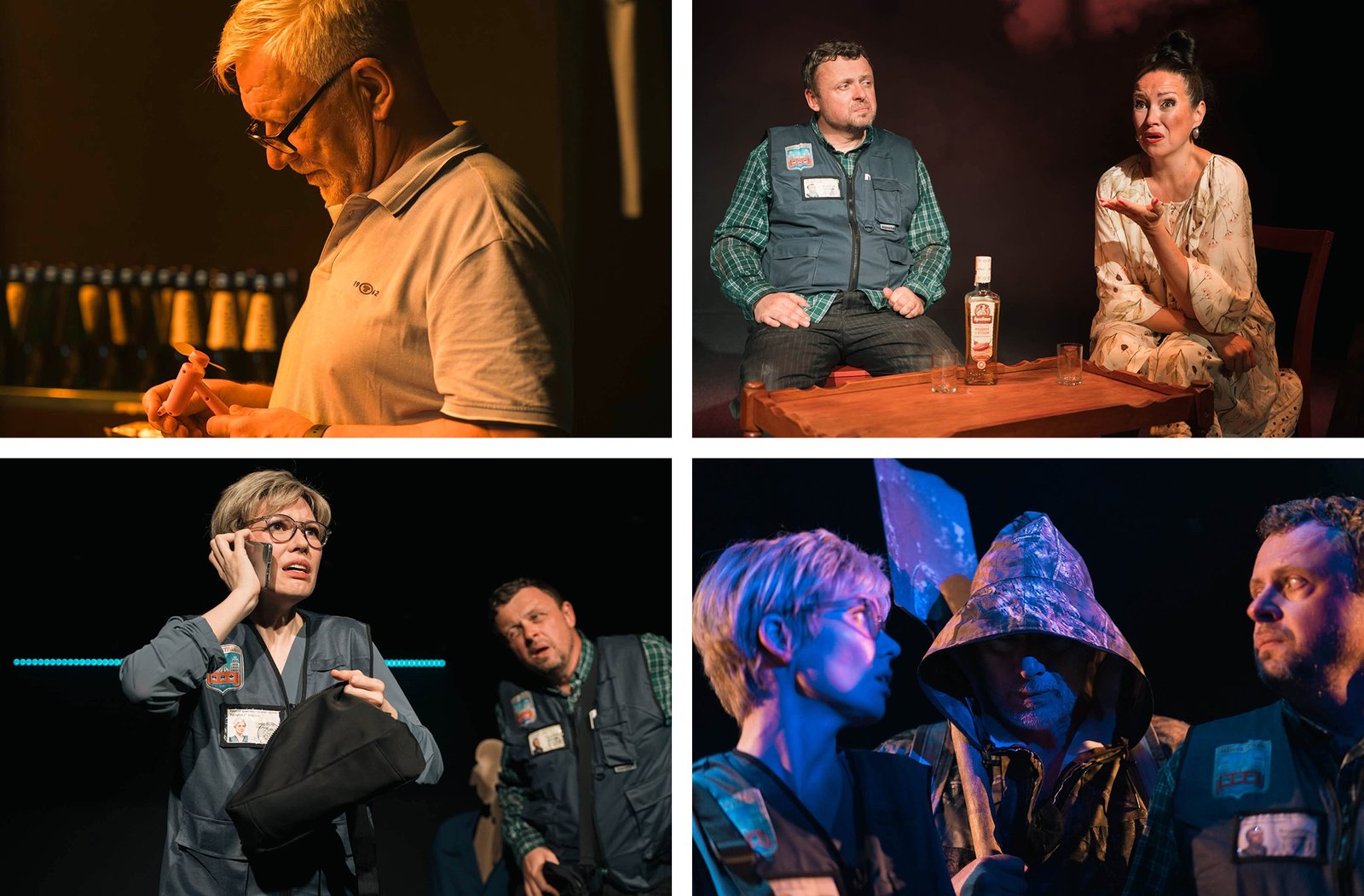
The Polish capital also hosted the festival of modern Belarusian drama “Dramatyzacja”. Its art director Valancina Maroz recalls that a similar competition – WriteBox – was held in Minsk in the 2010s, but it is currently suspended. Currently, due to censorship, relevant Belarusian texts do not get on stage at home. And there is a shortage of them abroad. The festival set a goal to fill this void.
The goal was achieved. The winner was Renata Tałan’s play “Limb” – a highly topical and at the same time timeless work, the heroine of which is forced to pay the final respects to the deceased, unknown to her, instead of their relatives who have left the country.
“Limb”, as well as four other plays that were shortlisted, were embodied during performative readings. This helped to present the plays to the audience, discuss their issues, and for the directors – Ženia Davidzienka, Alaksandr Jendžajeŭski, Bažena Šamovič and Kirył Mašeka worked on the readings – to immerse themselves in the material. Perhaps in the future the readings will develop into full-fledged performances.
Director Juryj Dzivakoŭ staged a surrealistic play for children, “Ucho”, at the Gulliver Puppet Theatre in Warsaw. The children’s theatre “Banana”, created by former actress of the Hrodna Drama Theatre Lizavieta Milincevič, is now also working for this audience.
Belarusian themes remain relevant in other countries. The play by the Belarus Free Theatre “KS6: SMALL FORWARD” was shown in Paris, starring basketball player Kaciaryna Snycina.
Music: cancellation of major festivals and emergence of new ones
Belarusian music continued to develop in its usual vein from April to June. Maks Korž packed European stadiums, Alaksiej Chlastoŭ served 14 days for hooliganism, and Siarhiej Michałok was charged under two articles of the Criminal Code.
Storms of concert life within the country
From April to June, the Belarusian music scene in the country was in turmoil. Already in the first half of the year, it became known about the losses of major festivals, including Lidbeer. But later the organizers wrote that the festival would still take place. It will be held on August 29. By the way, the first batch of tickets flew away even before the first participants were announced. Among the Belarusians this year, Kas and IODO BAND have so far been announced.
Much less lucky was the festival dedicated to Kupalle/Kupala Night, which was supposed to take place on June 28 in the Dukorski estate. It was cancelled after a post on social networks, where a Belarusian complained about the poor conditions of keeping animals in the complex. Among other things, the techno rave in the Bielaviežskaja Pušča National Park, where Police in Paris were announced as the headliners, was postponed due to complaints. The event was supposed to take place on April 18, but as a result it was scheduled for August 28.
The organizers themselves explained that the postponement was not related to the scandal on social networks. They say that the rave is expanding to the festival’s borders and will be held in the house of Father Frost [analogy of Santa Claus in Belarus and some other countries of the region], which is located one kilometre from the protected area.
The Outloud festival in Warsaw was not without scandals as well. The reason for controversy and discussion was the alleged participation of Belarusian bands in the festival alongside Russian headliners. At first, Lavon Volski was announced among the Belarusian artists, but later he refused to perform. From the Belarusians, “Dai Darogu!” and “J:Mors” nevertheless played at the event.
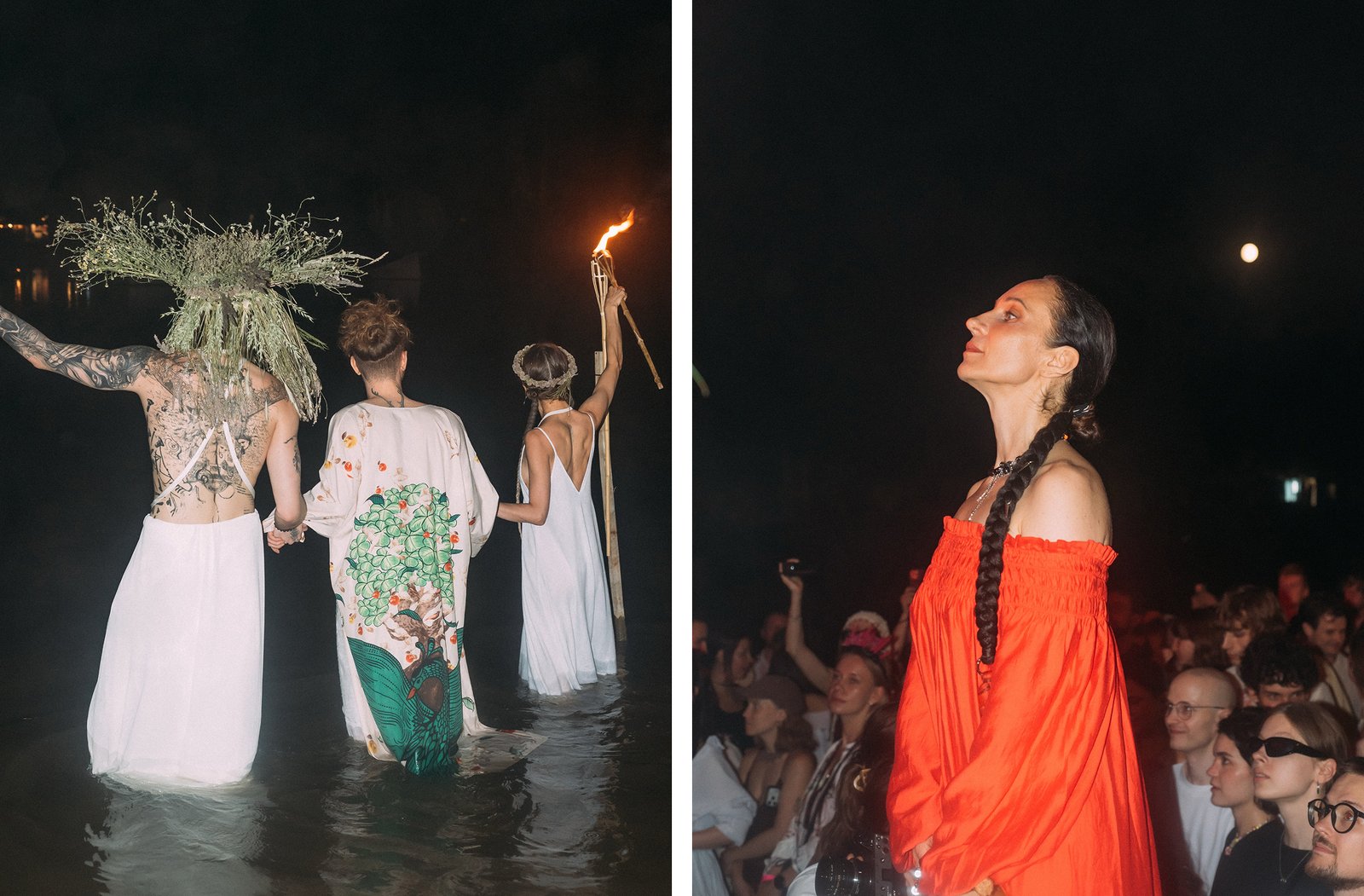
One of the main events of this season was Sviata Fest, which took place in the “Echo” space on June 27. The organizers announced this event as a celebration of Belarusian music. And it happened that way. The line-up consisted exclusively of Belarusian artists playing in different genres and styles. In terms of the quality of participants, this is definitely one of the strongest events in recent years, as it has brought local culture to a new level.
Once again, in June, the belbet fest was held, the headliners of which were again Russian stars. Belarusian stars could be seen at the “Varušniak” festival, which was held on June 27 in Warsaw. Šuma, the leader of the “Soyuz” band Alaksiej Čumak and the Ivan Dorn project performed there.
In concert life, there were also some interesting events during this period. On April 10, rapper Laitovy [Belarusian: Лайтовы] organized a presentation of his new album “Look Inside” [Belarusian: “Пагляд унутр”] (the author’s spelling has been preserved – Ed.) in the same “Echo” space. He gathered a full house there, despite the fact that the album was released online only two weeks after the concert. This event became an indicator of the solidarity of the Belarusian community in the country. With a small team, the artist attracted many sponsors to his project. Donations covered the costs of releasing the album.
Belarusian electronic musicians Parade of Planets gathered a sold-out crowd at the Prime Hall. The band “Drazdy” went on a European tour. Their concerts in Moldova, the Czech Republic and Lithuania took place in May. The bands Kas and Zvonku gave a joint concert in the Lidbeer courtyard.
Successes of Belarusians abroad
Belarusian music continues its cultural expansion to the West. The authoritative independent British publication The Quietus wrote about the Belarusian-Australian folk trio Kapella Kotra. Peter Clarke in his column talked about cool and important folk releases from around the world. There was also a place for the Belarusian-Australian trio, which works with the heritage of several peoples at once.
This is not the first time that Belarusians have appeared on the pages of the prestigious source. At the end of 2025, The Quietus published a large article about the music scene of Central and Eastern Europe.
Metal musicians Dymna Lotva gave a long interview to the authoritative magazine Metal Hammer. In the publication, Belarusians appeared next to HIM, At the Gates, Babymetal and other stars. The metalheads’ work did not end there. The musicians recorded a song and shot a video together with former My Dying Bride vocalist Aaron Stainthorpe. The song was called “The Boat of Despair” [Belarusian: “Ладдзя роспачы”] and refers to the famous work of Uładzimir Karatkievič. However, despite the allusion to the Belarusian classic, the song itself tells a different story. It is a sharp existential manifesto about the tragedy of forced emigration and the price of freedom.
Maks Korž’s stadium concerts have become traditional. This year, the artist has held three performances: in Istanbul, Bucharest and Düsseldorf. The first two were well-attended by the sold-out crowd.
There is also some success in the eastern direction. Hrodna rapper Paźniaks has given his first solo concerts in Russia. He plans to perform in Belarus, but according to him, organizing a concert in his own country is much more difficult.
Rapper Nkeeei recorded a fit with Olga Buzova, which went viral on social networks even before its release. Maby Baby, in turn, became the ambassador of the Belarusian KFC, recording a special track about Kentucky Fried Chicken.
Restrictions, repressions and new shocks
One of the most high-profile events in Belarusian music over the past three months was the arrest of Alaksiej Chlastoŭ. The artist was accused of petty hooliganism and arrested for 14 days. At the same time, a video appeared on the singer’s Instagram, which he recorded in advance. The musician said in the video that he had already been summoned twice for “preventive conversations”, including to GUBOPiK. After 14 days, the artist was released and continued to conduct social networks, although not so actively.
Dymna Lotva vocalist Kaciaryna Mankievič was charged with as many as five articles of the Criminal Code. Among them are financing terrorist activities and propaganda of terrorism.
A criminal case was also opened against Siarhiej Michałok. He was accused of inciting hatred and insulting Alaksandr Łukašenka.
Several people were detained during an invitation only rave party that took place near Stoŭbcy on the night of June 21-22. They were sentenced to 10 to 15 days in prison.
Despite the repression and the disturbing background, musical life continues in Belarus and new local stars are emerging. An artist under the nickname “Nochnoy Roman” [Russian: “Ночной Роман”] went viral on social media with his single “Kvetki”. The guy makes synth-pop in the style of “Laskovyi Mai” [Russian: Ласковый май, lit. ’Tender May’] which the audience really likes. On Instagram alone, the guy got hundreds of thousands of views.
The band Luvrz also got its hundred thousand views with a snippet of the song “Rany”. The band recorded it as part of the “VYKLIK” competition, in which more than a hundred Belarusian artists and bands took part. The guys simply created modern metalcore in Belarusian – and it became a solid boost for their career.
Belarusian music blogger Safija Sitnik has started doing video interviews with Belarusian (and not only) musicians. For example, Trollwald band leader Andrej Apanovič and ex-Machine Head and Testament drummer Chris Kontos have already come to her show.
The music AI project with Belarusian roots GRAI has raised $9 million in a seed round. GRAI is currently working on several AI products: a remix app Music with Friends for iOS and a platform for experimenting with music on Android.
The Amplify Belarus educational intensive on creating music releases for Belarusian artists has been launched. This is a programme in which participants, together with mentors, go through the entire process – from preparing material and registering copyrights to DSP platforms, pitching, promotion and analytics.
The project “Sepultura Alive” by Belarusian journalist Alaksandr Čarnucha continues to work. Broadcasts of concerts by Belarusian artists are supported by the viewers buying symbolic tickets. The last guest of the project was Anastasija Rydleŭskaja.
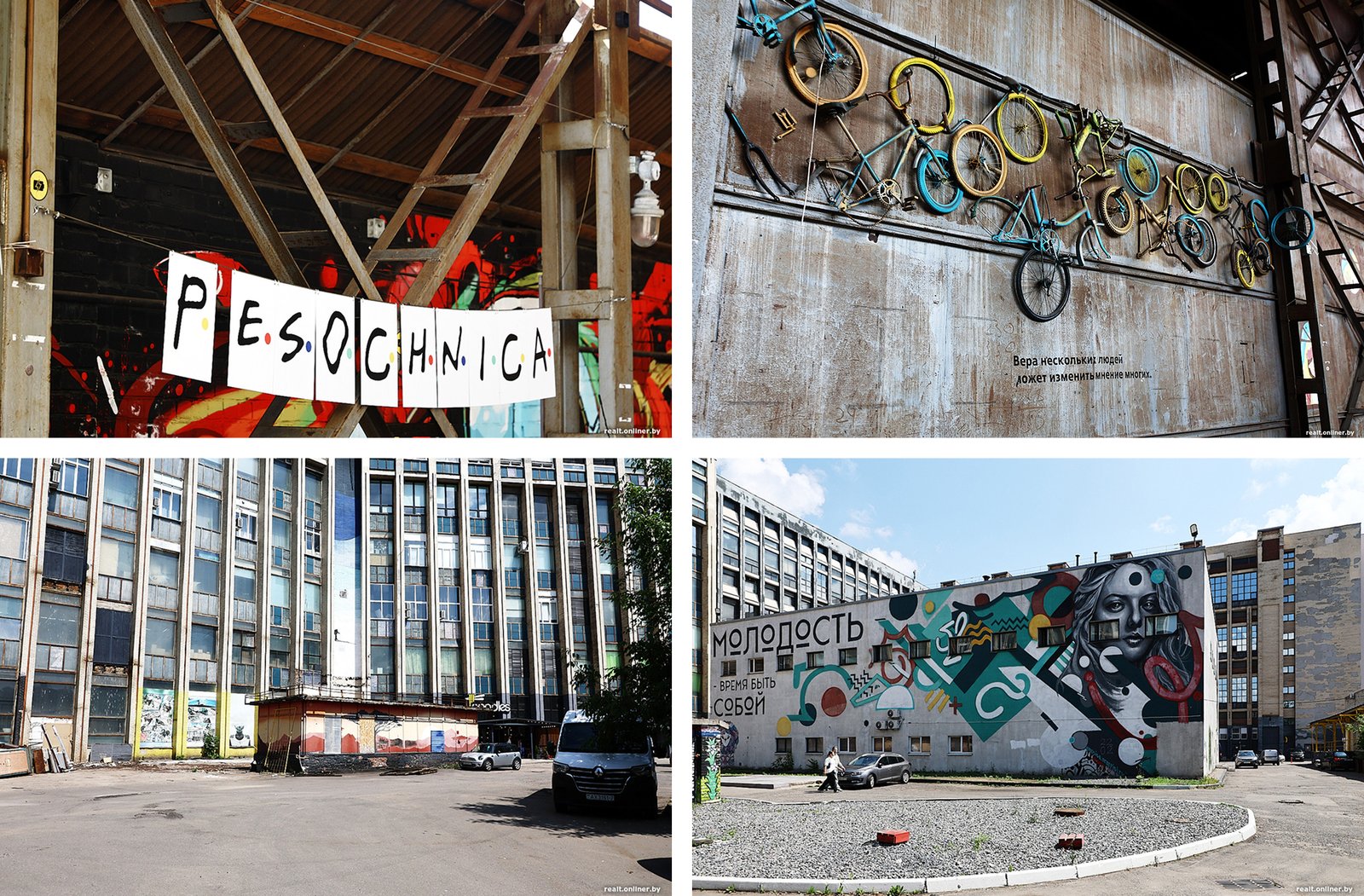
There were losses during this period. The venue “Pesochnitsa” [lit. Sandbox’], where concerts and cultural events were held, was closed. During these three months, we also lost the folk band Ralla whose members continue to make music – though the magic of the duo is no longer the same. Vocalist Nasta Krupko left the band Passive Voice.
Results
Belarusian musical life continues to exist in the paradigm of survival no matter what. Organizing a concert or festival is becoming increasingly difficult. This is influenced not only by repressive but also bureaucratic components. Obtaining tour permits is taking longer, and phrases like “cancellation for reasons beyond our control” are becoming Belarusian everyday life.
This also affects the artists themselves. There are fewer venues for performances and more bans, so not everyone can withstand these tests.
However, despite the obstacles and restrictions, Belarusian music, step by step, not only continues to exist, but also becomes more and more visible on the map of Europe.
Art: from targeted changes to institutional dismantling
The second quarter of 2026 deepened and radicalized the fault lines that had emerged on the Belarusian art scene at the beginning of the year. While the previous period documented the coexistence of international successes with internal administrative and political restrictions, the three months under review showed the transition of the state machine from targeted pressure to systemic reformatting of the infrastructure. Within the country, autonomous cultural spaces are being effectively liquidated in favour of hypertrophied state control, while outside Belarus the artistic community is finally being formalized into an institutionally independent entity.
Narrowing of cultural space in Belarus
If at the beginning of the year the monitoring documented raids on individual artists (the arrests of Aleh Łaryčaŭ, Viktoryja Bahdanovič, and Alaksandr Lankievič), then in April–June the repressive practice expanded to both the real and virtual memory.
The practice of detaining cultural figures upon their return to the country from foreign trips continues: in April, after arriving from Georgia, photographer Alaksandr Šyško was detained at the Minsk airport (a criminal case was opened against him for taking part in Belarusian Freedom Days abroad). A symbolic gesture of censorship of history was the decision of the Hlusk District Court of May 4, 2026, according to which the Ministry of Information recognized the Facebook account of the artist Aleś Puškin, who died in prison almost three years ago, as “extremist materials”.
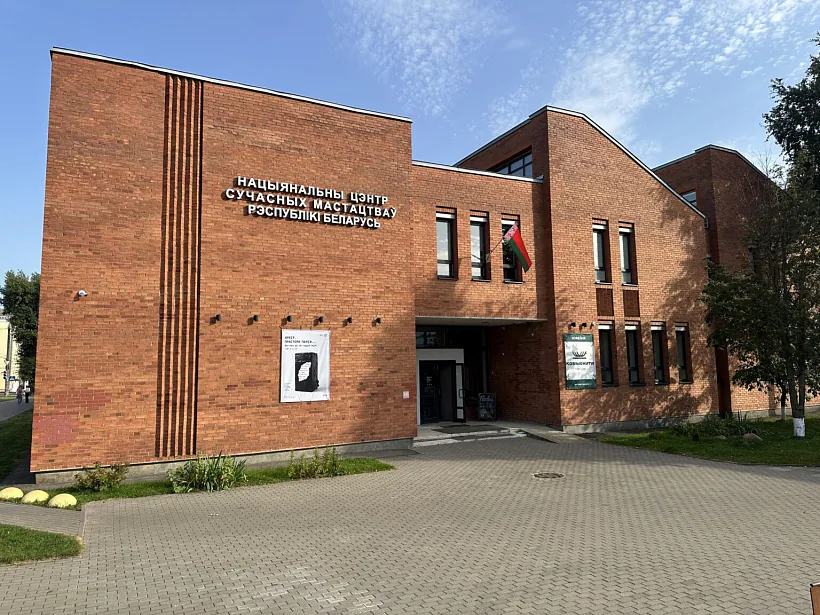
The process of physical narrowing of the independent field logically continued with the closure of the private bar “Molodoy”, where cultural events and exhibitions were also held. However, the main infrastructural shift of the period was the complete liquidation of the National Centre for Contemporary Art (NCCA), a state institution with more than a decade of history. From June 22, 2026, the NCCA completely ceased exhibition activities at its site in Minsk in Nekrasov Street, and its funds and buildings will be distributed between the National Art Museum and the Academy of Arts. This marks the end of the so-called modernization of state institutions, which was discussed at the beginning of the year: the state is abandoning the curatorial autonomy of contemporary art, restricting official life within tightly controlled, ideologically sterile boundaries.
Control over cultural heritage
The trend towards working with cultural memory, which at the beginning of the year was based on private initiatives (for example, the purchase of lithographs of Napaleon Orda by the MALDZIS initiative), was intercepted in the second quarter by the state, which is aggressively claiming the role of the main and sole administrator of national heritage.
Over the monitored period, the process within the country has been developing in two directions. First, the Belarusian authorities officially announced the beginning of administrative monitoring of foreign antique auctions. Immediately after, the National Art Museum acquired a unique four-metre, Sluck belt from a private individual, “the cost of which is measured in a five-digit currency figure”.
Secondly, the state system of cultural control has switched to the direct export of private collections of arrested individuals. Thus, ancient icons confiscated from the Catholic priest Hienrych Akałatovič, convicted of “treason to the state”, were transferred to the National Art Museum and put up for auction to pay off a court fine of 1.7 million rubles. Nevertheless, the independent initiatives that we highlighted in the last review continue their activities. The MALDZIS public initiative acquired an early work by the famous artist of the Paris School Vosip Lubič at an auction in Israel. This is a painting “Workers”, made in gouache, dating back to the 1920s. For researchers, it is a real find, since very few examples of Lubič’s early work have survived.
Belarus on the international stage
Unlike the domestic field, the foreign vector showed a transition from the status of “announcements” (which was observed at the beginning of the year regarding Manifesta and the Venice Biennale) to full-scale institutional implementation and recognition of Belarusian contemporary culture in the European space.
The projects announced earlier have successfully opened: the independent Belarusian pavilion Official. Unofficial. Belarus, curated by Danieła Kalada and the Belarus Free Theatre, began work at the Venice Biennale in the church of San Giovanni Evangelista, presenting the “architecture of surveillance and control”. The European Biennale Manifesta has also begun its work in Germany, where the official programme presents the works of Maryna Napruškina. The place of implementation of her project was the Gethsemane Church, built in 1947-1950.
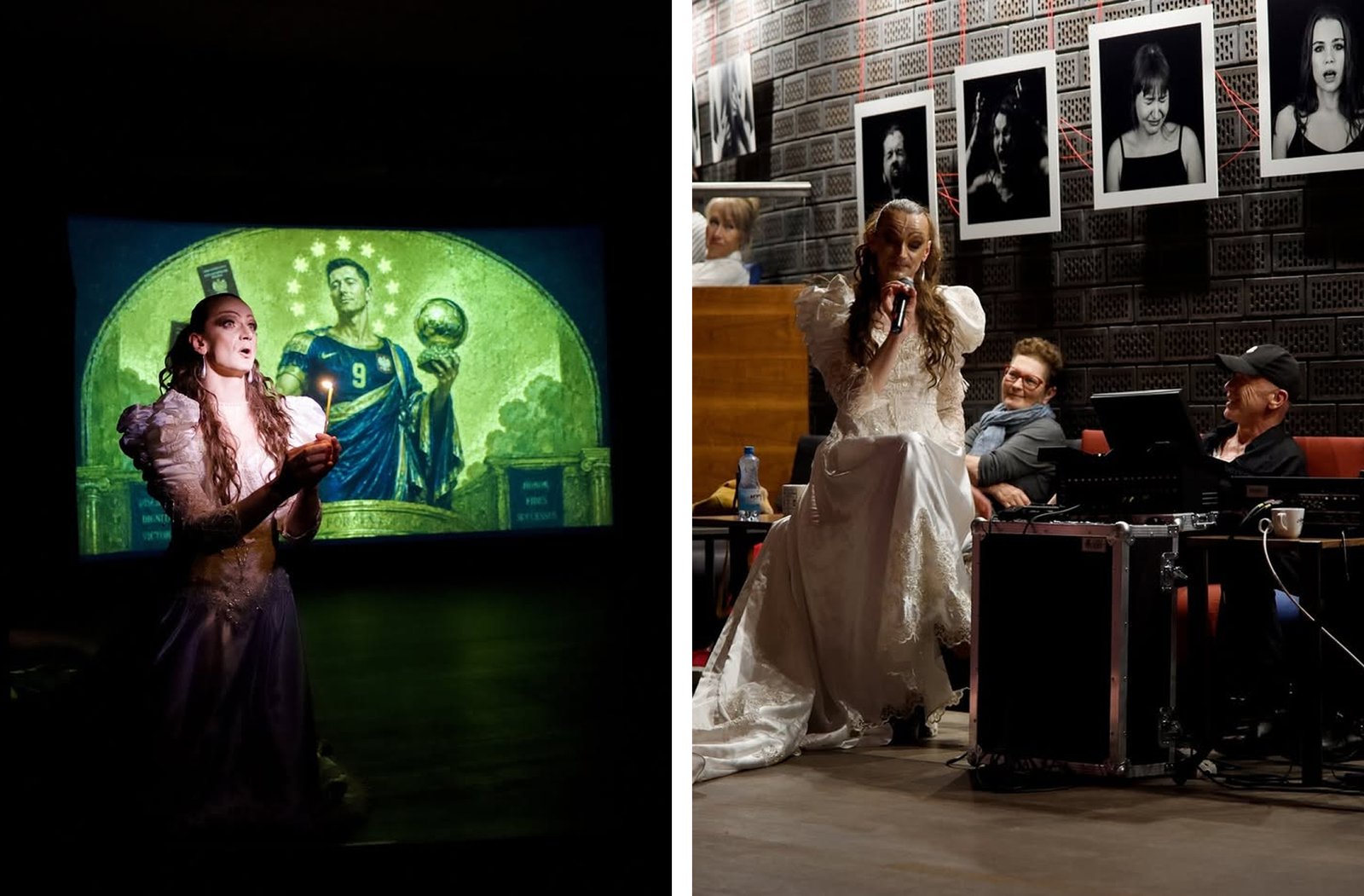
The scale of recognition is also confirmed by the continued access to a wide foreign audience. For example, Ała Savaševič’s sculpture “Woven with a Whisper” [Belarusian: “Шэптам тканая”] became the face of Wrocław’s main cultural guide “Wrocławski niezbędnik kulturalny” on the eve of her personal exhibition. In parallel, the understanding of historical and migration experience is taking place: the group exhibition “Half-Life: 40 years after Chernobyl” opened in Berlin, and Ihar Šuhalejeŭ’s performance “Will U Marry Me?” on the theme of bureaucratic difficulties of legalization was presented in Białystok. The opening of Uładzimir Cieśler’s personal exhibition Sugar Free in Pisa, Italy also took place.
Belarusian photographers: a new wave of international success
The field of photography, which at the beginning of the year was distinguished by isolated successes (Ksienija Hałubovič at Female in Focus, and Lesia Pčołka’s publication on the shortlist of the Cartier-Bresson Foundation), in April–June took shape as a full-fledged “new wave” with strong positions in Europe.
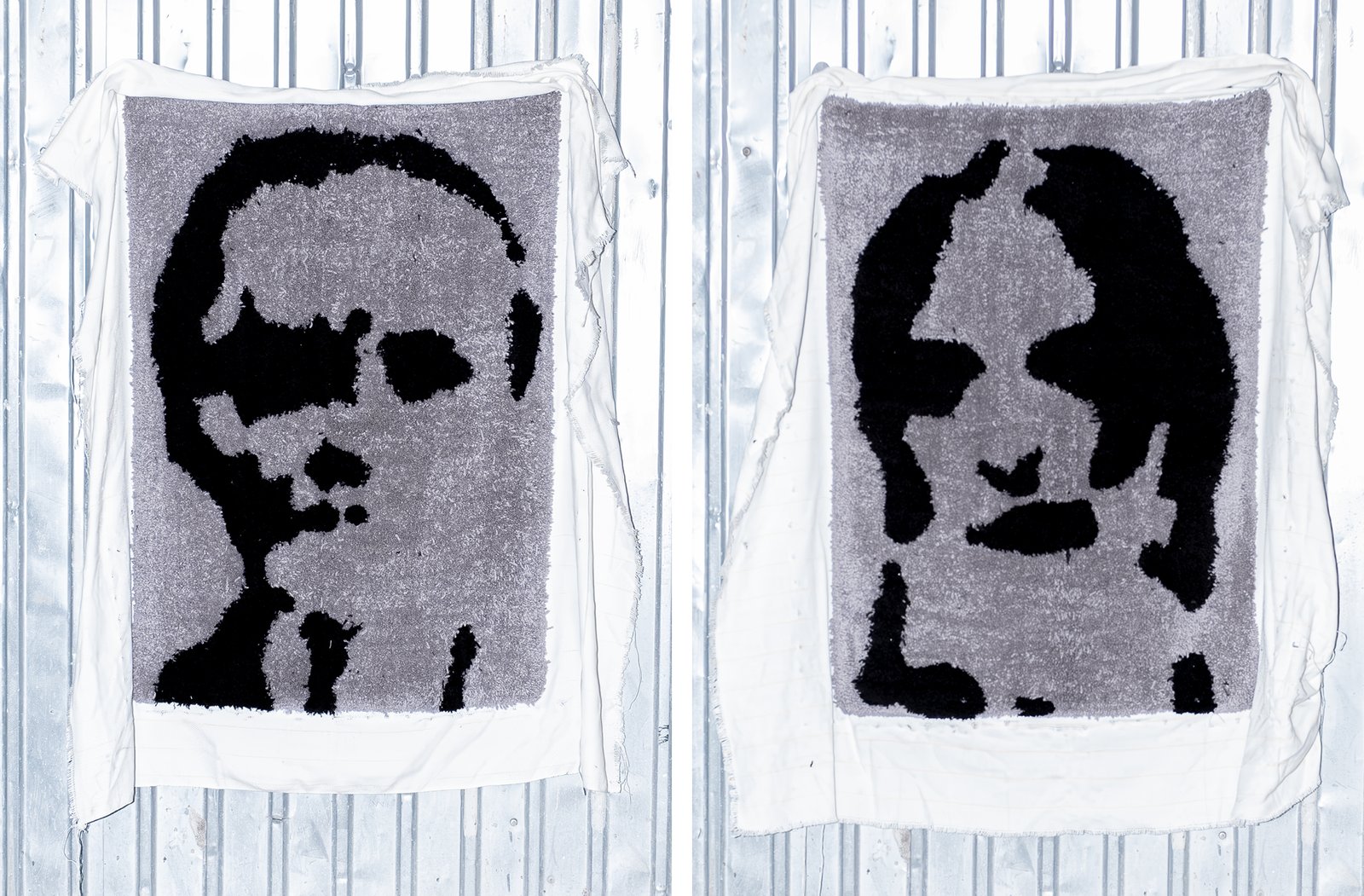
The main event of the period was the prestigious photo festival in Łódź (Fotofestiwal 2026), which was held entirely under the banner of solidarity with Belarus, presenting projects by more than 10 Belarusian authors. At the same time, photographer Saša Vialička, who was introduced by the Warsaw gallery Jednostka at the beginning of the year and who won at Foam Talent, received the main award of the festival – the Fotofestiwal Grant 2026 for a series of portraits of female political prisoners made on carpets.
At the same time, the Belarusian expert community was recognized: art critic and researcher Tania Arcimovič became the laureate of the international grant of the prestigious European Igor Zabel Award Grant for 2026 for her contribution to the study of the history of Belarusian performance, avant-garde, and independent art.
Books, research, and intellectual recognition
An important qualitative change of the period was the expansion of international recognition: while previously we documented mainly artistic media (installations, jewellery), now the focus of European institutions has shifted to Belarusian research, book design, and humanitarian initiatives.
The photo book “Ruins of Belarus” from the VEHA archive, created in collaboration with the Centre for Belarusian Culture in Białystok, received an honourable mention (Wyróżnienie) at the prestigious 66th competition “Najpiękniejsze Polskie Książki 2025” in Warsaw in the “Art” category. The book has effectively preserved the visual memory of 45 destroyed architectural monuments.
At the same time, the Belarusian expert community was recognized: art critic and researcher Tania Arcimovič became the laureate of the international grant of the prestigious European Igor Zabel Award Grant for 2026 for her contribution to the study of the history of Belarusian performance, avant-garde, and independent art.
Traditional culture: Kupalle, detentions and the district police officer/folklorist
Kupalle/Kupala Night is widely celebrated both in Belarus and in the diaspora, although events related to traditional culture have often been cancelled in Belarus, and there are detentions at those events that do take place. Motifs related to traditional culture are used in modern art, and the works that result from such a symbiosis are exhibited at significant international exhibitions. It seems that in a couple of years Belarus may already have 9 elements on the lists of the intangible cultural heritage of humanity under the auspices of UNESCO.
Motifs of traditional culture at events with diverse themes
The big event of 2026 was the exhibition “Official. Unofficial. Belarus” at the Venice biennale, which runs until November 22. Independent Belarusian artists are taking part in it. Belarus is not represented by the official state pavilion this year. Within the Belarusian exposition we can see an installation by Uładzimir Ceśler with straw spider motifs. However, these amulets are made of prison bars. They hang under the ceiling, and a rye field has been created under them. Testimonies of former political prisoners are heard. “It is easy to express predictable skepticism about the exhibition: like, Belarus is once again being shown and explained to the whole world through repressions, prisons, censorship and exile. That’s it, I’m tired of it. But the problem is not that Belarusian art is once again talking about repressions. The problem is that repressions in Belarus do not end”, writes “Nasha Niva”.
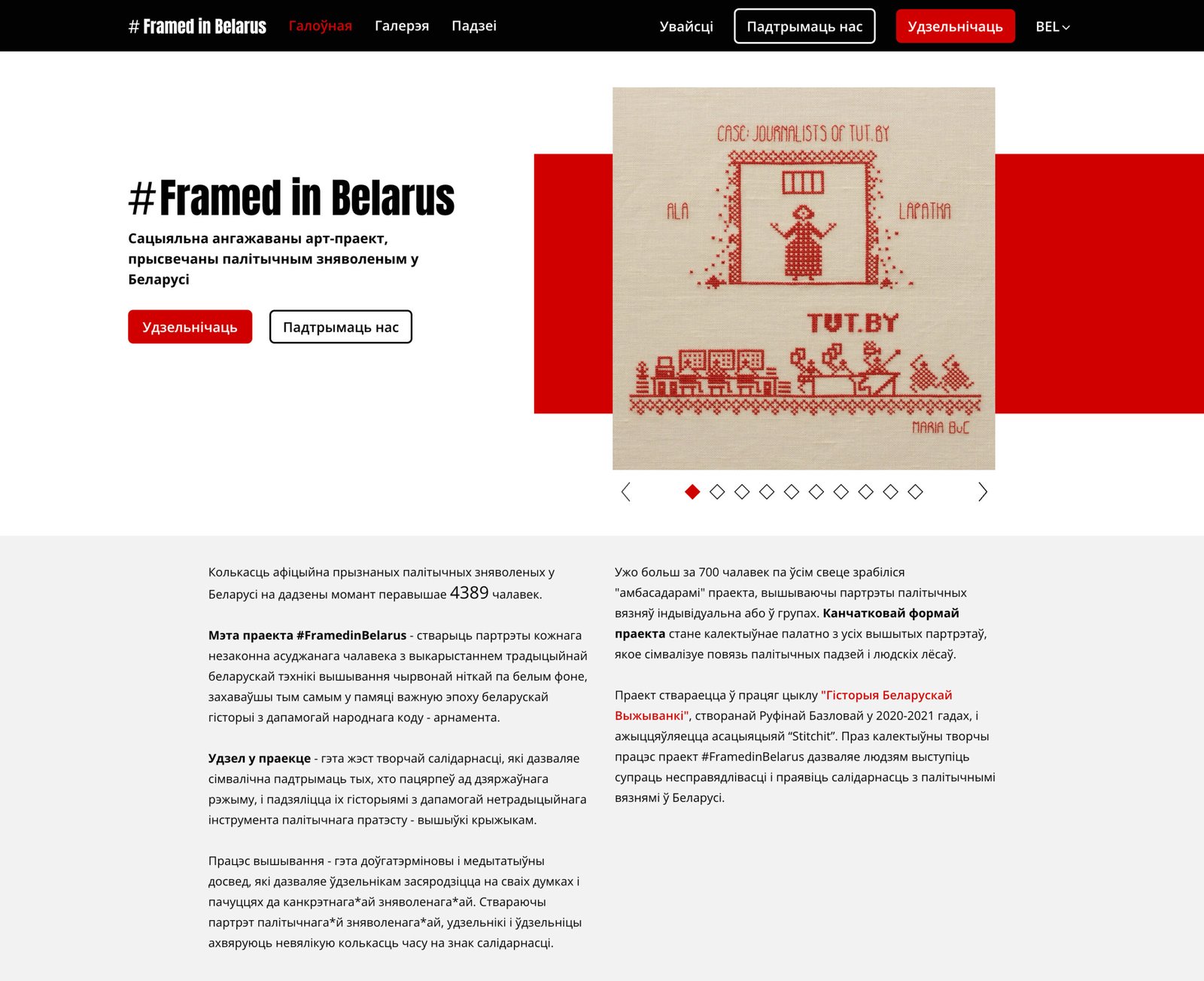
From autumn 2025 until April 12, 2026, artist Rufina Bazłova’s project Framed in Belarus, which uses the traditional cross-stitch technique and is dedicated to political prisoners, was exhibited at the International Textile Triennial in Łódź, Poland. This is the world’s largest and oldest event dedicated to contemporary textile art. The project was then shown at the Matter of Art international biennial in Prague. It can be seen until September 13.
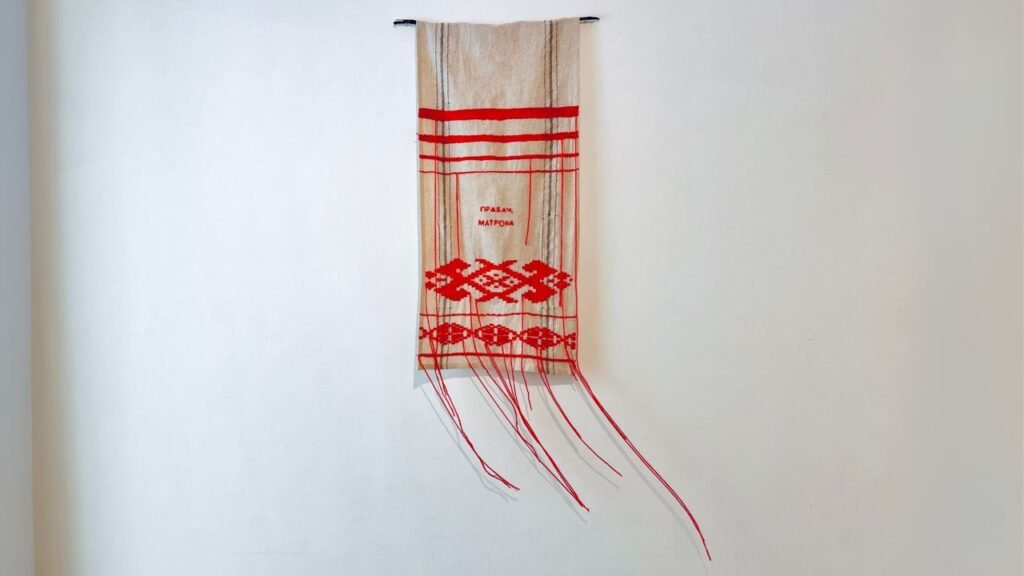
From mid-April to mid-May, Berlin hosted the exhibition “Turbulence Zone” by artist Alena Rabkina, where the artist showed, among other things, installations using motifs from traditional textiles. One of the most striking works at the exhibition was “Sorry, Matrona”, dedicated to the creator of the ornament on the Belarusian national flag, Matrona Markievič.
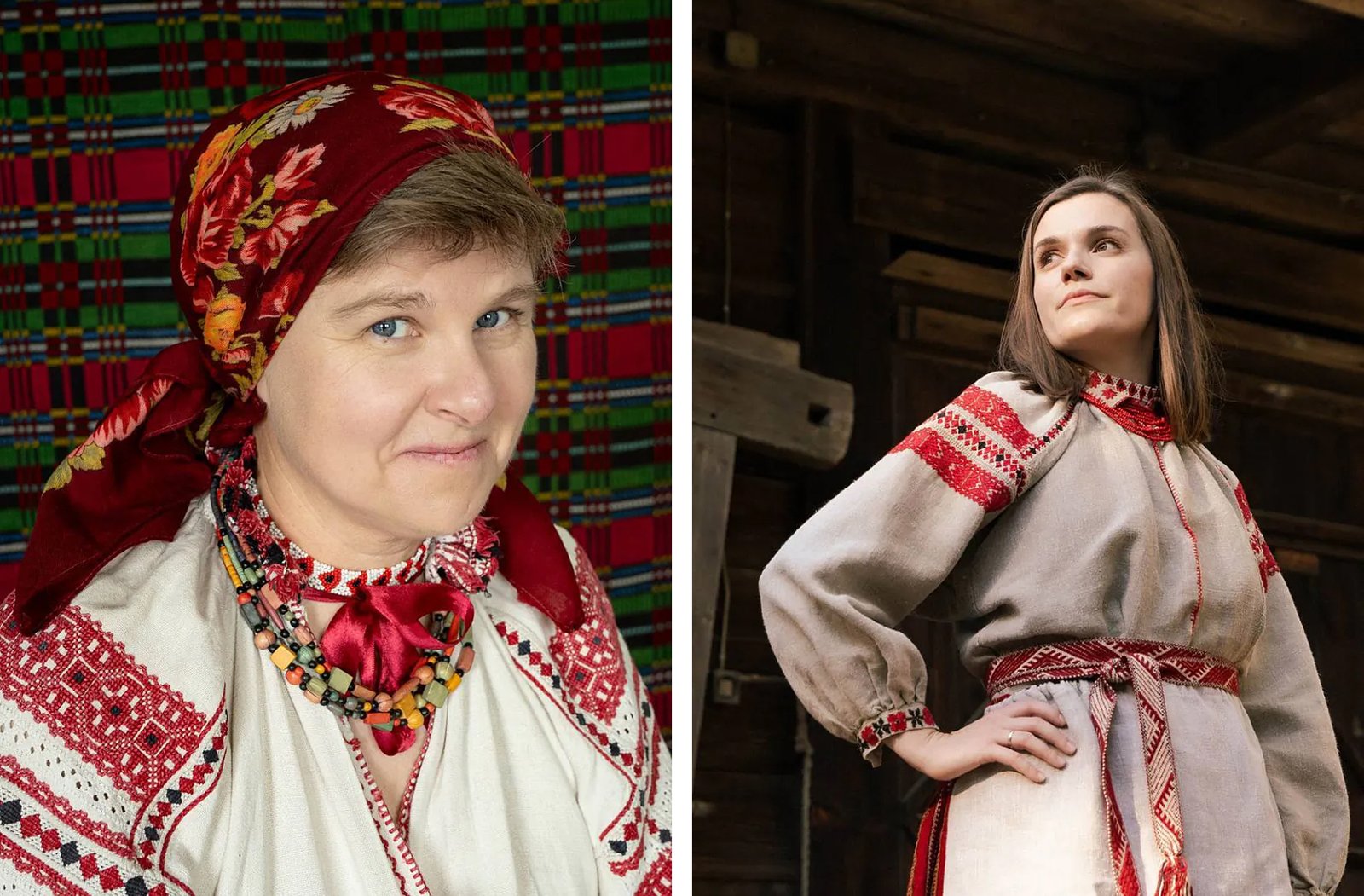
On May 24, Belarusians from Germany brought a huge dragon decorated with an element of a traditional ornament to the Carnival of Cultures in Berlin. Belarusian culture was presented at this festival for the first time. The participants called themselves the group “Belarus Dances with the Dragon” [Belarusian: “Беларусь танчыць з Цмокам”]. They wore wreaths of greenery, which referred to the celebration of the Trinity. The authors of the idea were clothing designer Nata Ko and production director Siarhiej Arłoŭ.
Cancellation of public events in Belarus
During the period under review, various institutions faced problems when organizing public events related to traditional culture. For example, the Vietka Museum of Old Believers and Belarusian traditions named after F. R. Shklyarau planned the Call of Spring/Hukańnie viasny event on March 22. But the Museum received a recommendation “from above” not to hold an entertainment event on the anniversary of the tragedy in Chatyń. “It is worth noting that March 22 is the day of remembrance of the burned village of Chatyń, and in recent years the Belarusian authorities have often used this date to limit other cultural or public events, even if they are exclusively folklore in nature”, writes reform.news.
The people of Homieĺ still had the Call of Spring event in a closed format on March 21 in the courtyard of the restaurant “Spadčyna” [literally in English: “Heritage”]. Christmas/Kalady was celebrated there in January, and since the establishment opened last year, master classes “Dancing by the Stove” [Belarusian: “Танцы ля печы”] have been held. According to another version, the Call of Spring was even agreed upon by the regional executive committee. However, some participants were detained, sentenced to being in custody and fined. The trials continued in May. Among those fined was even the district police inspector Viktar Šypkoŭ. At the end of 2025, he was awarded the state prize “For Spiritual Revival” – this was how his contribution to the preservation and popularization of folk art, ethnographic research and reconstruction of costumes of the Homieĺ district was noted. “The restaurant “Spadčyna”, where the event took place, was closed for some time, but then reopened. However, events on the theme of Belarusian culture and cuisine are no longer announced here”, writes Euroradio.
The international festival of traditional culture “Braslaŭskija zarnicy”, which was supposed to take place on May 22–24, was also cancelled. Kupalle/Kupala Night in the Dukorski estate near Minsk, scheduled for June 28, did not take place either. The reasons for the cancellation are unknown, as in the case of the Kupalle celebration “Sun Festival”, which was also supposed to take place near Minsk, in Dudutki. It seems that this is precisely this year’s trend. For example, last year, propagandist Volha Bondarava tried to cancel the “Sun Festival”, but it still took place.
Kupalle/Kupala Night events around the world
Despite the cancellation of many festivals, the celebration of Kupalle can be called massive both in Belarus and abroad. Perhaps more Kupalle events than in previous years took place closer to the summer solstice, and fewer were timed to the “Orthodox Kupalle” from July 6 to 7. For example, in the Belarusian State Museum of Folk Architecture and Life near Minsk, Kupalle was celebrated twice: on June 20 and July 4, and the number of visitors and participants at both events was approximately equal. It is not known whether it was a coincidence or not, an invitation only rave party near Stoŭbcy was timed to coincide with the shortest night of the year from June 21 to 22, at which – attention – there were also detentions. Some of the participants were sentenced to 10-15 days in prison.
Kupalle is often the most popular holiday in the Belarusian diaspora during the year and even the only day of the year when people who are not involved in Belarusian affairs on a daily basis feel the need to manifest their Belarusianness. Sometimes in diasporas, as well as in institutions within Belarus, several Kupalle events are held. For example, in Warsaw we know of four celebrations, if we count the Varušniak festival as one of them. Several craft fairs were also timed to Kupalle.
State awards and lists
The above-mentioned Viktar Šypkoŭ, a policeman fined for participating in the Call of Spring Festival in Homieĺ, became the only figure associated with traditional culture among those awarded the prize “For Spiritual Revival” and special prizes for figures of culture and art. “The folk master revived and popularized the technique of weaving on a circular basis (“spreng”), and according to local traditions, ritual actions for Easter and Christmas were restored and are being held. In 2024-2025, Viktar Šypkoŭ conducted ethnographic research and restored traditional costumes of the southeastern part of the Homieĺ region, as well as the tradition of making festive and wedding wax wreaths”, the newspaper “Zviazda” writes. The awardee himself told reporters: “Although I am a man in uniform, we can say that service is for the heart, and traditional culture is for the soul… This is a connection to the origins of the small Motherland, this is what our ancestors lived by. And in order to understand traditional culture, you need to see through the eyes of our ancestors the beauty that they saw with their souls and tried to transfer to simple everyday objects. I dived headfirst into it, one might say, and to this day it does not let me go”.
Former political prisoner Łarysa Ščyrakova, who is also interested in traditional culture and now offers photo shoots in traditional costumes in Białystok, spoke in her interviews about a policeman/folklorist who was involved in some of her numerous detentions. Most likely, she was referring to Viktar Šypkoŭ.
The State List of Historical and Cultural Properties of Belarus, which includes elements of intangible cultural heritage along with tangible monuments, continues to be updated. Most of them are related to traditional culture. The only exception in all the years that Belarus has been acting in accordance with the UNESCO Convention for the Safeguarding of the Intangible Cultural Heritage of 2003 is the performance of the Janka Kupała Theatre “Paŭlinka”. In the first half of 2026, the list was updated with the element “Tradition of performing the folk dance “Quadrille” [Belarusian: “Кадрыля”] in the Hrodna region”.
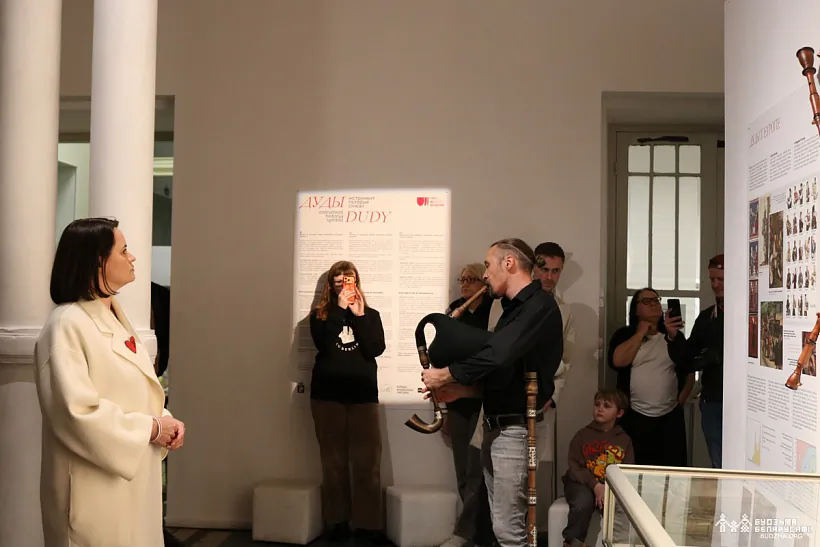
The Presidium of the Council of Ministers adopted a proposal to include the element “Dishes made from grated potatoes – traditions of preparation and consumption in Belarus” in the Representative List of the Intangible Cultural Heritage of Humanity, maintained by UNESCO in accordance with the above-mentioned Convention. The dossier was to be sent to UNESCO in March. This proposal is not yet available on the institution’s website. The dossier for the element “Culture of the Belarusian Bagpipe”, sent last year, is currently inactive (unavailable for reading). It may be considered in 2027 and – if successful – will become the eighth element of the intangible cultural heritage from Belarus on the UNESCO lists. This proposal by the Belarusian state has sparked a discussion in the Belarusian bagpipe community, a significant part of which is in forced political emigration.
In the second half of May, the Warsaw Free Belarus Museum hosted the exhibition “Bagpipes: Instrument, History, Symbol” [Belarusian: “Дуды: інструмент, гісторыя, сімвал”] (curator – Jaŭhien Baryšnikaŭ). The basis of the exposition was information stands. Instruments restored by various masters in different years, as well as Polish bagpipes from different regions, were also exhibited. “The bagpipe became best known as a symbol of struggle “thanks” to the criminal case against the musicians of the “Irdorath” band and their friends who played at rallies in 2020. Many bagpipers ended up in exile due to political repression. At the same time, bagpipers are performing at the opening of the All-Belarusian People’s Assembly in 2024, the “Culture of the Belarusian Bagpipe” is being included in the National Inventory of Historical and Cultural Heritage of Belarus and is applying for inclusion in the UNESCO Representative List of the Intangible Cultural Heritage of Humanity. The bearers of tradition in these nominations are employees of state cultural institutions, and the bagpipe community, which has been reviving the instrument since the 1980s, is effectively ignored. The visitor to the exhibition is left with an ethical dilemma: should we support the nomination of bagpipes by the Republic of Belarus to the UNESCO list? Who really owns this heritage today?” writes Budzma.org.
Important publications
The journal “Belarusian Folklore”, issue 13, is a periodical published by the Centre for Research on Belarusian Culture, Language and Literature of the National Academy of Sciences of Belarus. It is the only journal in the field of folklore published in Belarus that is indexed in the international Scopus database.
The Kupala Songbook [Belarusian: “Купальскі спеўнік”] of the Tradycja project is a guide to Belarusian traditional culture, containing a collection of folk songs. The publication is supplemented with a QR code for listening to the original folklore performance.
Cover on the main page:
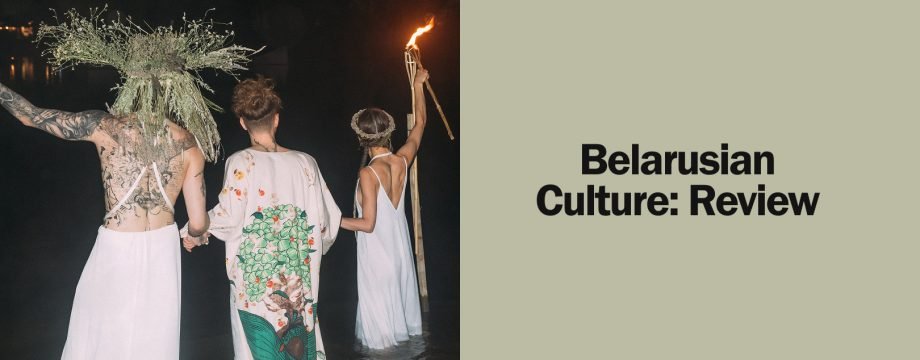
During the Kupala Night edition of Varushniak in Varshava. Source: instagram.com/varushniak
The reviews are prepared with the support of the ArtPower Belarus programme and the European Union.