
We continue our series of interviews with projects supported by ArtPower Belarus with funding from the European Union.
The project People of Salt is a large-scale work by artist and curator Uladzimir Hramovich, developed from long-term research into the salt mines of Salihorsk as both an image and a metaphor for Belarusian history, economy, and ethics. In this success story, we explore how the idea evolved over the years, why support from ArtPower Belarus became a practical necessity, how grants function within artistic practice, and how the theme of uprisings is interpreted by international audiences.
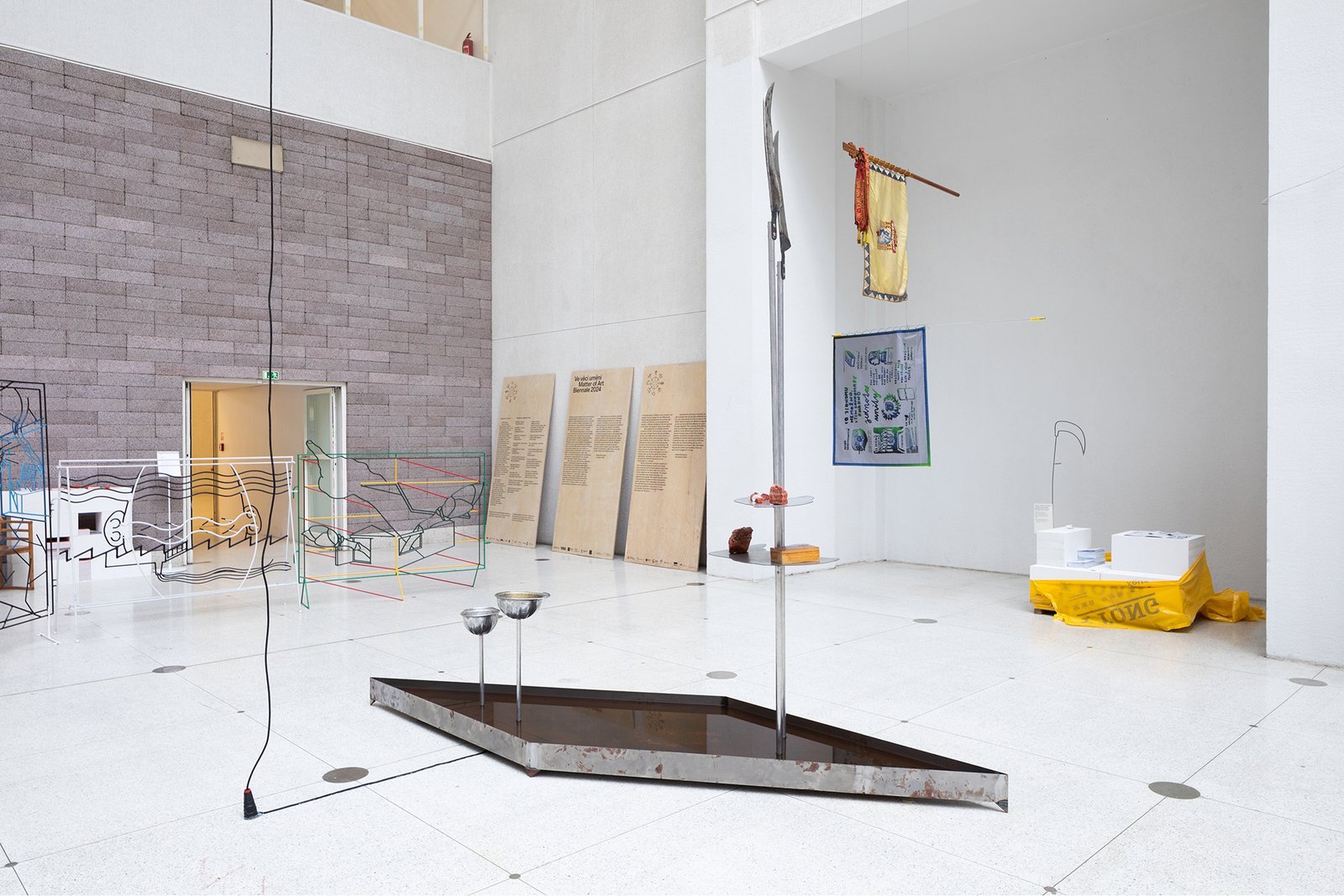
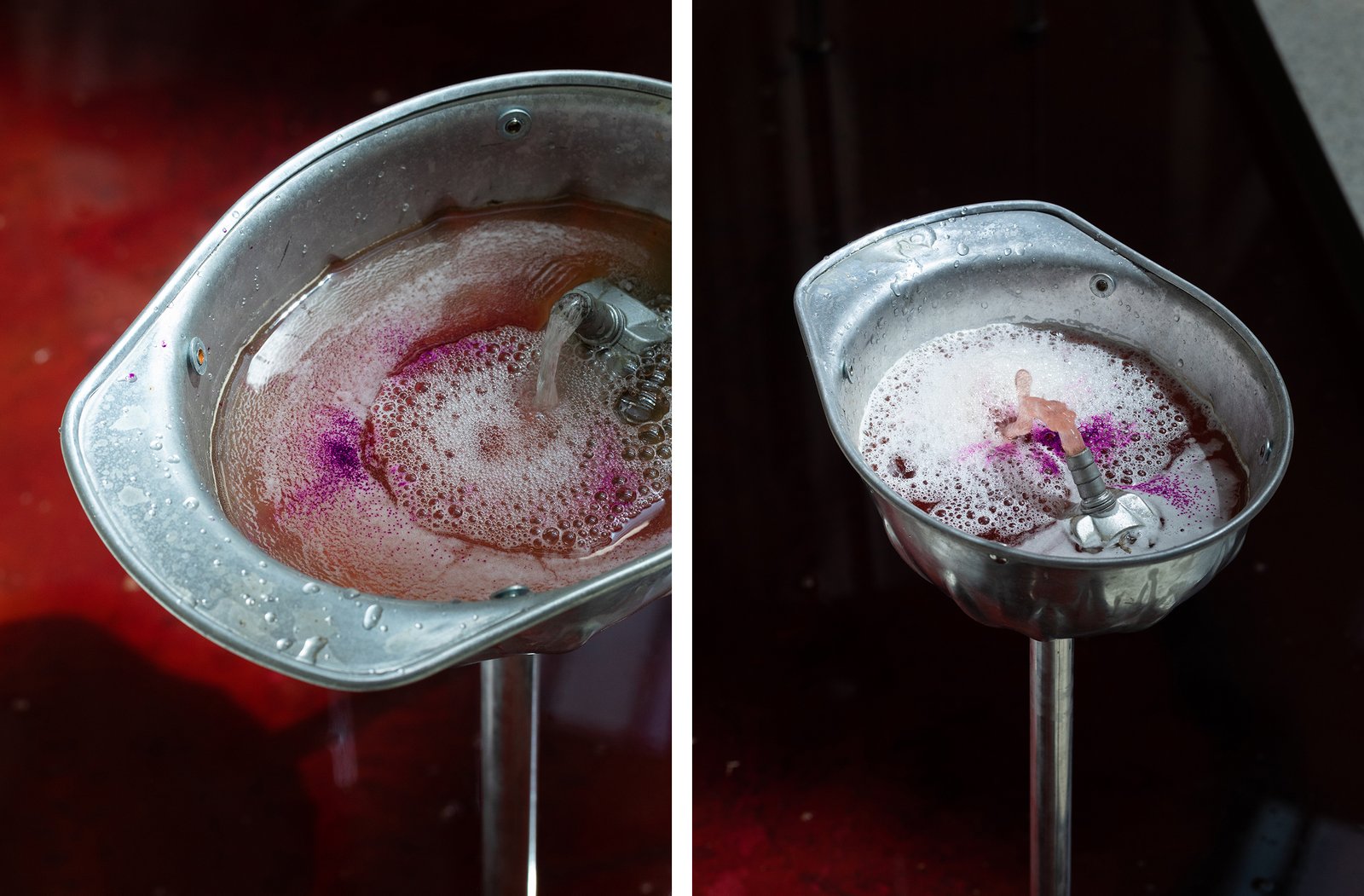
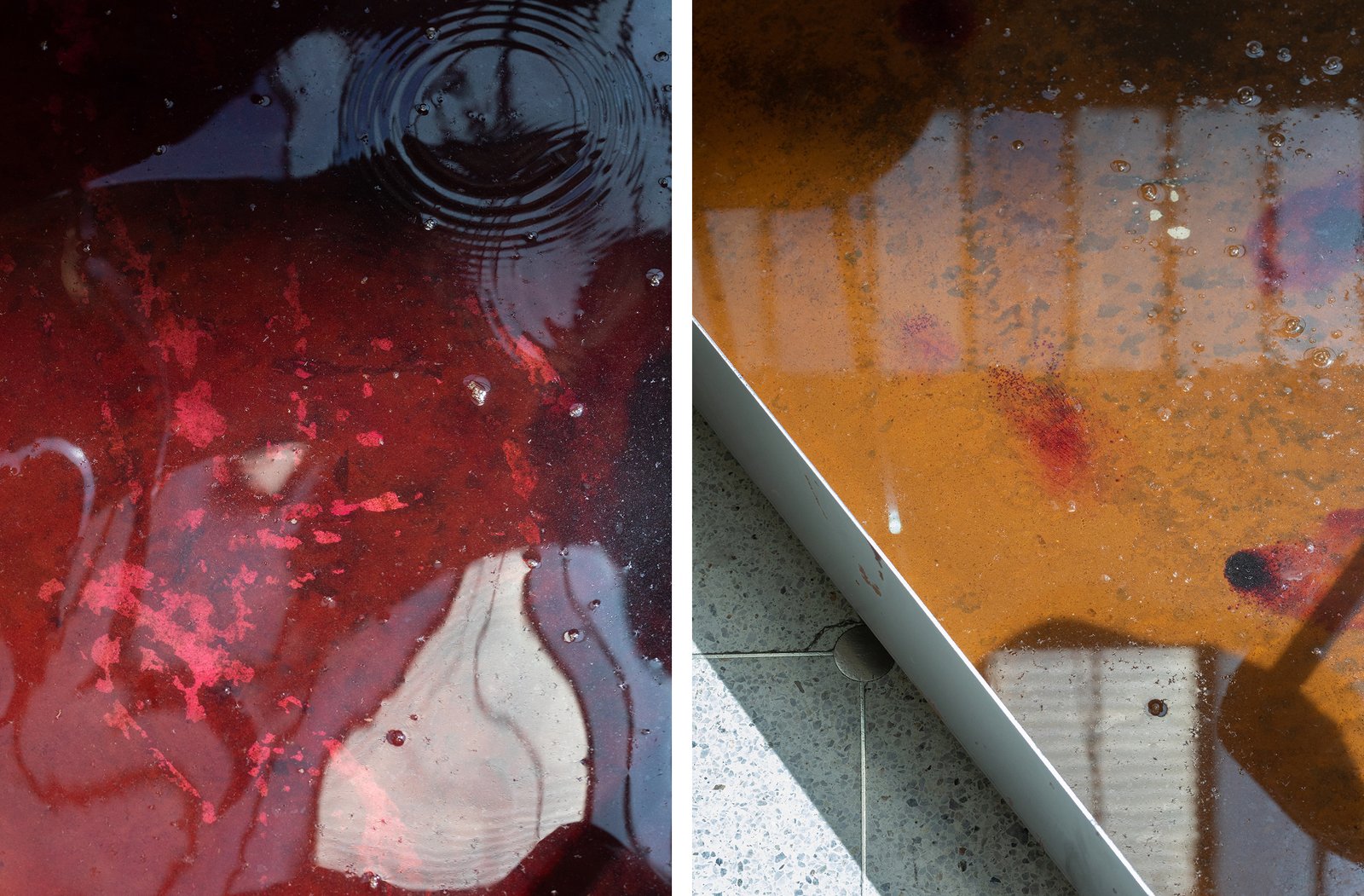
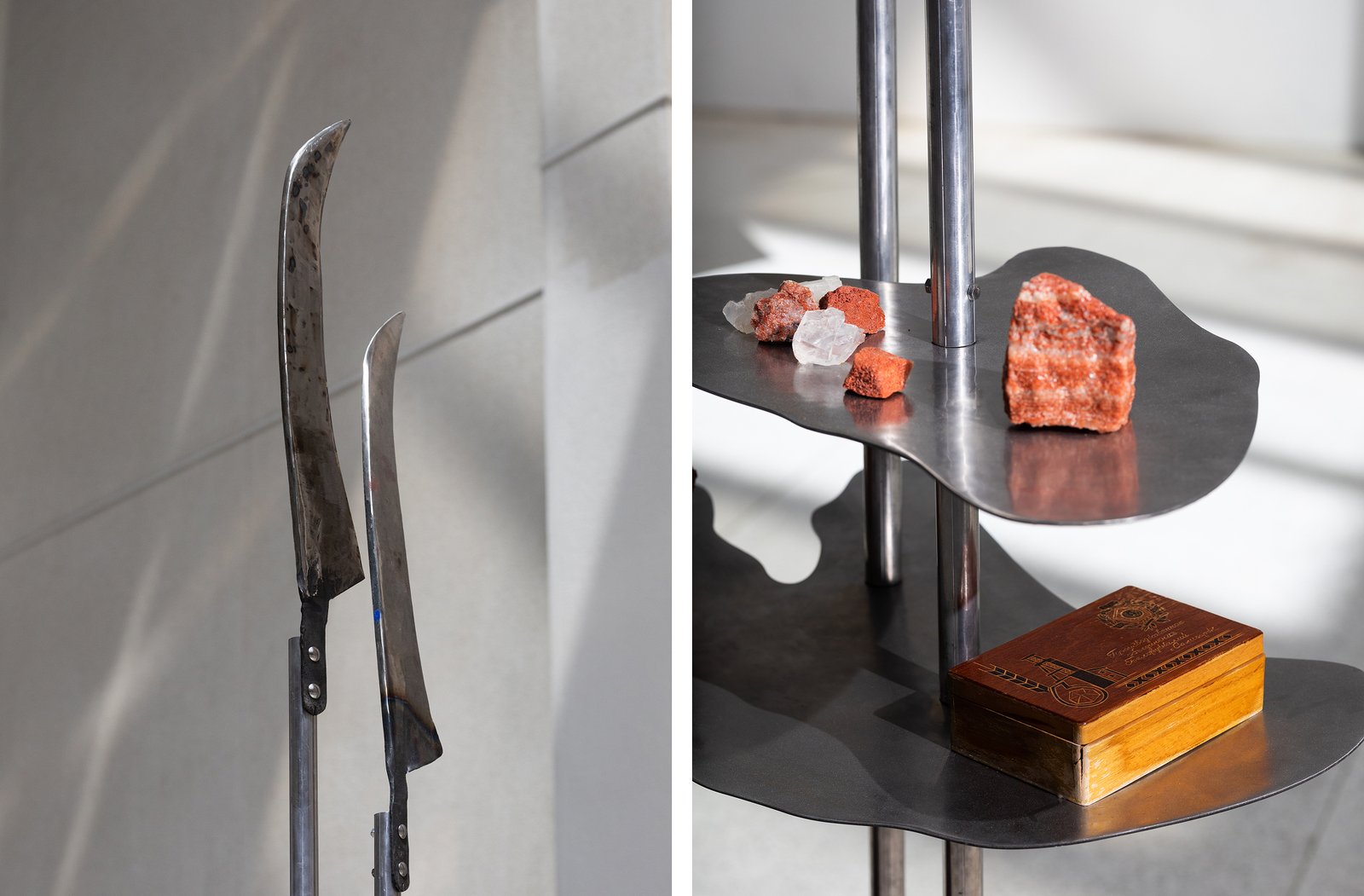
Created in 2024, the installation takes the form of a fountain composed of unusual elements. The water is tinted with potassium permanganate, a reference to the salt extracted in Salihorsk. Some objects, such as helmets, symbolise the hard labour of workers in mines, quarries, and construction sites. Others, such as scythes, refer to agricultural work in rural areas. Yet these tools of labour are transformed into tools of resistance.
The work is dedicated to two events: the uprising of 1863–1864 and the protests of 2020, both of which ended in failure. “But what does this failure actually mean? How can we remember it and use it in the present moment?” — these are the questions the artist raises.
How did it all begin?
Uladzimir says he approached the theme of the Salihorsk salt mines not as a “plot”, but as an image that helps explain Belarus and its history through both economy and ethics. For him, salt is a rare “natural material” extracted from the earth and sold with minimal processing. This makes it a symbol of a basic, resource-based country, while also serving as a reminder of who creates this resource, and at what cost.
“I have actually been thinking about the Salihorsk mines for a long time, as an idea and a metaphor for the existence of Belarus and Belarusian history. There is both an economic and an ethical dimension to it. In essence, it is the only natural material of this kind that is extracted from the depths of Belarus and sold with almost no major processing. In a way, it is Belarusian oil.”
The first “component” of this story appeared long before the launch of ArtPower Belarus, back in 2017, in the form of a lecture-performance. After 2020, the theme gained a new and sharper layer through the experience of protests and strikes:
“In 2020, when workers tried to organise a strike and joined the protests, this story expanded.”
Applying for the ArtPower Belarus grant
The decision to apply for the first edition of the ArtPower Belarus grant in 2023 was driven by a concrete opportunity to present the work in an international context. Uladzimir explains that he had been invited to present the idea at the Matter of Art Biennale in Prague and was looking for additional funding specifically for production and scaling.
“I was simply looking for additional funding to have a budget for the installation, for this idea, for this fountain. That’s why I applied. In the art field, grants often become one of the key tools that make it possible to realise complex or large-scale works, because without financial support many projects simply don’t happen.”
What was made possible thanks to the programme
Support from ArtPower Belarus made it possible to cover the main production costs of the installation: purchasing materials and producing its key elements.
According to the artist, the process from the first sketches to the completed work took around six months. Some elements were produced in Czechia, while the remaining details were made by him.
Uladzimir speaks about the results quite reservedly: his life did not change radically. However, the very fact that a large-scale work came into being was important for him, a work that brought together the ideas and research of recent years. The installation also became a new stage in his artistic practice, not least because of its physical scale.
“This is one of my important works, where I managed to bring together many ideas I had been working with for a long time and turn them into a major statement. I had never made a work of this scale before: three by three and a half metres. And that matters, it gives you the next step, something you can build on.”
Here, he also points to a broader issue that he sees as systemic: in Belarus, there is often little opportunity for experimentation or for “large” projects not only because of censorship, but also because of a lack of resources, infrastructure, studios, and stability.
“One of the main problems of the Belarusian cultural field in the visual arts is that you have almost no opportunity to experiment, no opportunity to make large exhibitions or projects. So people make works that can be shown on Instagram.”
One of the most difficult parts of the project for the artist was preparing the grant application. He notes that, for many artists, the bureaucratic logic of grant programmes requires a completely different way of thinking.
“Filling in the application was difficult for me. You make a work, and then you have to write what it responds to. Many people simply don’t think that way, but these are the rules of the system, and you have to accept them.”
For Uladzimir, however, the strongest result was the very fact that the large-scale work was completed and shown in an important international context. He describes it as a “major statement” that brings together everything he had been thinking about for a long time. And, of course, visibility matters too: when a work of this scale appears in your portfolio, it opens up further opportunities and proves that you are capable of creating complex installations and working in large formats.
International partnerships and context
Speaking about the international art field, Uladzimir emphasises the importance of networks, contacts, and cooperation with institutions. In his view, the issue is not that Belarusian art speaks to Europe in “the wrong language.”
“Our art is not worse. The only thing we lack is resources, resources and opportunities to show our work.”
He also explains his own entry into the international context through this network: he was invited to the Matter of Art Biennale in Prague by a Belarusian curator with whom he had been working for a long time.
As for the theme of the 1863–1864 uprising, Uladzimir stresses that the very motif of uprising, and of a “peaceful object” becoming a symbol of resistance, is international. He gives the example of the scythe: in different European histories, it is a recognisable metaphor.
“When it comes to the theme of uprising, uprisings have happened everywhere. Scythes like these were made in Germany as well. It is an international story: when an ordinary object becomes a weapon.”
After completing the project, the artist continues working on new ideas. His upcoming plans include an exhibition in Warsaw and several new projects that are still in development.
Nomination for the Neuköllner Kunstpreis 2026 in Berlin: how did it happen?
This was not a “miracle,” but rather persistence and an understanding of the context. The award is local: applicants must either live in Berlin’s Neukölln district or have a studio there. And, of course, it matters not to be a complete outsider to the local art scene through previous exhibition experience and contacts with municipal venues.
“I applied twice. Last year, I submitted the same work and did not get selected. This year, I applied again and was shortlisted. There are many applications, the competition is high, and even strong work does not guarantee success on the first attempt.”
Advice for those planning to apply for a grant
According to Uladzimir, the most important thing is not to treat the results of competitions as an evaluation of your art.
“You have to understand: if it doesn’t work out, that is not the main thing. It says nothing about the quality of the work. You need to keep doing what you do and keep looking for other opportunities.”