
The Analytical Group of the Belarusian Council for Culture have summed up the results of 2025. Here, we have compiled a top ten list of the most notable trends and significant events (in accordance with assessments made by our experts) within each of the customarily reviewed fields – literature, music, cinema, theatre, traditional culture, and visual art. This year, we witnessed major successes of Belarusians on the global cultural scene, as well as the reality of severe repressions within the country.
We welcome you to read, compare, and discuss whether the assessments of our experts correspond to your personal observations. How will 2025 be remembered?
Theatre: A New Funding Scheme and Dimness under Censorship
Music: Festivals Return, Bands Dissolve
Art: The Year of Women
Traditional Culture: Attentiveness to the Roots, Shaping the Present
Cinema: The Burial of a Festival, Victories in Europe
Literature: Will Maldzis Find the Cross of Euphrosyne of Polotsk?
Theatre: A New Funding Scheme and Dimness under Censorship
From 1 January, theatres transitioned to a new funding system: 50% is provided by the state, and 50% must be earned independently by theatre groups themselves. Instead of focusing on their core activities, theatres are forced to engage in virtually anything in order to attract audiences. This leads to an increase in entertainment-oriented productions, the fact that clearly hinders artistic development, and negatively affects the production qualities.
There is still no end in sight to the audience’s eagerness to attend the Minsk Puppet Theatre’s productions. The extremely popular Evgeniy Korniag’s productions familiarize Belarusians with the theatre of a high artistic level. This fact proves that The Puppet Theatre today has become to a certain degree a quality mark and a fashion, making criticism of its productions virtually impossible.
At the Belarusian State Academy of Arts, the Theatre Faculty has been eliminated and incorporated into the Faculty of Cinema, Theatre and Television. In Belarus, it is very common to give significance to the word order, especially in the names of institutions. So, given the fact that the new department – the Department of Cinema, Theatre and Television – it becomes quite clear that cinema will receive the main spotlight there.
The production of the play Sisters Grimm was banned. A committee from the Ministry of Culture deemed it considered too dark and too gloomy to give it the ‘green light.’ This demonstrates that no one is protected from censorship and that the old rules of the game no longer apply (since 2015, the Puppet Theatre staged Interview with the Witches, on which Sisters Grimm is based, without causing any issues).
Russification continues. The Puppet Theatre “Lyalka” in Vitebsk, which had previously worked exclusively in the Belarusian language, began staging performances in Russian.
The head of the Theatre of Belarusian Drama, Svetlana Naumenko, announced that the theatre wants to start a special project titled “The Theatre of Belarusian Drama on Mondays”, within which there are plans “to stage Russian classics in Russian.” As of now, this idea has not been realized.
Belarusian theatre continues to balance on the edge close to supporting Russian aggression. Due to the public outcry and thanks to resistance from the theatre troupe, The National Academic Bolshoi Opera and Ballet Theatre decided not to tour Crimea. Svetlana Naumenko announced a production based on a work by Russian writer Zakhar Prilepin, who openly supports the war.
Belarusians achieve success on the international stage. Opera singer Oksana Volkova performed the leading role in Carmen at the Metropolitan Opera. Conductor Dmitry Matvienko made his debut at the Paris National Opera. Palina Dabravolskaja’s monoperformance Sarmatyja was shown at a festival in Seoul. Theatre critic Anastassia Pankratava became an additional consul of UNIMA (the International Union of Puppeteers affiliated with UNESCO), among other achievements.
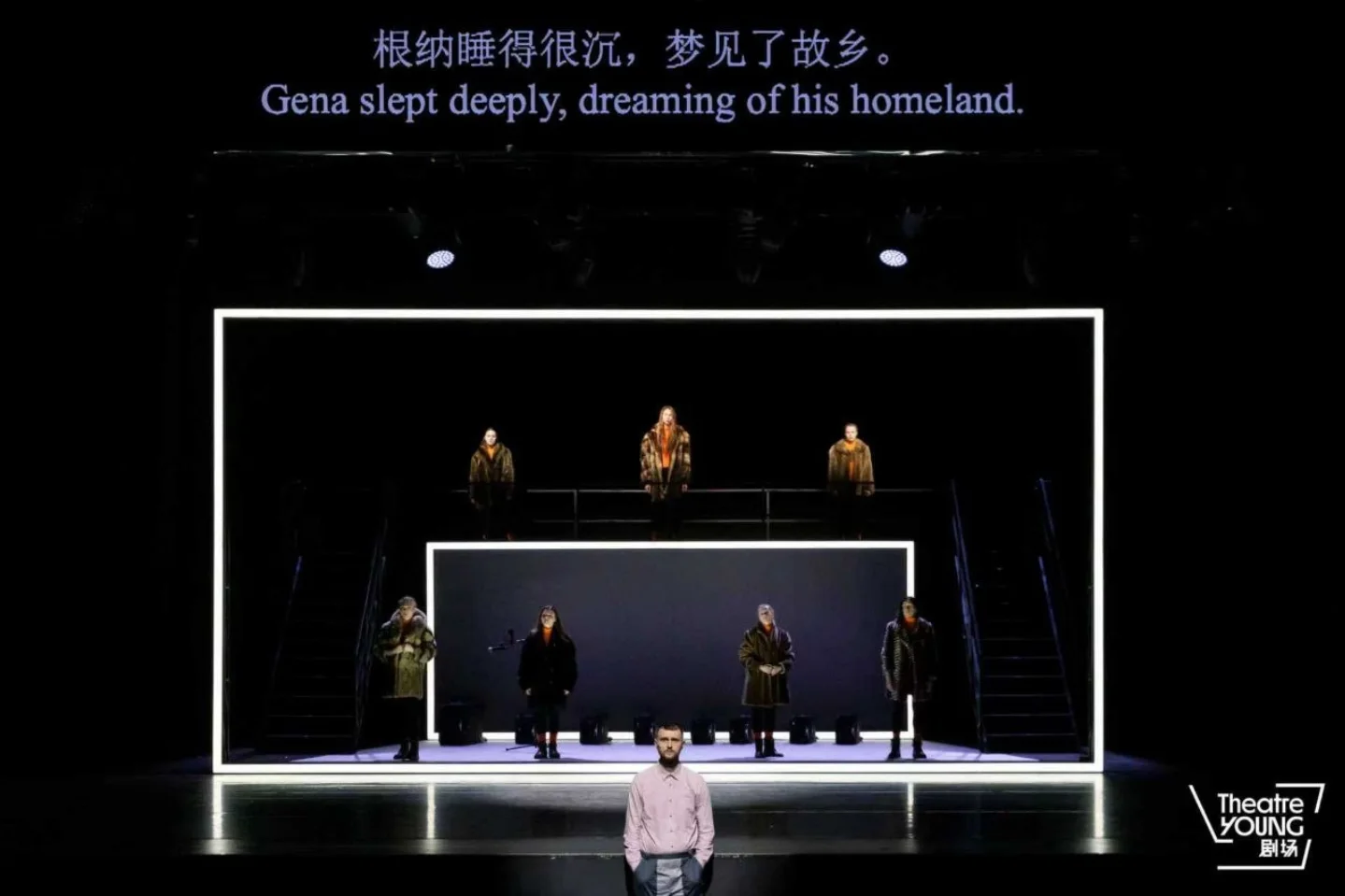
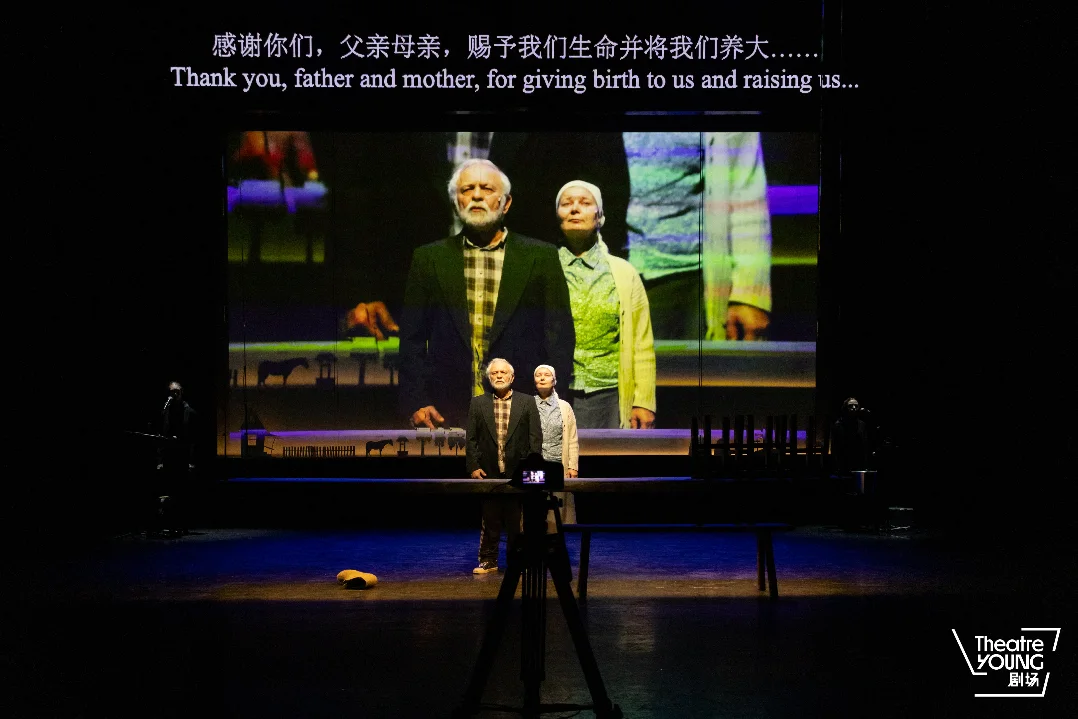
The Theatre of Belarusian Drama toured China, presenting the productions of My Homeland and Evening at a festival in Shanghai. This is a positive example of promoting Belarusian theatre and Belarus.
Belarusian playwrights are in demand abroad. Three works by Belarusian playwrights were shortlisted for the Lubimovka award: Maxim Dosko (Insula), Renata Talan (Limbo), and Khasia Korneva (The Red Squirrel). Lubimovka is an independent project for playwrights writing in Russian language.
Poland still remains the epicentre of Belarusian theatre life abroad, with the forum “Druga próba. Teatr ponad granicami” being its most prominent event. “Druga próba” is a forum for Belarusian, Ukrainian, and Polish artists, held in Poznań.
The Bliski Wschód forum took place In Lublin and this time the event was almost entirely dedicated to issues of theatre and to the Free Kupalauсy troupe.
Music: Festivals Return, Bands Dissolve
Belarusian Bands on International Scene
Molchat Doma continued to strengthen its position in the West in 2025. The band performed on KEXP radio and YouTube channel, played at the major Openair Festival in Gdynia, and submitted their work for Grammy consideration.
The brutal death metal band Extermination Dismemberment played at Wacken, a major metal festival in Germany. The band also started its collaboration with the large company Unchained, which promotes bands such as Lorna Shore and Killswitch Engage.
СОЮЗ – SOIUZ band released a Belarusian-language album KROK (Step) on the British label Mr Bongo and will go on a European tour next year to support the album. The band was also mentioned in the British online magazine The Quietus in an article dedicated to the music scene of Central and Eastern Europe.
The Dissolution of Petlia Pristrastiya [Noose of Passion] and of Other Bands
Four bands announced their dissolution. Petlia Pristrastiya’s vocalist, Ilya Charapko-Samakvalau, left the band. After completing a large-scale European tour, the band ceased to exist. Son of Deni, Naka, Soz, and N.R.M. either paused their activities or dissolved entirely. Unfortunately, not all projects withstand the pressures that come with being in emigration.
Pazniaks – Discovery of the Year
21-year-old rapper Pazniaks from Hrodna is one of the breakthroughs of last year. He exemplified one of the briskest rise to fame. Previously we wrote about the short video for his latest single, Hawaiian Pizza, which reached 1 million views on Instagram. This comes alongside generally positive critical assessments of his work. At the beginning of summer, no one knew about him, but now he is an artist whom Basta invited to join his label. He also released collaborations with Mayby Baby, Booker, and Slava KPSS.
Max Korzh’s Concert in Warsaw
In summer, on the 9th of July, Max Korzh played a sold-out concert at the “Narodowy” Stadium in Warsaw. The “Narodowy” is a 58,580-seat stadium, and the concert itself was attended by 70,000 people. The tickets for Korzh’s show were all sold out within five days. The show caused a stir in some Polish and Belarusian media outlets, since some of Korzh’s fans were trying to make their way into the standing area, where tickets were much more expensive. After the show, the Polish government deported 57 citizens of Ukraine and 6 citizens of Belarus for causing civil disorder during the concert. Subsequently, Korzh’s concert in Kazakhstan was cancelled, but the artist announced a performance in Romania on 23 May 2026.
A Strong Local Artistic Communities Emerge in Belarus
In 2025, a strong community of local artists finally emerged in Belarus. They support one another in promotion, concert organization, they organize collaborative concerts, vacation together and continue to tour across Belarus.
The Resuscitation of Major Festivals
Several large festivals came back from hiatus in 2025. After seven years of silence, the Stereo Weekend festival took place and featured Russian and Belarusian performers. The headliners were Antoha MC, Moya Mishel, and Mnogoznaal (Knewtomuuch).
Lidbeer came back from a two-year break, with Russian stars once again as headliners. Borisovskiy Trakt, Davay na Ty, Parade of Planets, and Police in Paris were among well-known Belarusian acts.
Self-Expression and National Identity among Belarusian Artists Working within the Russian Market
In the eastern part of the globe, the main event was the music video by the artist Maybe Baby from Zhabinka, Brest Region. It is a diss track aimed at the Russian artist Instasamka, in which the Belarusian artist performs part of the song in her native language. The fact that some of the lyrics in the song are performed in the Belarusian language caused many Belarusians to make their own videos with parts of Maybe Baby’s song in their mother tongue playing in the background. Today, there are over 12,500 TikTok videos that are part of this trend.
Belarusian artists working primarily on the Russian market began openly asserting their Belarusian roots. Maybe Baby released a diss track aimed at Russian artist Instasamka, partially performed in Belarusian. Belarusians began creating videos using this fragment and posting them on social media. The artist also released a joint track with Pazniaks titled Zhabinka–Hrodna.
The trio Uniqe, Nkeeei, and ARTEM SHILOVETS similarly emphasize their Belarusian roots from using different references in lyrics to performing with official Belarusian symbols on stage. The duo Nemiga released a Belarusian-language song on its new album.
Touring Difficulties
Belarusian music continues to evolve within an unstable environment. Many Belarusian artists must navigate constant restrictions and bans, very small-scale tours, and “extremist” brandings.
The problem of freely organizing concerts inside the country persists. There are still cases where concert organizers are denied permits. Such cases have serious consequences, including financial ones. The inability to hold concerts on a stable basis has negatively affected some of the venues.
The Return of Alexei Khlestov
Singer Alexei Khlestov, who was blacklisted after the 2020 protests, unexpectedly returned to the public scene. Videos of the artist, who now works as a taxi driver, went viral on social media. This gave new momentum to his career. Today, Alexei gives interviews, hosts streams, and works on new songs.
Belarusian Artists collaborate with Brands
The band Borisovskiy Trakt was particularly active in this area. First, they collaborated with Mak.by, and later their song became the soundtrack for the Belarusfilm production Turning Point.
The clothing brand Mark Formelle used the cover of Vladimir Mulyavin’s song Jas Was Moving Down the Clover performed by the band Police in Paris in one of its advertising campaigns.
This is far from a complete list of important events that occurred in Belarusian music this year. European tours by Belarusian artists, the designation of entire bands as “extremist,” the dissolution and return of Drazdy, Vitaly Artist’s (Bez Bileta band) flip-flopping, and many other interesting and controversial developments all indicate that Belarusian music continues to develop, live, and breathe. And that is what matters most.
Art: The Year of Women
Cemra (Darya Siamchuk). Fragile / Крохкасць (MAD Galle, Pozrynań)
In her new works and performance from the Fragile project, Darya Cemra continues to tackle the issues related to trauma and looks for new forms of art therapy by transforming the habitual functions of objects. An object replaces a painting; the body replaces the object; movement replaces the body; sound replaces movement—and when sound disappears, only light remains: the light of absolute whiteness and total calm.
Today it is necessary to acknowledge critical perspectives, even if only within such art platforms. That’s why it is important to mention here that the works of artists Сemra (Darya Siamchuk), Anastasia Rydlevskaya and Jana Shostak were part of the “Feminism and Women’s Art” fair, which was held in Warsaw.
“The Three Graces” of Belarusian Fashion
There is no doubt that during the past three months Masha Maroz, Tasha Katsuba, Anastasia Rydlevskaya have been “the three graces of Belarusian fashion”, who were united by several initiatives. Among such initiatives was the Refashioned project organised by Kraina Foundation in cooperation with International Organization for Migration (IOM Poland) with the support of Vogue Polska.
One of the most striking phenomena of 2025 was undoubtedly the “three graces” of Belarusian fashion – Masha Maroz, Tasha Katsuba, and Anastasia Rydlevskaya – who were united through several initiatives within the contemporary Polish artistic scene. Even though the three artists share similarities in their fields of interest, and approaches, they are fully independent and have clearly distinct artistic positions.
The first personal Fashion Collection Show “Transition’25” by Tasha Katsuba was of an entirely different character and was held at the Kraina Foundation in Warsaw as the conclusion of her creative residency there. The inspiration for the show came from the art object “Hope”, which was created during the protests of 2020 as both a personal and political gesture. It might well be that the street itself brings plastic elements into the artist’s costumes, which are often deliberately detached from functional use. The sharp rhythm, torn forms, and fragmentary nakedness reflect a state of transition, which is an intense and painful attempt to overcome trauma.
Perhaps the theme of overcoming crises in contemporary Belarusian art is best embodied by Anastasia Rydlevskaya. She created stars for so long that she may soon become one herself. We observe how success elevates her and how its light spreads across all areas of her talent. Her musical and poetic work continues to gain popularity, while her eccentricity of burlesque form permeates not only the musical stage but also the theatre. Rydlevskaya’s artistic practice is a dynamic flow of integrated self, that transforms a wounded individual into a creator and the surrounding reality into a holistic artistic cosmos.
Masha Maroz draws inspiration from her ethnographic journeys across her native Polesia and from the study of archaic traditions. Her goal is “to rethink and integrate traditional culture into everyday life as an essential part of anti-colonial practices.” Masha’s fascination with the symbolism of colour and form in folk art, combined with the tradition of geometric abstraction of the Belarusian avant-garde, is vividly manifested in her pursuit of a universal synthesis. For instance, in the performance “Runes” (РУНЬ – Run’ (Kamień. Pawilon Edukacyjny, Warsaw)), where a collection of women’s clothing becomes a part of a larger whole that unites visual art, performance practices, choreography, and music within an ideal architectural framework.
Lesia Pcholka. Roadside Objects (Festival de la jeune photographie européenne, 15th edition, Paris)
Folklore and national symbolism play an important role in today’s Belarusian art scene. As evidence of this, one can mention Lesia Pcholka’s striking project Roadside Objects. It was inspired by the book Belarusian Folk Crosses by ethnographer Mikhail Romanyuk. The artist followed the routes mapped in the book, yet she did not find a single one of the crosses at roadsides and intersections mentioned there. In their place, new forms emerged. This anonymous traditionalism of free reinterpretation resonates with contemporary conceptual practices of topography and citation. The photographs of the crosses, semi-transparent and nearly life-size, are displayed in the gallery space so that they can be “read” from both sides, creating a metaphor for movement through space and time.

Georgy Yagunov. Stone from Olebeka / Wild Runes (Rundetaarn | The Round Tower, Copenhagen)
In the project Stone from Olebeka / Wild Runes, Georgy Yagunov delves even further into the prehistoric depths of tectonic matter. Reflections on “wild runes” – natural, non-human signs where geology, epochs, landscapes, and forgotten languages intertwine – inspire the artist to create installations from fragments of solid rock and soft soil. His own signs within these installations evoke the futile attempts to decipher the meanings of the abstract.
Breaking the Silence. Curator Dina Danilovich (NCSM, Minsk)
It is important to highlight curatorial work as a process of creating atmosphere and spatial realization. Dina Danilovich is undoubtedly one of the most prominent curators in Minsk. Among her many projects, Breaking the Silence stands out as a conceptual statement about communication. It demonstrates that art, as a tool and language of interaction, remains an incredibly resilient mediator and medium even in today’s challenging circumstances. Here, paintings “speak” more than words, while the plasticity and form of representation align perfectly with contemporary relevance.
Konstantin Selikhanov. The Sacred Book (Art Residency “Kairos”, Astrashitsky Haradok)
The Sacred Book (curated by Olga Rybchynskaya) can be seen either as a testament summarizing the artist’s creative path or as a revision of meanings in the contemporary state of affairs. The site-specific principle of installation is consciously employed here as a strategy for the human relationship with historical circumstances.
Anna Sokolova. Netz / The Net (Kunst-Station Sankt Peter, Cologne)
Anna Sakalova continues to explore the interaction between minimalist plasticity and architectural space. Her fourth major project of the year in the linement series was created specifically for St. Peter’s Church in Cologne ahead of Advent. The monumental light video sculpture Netz, around 20 meters long, stretches diagonally from floor to ceiling, engaging in dialogue not only with the architecture and spatial context but also with works by Rubens, Richter, and Chelidy nearby, extending the plastic tradition of radical artistic expression.
Katerina Kouzmitcheva. Betonium
This year, Katerina Kouzmitcheva presented her project at several exhibitions and festivals. Betonium has been in development for many years and across 11 countries. In this project, the photographer examines the connection between contemporary collective identity and the architectural heritage of Central and Eastern Europe, where elements of late modernism intertwine with brutalist pragmatism, directly influencing human behavior. Many of the photographs function as artifacts of performances that highlight the awkwardness and pseudo-humanity of post-socialist space.
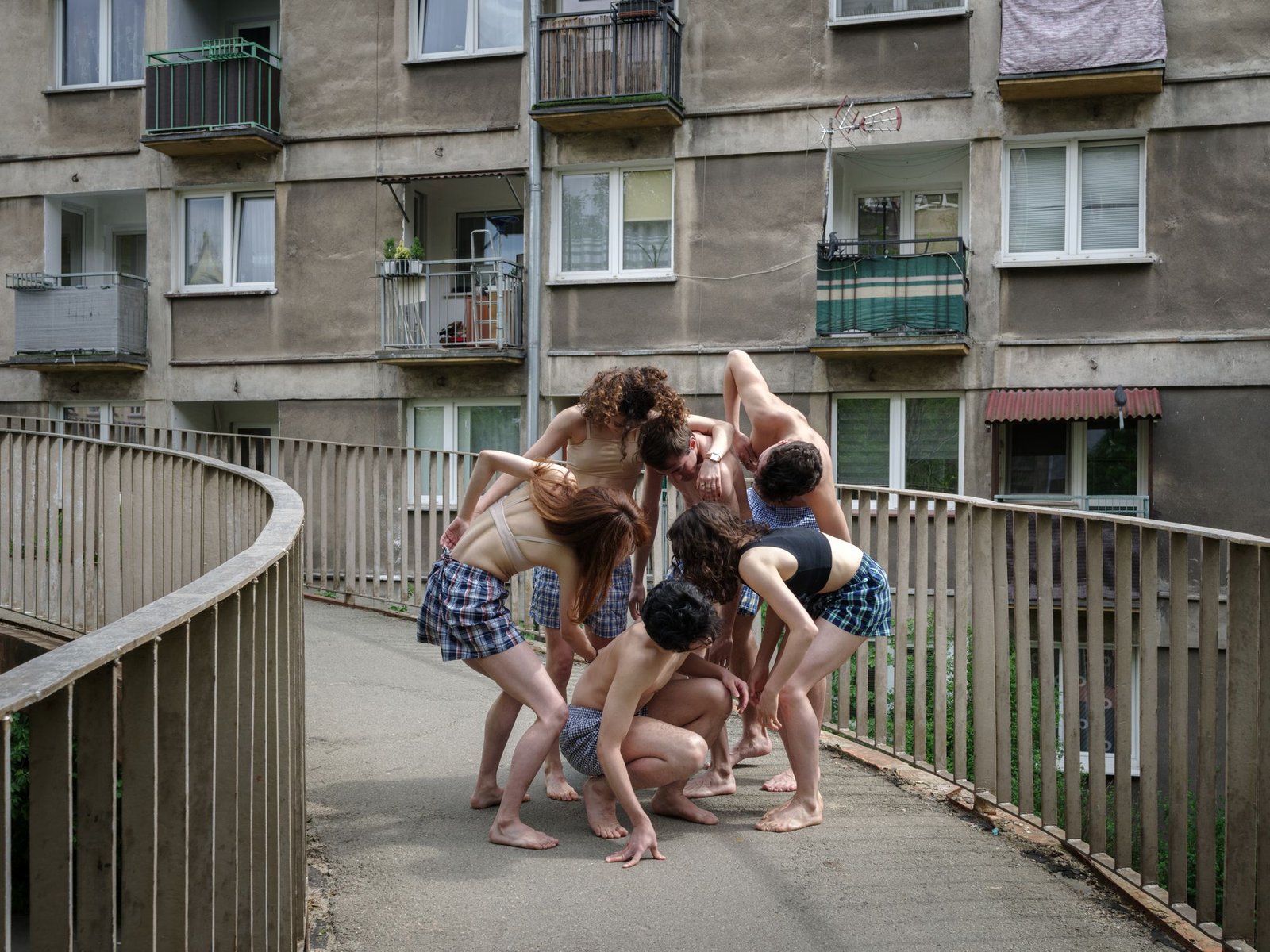
Awards for Belarusian Artists
Sasha Velichko’s project State of Denial won at the Les Boutographies Festival 2025 in Montpellier, France, and received the main prize, The SEEEU Photo Essay Award, at the first European Month of Photography in Japan, held this year in Tokyo. State of Denial is a multi-layered conceptual project in which the interactivity of photographs and texts, taken to the absurd, exposes mechanisms of propaganda and bears witness to political repression in Belarus. The artist reinterprets trauma and the cynicism of violence through staged photographs, offering a critical and ironic response to the information noise of propaganda media.
Ala Savashevich received the Wrocław Art Award 2025 for “an outstanding stance, artistic maturity, and for multimedia installations that address issues of memory, power, and global conflicts.”
International Curatorial Collaborations
The project “What are our collective Dreams?” at the National Gallery Zachęta in Warsaw, curated by Antonina Stebur with the artist Marina Naprushkina. Her interactive installation “Soil without Memory, Body without Rest” perfectly aligns with the exhibition’s concept: to confront the past not for idealization but to understand its complexity and reflect on what it can tell us about the present and potential scenarios for a shared future. Within this project, curators, together with invited artists and activists, question the role of cultural institutions in the context of increasing ethnic and national diversity.
Another significant development for Belarusian art is Antonina Stebur’s appointment as curator of the main exhibition at transmediale 2027, one of the world’s most influential festivals of digital and media art, held in Berlin.
Alexander Adamau. Hyperrealistic Mother (Szczur Gallery, Poznań)
Finally, reflecting on what has been essentially a female-focused year in Belarusian art, we can look through the “mirror of forecasts” in Hyperrealistic Mother, by artist Alexander Adamau under curation of Lizaveta Stetcko. Behind the glass, one can see a new clarity in Belarusian contemporary art. The work combines intellectual play and conceptual language with surreal and absurd irony as a form of critical expression, exerting total control over space and context, armed with new technologies and a “voice from the future”: “Someone is knocking. She enters and fills the space like soft, warm ether. Now you don’t need to worry.”
Traditional Culture: Attentiveness to the Roots, Shaping the Present
Nieglubka textile tradition of Vetka District Gomel Region was inscribed on UNESCO’s list of Intangible Cultural Heritage in Need of Urgent Safeguarding.
This took place in New Delhi during the 20th session of the UNESCO Intergovernmental Committee for the Safeguarding of the Intangible Cultural Heritage. Nominations to UNESCO lists increase Belarus’s visibility at the international level.
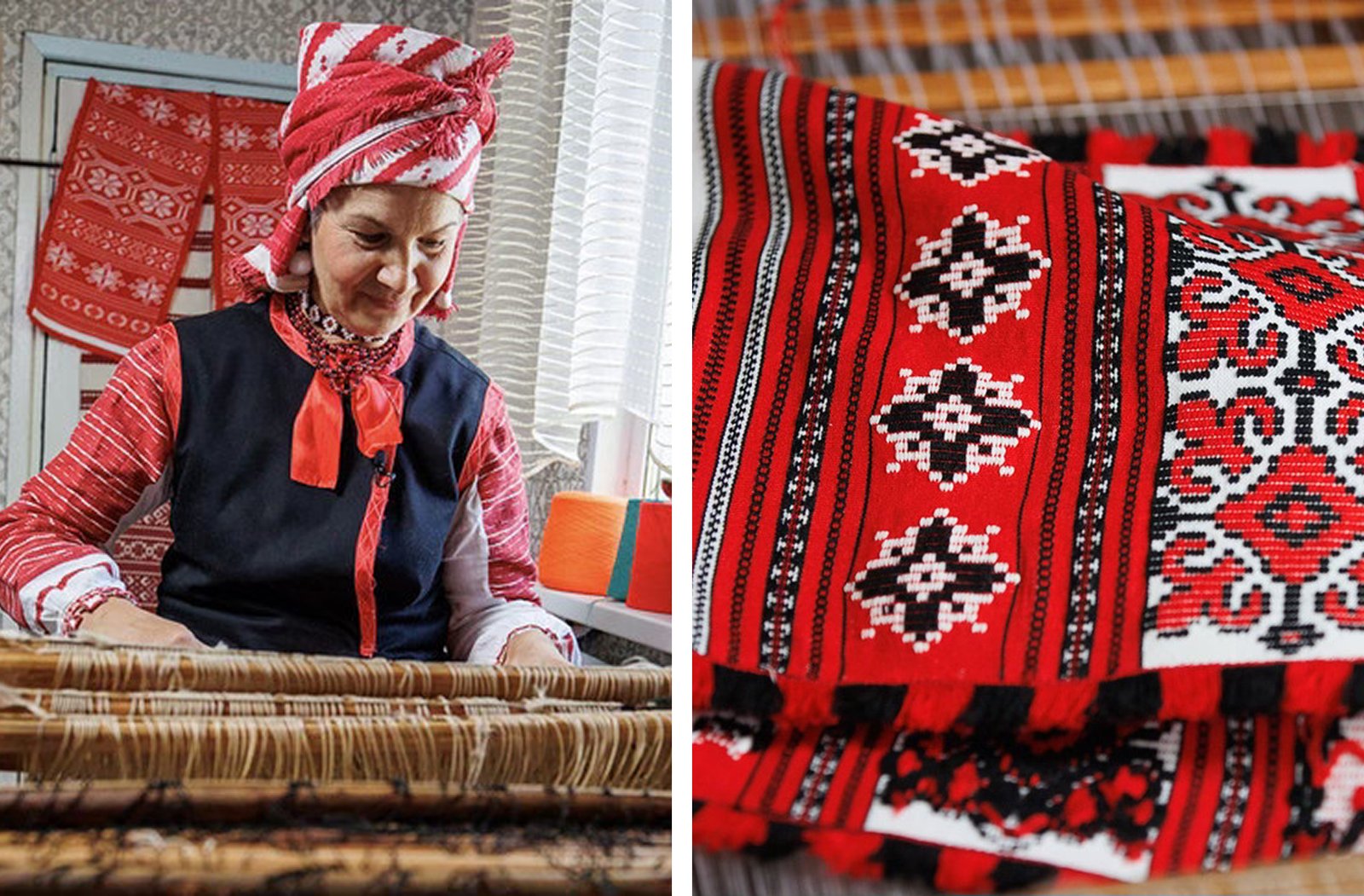
Volha Labacheuskaja’s, monograph “Abrok. Abidzennik: Female Ritual Practices.”
This book, published in November, is the result of many years of research expeditions across Belarus. It demonstrates one of the mechanisms for responding to life crises within traditional rural society. The work became a fundamental synthesis of the topic, showing that the described practices remained alive in Belarusian villages during World War II and later.
Album “Anthology of Beauty. Traditional Belarusian Costume”
A richly illustrated album based on the exhibition project of the same name was published at the National Art Museum of Belarus. This is yet another work that makes collections of traditional clothing from Belarusian museums accessible to a broader audience.
Anthology “Ghosts and Apparitions of Traditional Culture”
The eighth volume in the Mysterious Belarus series. The articles are united by a common theme and address not only Belarus, but also Estonia, the Czech Republic, and Russia. The appendix presents around 100 unique, previously unpublished texts about ghosts.
Кніга Яніны Грыневіч «Як нацыя вучылася спяваць», выдадзеная ў 2023 г., стала адной з пераможцаў прэміі Кангрэса даследчыкаў Беларусі, які прайшоў у верасні ў Берліне. У манаграфіі распавядаецца пра лёс фалькларыста Антона Грыневіча (1877 – 1937). Прэмія Кангрэса даследчыкаў Беларусі – бадай, самая прэстыжная ў беларускай гуманітарыстыцы.
Yanina Grynevich’s book “How the Nation Learned to Sing” published in 2023, became one of the winners of the Prize of the Congress of Belarusian Researchers, which took place in September in Berlin. Her monograph focuses on the life and works of folklorist Anton Grynevich (1877–1937). The Prize of the Congress of Belarusian Researchers is arguably the most prestigious award in Belarusian humanities.
Anthology Belarusian Lullabies with Audio Add-on was compiled by Siarzhuk Douhushau and published by the EtnaTradycyja project. It is worth mentioning that the edition brings together lullabies from all Belarusian ethnic regions. In addition to lyrics and musical notation, each song includes an audio version accessible via QR code.
The debut album by the band Kasary titled Kasary
The debut full-length studio album by the male vocal group Kasary, featuring soldiers’ and lyrical songs. The group had already gained recognition through concerts and music videos. The album is already available on major streaming platforms.
The show “Star Thread” (Нітка зорка)
Belsat project “Star Thread” (Нітка зорка), dedicated to historical costume and featuring Kaciaryna Vadanosava, attempts to combine entertainment and education. The series covers and focuses on many aspects of different historical periods, including traditional peasant attire of the late 19th and early 20th centuries. Over the year, episodes covered sayan (саян) , belts (паясы), women’s and men’s shirts, the Paniamonnie costume, Vaclau Lastouski’s Expedition of 1928, wedding attire, and outer traditional clothing. All episodes are available on the Belsat History channel. Recently, “Star Thread” (Nitka Zorka) was awarded the Francišak Bahuševič Prize for the best work on history.
“Vacations in Podlaskie” series
“Vacations in Podlaskie” is the road-movie–style series in which Podlaskie’s youth introduces their land to peers from Belarus. Each episode touches on different aspects of traditional culture. The series aired from June to August and is available on the Belsat Life channel.
“The Witnesses of Time” Documentary Series
The Witnesses of Time (Świadkowie czasu) is a series produced by the regional branch of TVP in Białystok. The films explore various aspects of the traditional culture of Podlaskie and stand out for their original documentary approach.
Cinema: The Burial of a Festival, Victories in Europe
Yuri Semashka’s film The Swan Song of Fedor Ozerov was selected for the Forum section of the Berlin International Film Festival. For the first time in history, a film made by a Belarusian director was included in an official competition section of Berlinale, one of the world’s major film festivals.
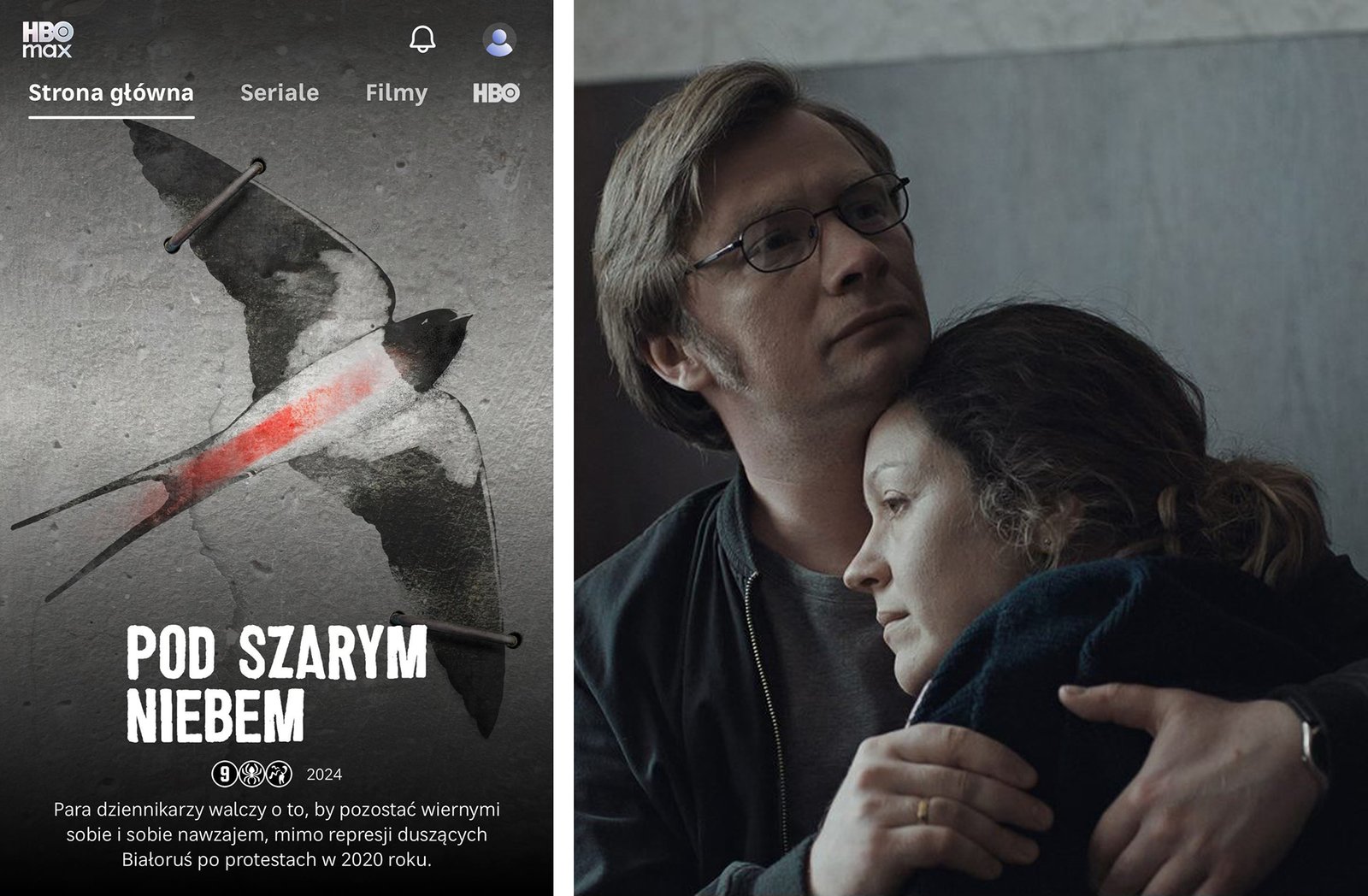
Under the Grey Sky goes around the World. Mara Tamkovich’s film Under the Grey Sky about Belarusian political prisoners – journalists Katsyaryna Andrejeva and Ihar Ilyash – continued its festival journey. The film entered Polish theatres and, by the end of the year, was added to the HBO MAX streaming service. Under the Grey Sky has so far become the most prominent cinematic statement by national filmmakers about the dramatic events in Belarus.
Welded Together Wins in the UK
Anastasiya Miroshnichenko’s documentary Welded Together won at the influential festival in Sheffield, UK. The film’s protagonist is a young woman from Brest who works as a welder at a local enterprise.
Awards in Locarno
A German-Austrian romance film shot on location in Belarus received an award at the prestigious Locarno Film Festival. White Snail, directed by Elsa Kremser and Levin Peter – the German-Austrian filmmaking duo – won a Special Jury Award for direction, and the Pardo for Best Performance, awarded to actors Marya Imbro and Mikhail Senkov, both from Minsk. Partially filmed in secrecy in 2023, the film tells the story of a romance between two outsiders: a model aspiring to build a career in China and a painter working in a Minsk morgue.
Film Festivals Live On…
National cinema festivals took place in various European cities. One of the most prominent ones are – the offline Northern Lights the Unfiltered Cinema festival with its screenings held in Poland, Lithuania, Estonia, Germany, and Finland, reaching beyond solely diaspora audiences.
…And Die
Janusz Hawryluk, founder and director of the Belarusian cinema festival Bulbamovie (Festiwal Bulbamovie), announced the forced dissolution of the project due to lack of funding and competition with other festivals. In Minsk, the Monochrome space, part of the Cinemascope initiative, closed; its primary activity had been classical and art-house film screenings.
Studying Cinema in Minsk
The KinoCollider initiative remains active. In addition to a film club and screenings of international festival cinema, it launched its film school in Minsk, which offers courses in film directing, animation, and screenwriting.
Watching Movies in Minsk
In the small hall (49 seats) of the Minsk cinema “Pioneer,” the premiere screenings and discussions of four short films by young filmmakers from the “49.cinemaclub” initiative were held to great acclaim. In May, screenings of short films by independent emerging directors, along with discussions and masterclasses, took place at the one-day student festival SYNOPSIS in the capital’s “Echo Dvor” venue.
Film Propaganda Intensifies
Belarusfilm demonstrated the peak of the Ministry of Culture’s frenzied activity. After the appointment of a new head and Aleksander Lukashenko’s destructive visit to the studio, the releases of Belarusfilm’s two films – Class Teacher and The Turning Point – were accompanied by an unprecedented and almost aggressive promotional campaign followed by the usual forced methods of filling cinema halls by drawing mostly appointed audiences to theaters.
The Need for New Themes
Independent Belarusian filmmaker Andrei Kashperski shot a pilot for a new series titled Swingers, which is described as being “not too political.” Other filmmakers are also increasingly turning to lighter, more entertainment-oriented themes.
Literature: Will Maldzis Find the Cross of Euphrosyne of Polotsk?
The Leipzig Book Fair Prize was awarded to
- Alhierd Bacharevič “for contribution to European understanding” for the German edition of his epic Dogs of Europe (Voland & Quist, translated by Thomas Weiler);
- Thomas Weiler for the German translation of I Am from the Burned Down Village… by Ales Adamovich, Yanka Bryl, and Vladimir Kalesnik (Feuerdörfer, Aufbau).
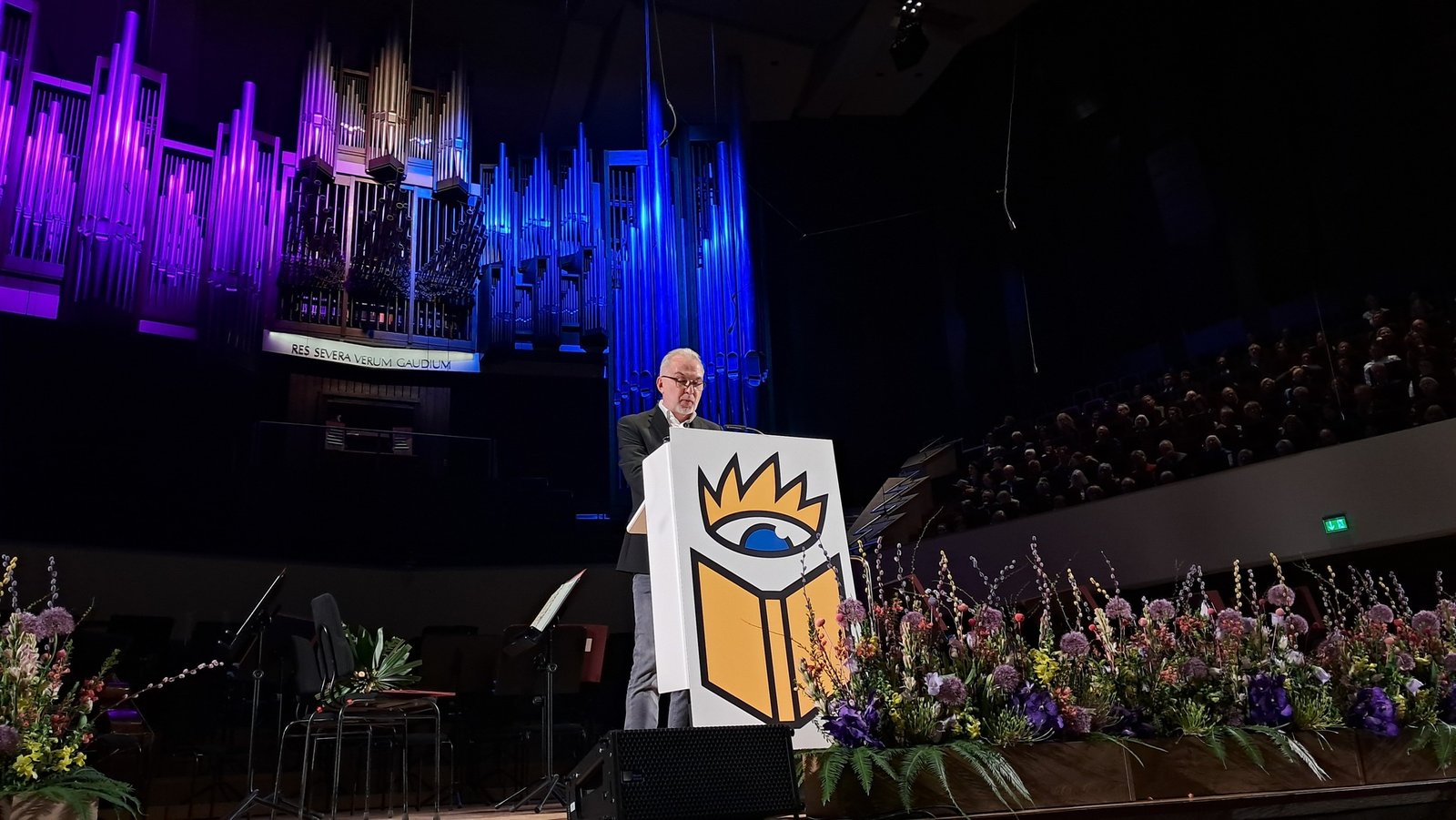
Key narratives of Belarusian writers from the late 20th and early 21st centuries thus found themselves transposed to the German soil – and therefore global – book market.
Liavon Barščeŭski received the Carlos Sherman Prize for his poetic translation of Homer’s Iliad. Translation and publishing within Belarus continues especially as part of the World Epics book series edited by Zmicier Kolas publisher (Roman Tsymberov Publishing, “Encyklopedics”). In 2025, Belarusian readers gained access to Virgil’s Aeneid, the Epic of Gilgamesh, and the Mayan-Quichen epic Popol Vuh (all translated by Liavon Barščeŭski). It is worth mentioning that the reissue of the Finnish epic Kalevala in Jakub Lapatka’s translation was also released.
“World epics” series exemplifies a major breakthrough for national scholarship, literature, and education, strengthening cultural identity and the national school of translation.
A tattoo of the Cross of Euphrosyne of Polatsk, reportedly inked on a Belarusian woman’s arm in December 2025, went viral on Threads. It remains unknown whether the woman exists, whether she is in Belarus or abroad, or whether the image depicts a real person or AI-generated content. What matters is that the image triggered a demand from the Belarusian internet users toward the Russian users to return the displaced national relic to the St. Euphrosyne Convent in Polatsk (“Belarusians, disperse: this is not the one”).
Instead of this we could have also mentioned the recent affirmation of state ideology as a national one, with the introduction of an ideologically tainted National Pantheon with its pro-Belarusian core into official media discourse—but the people come first.
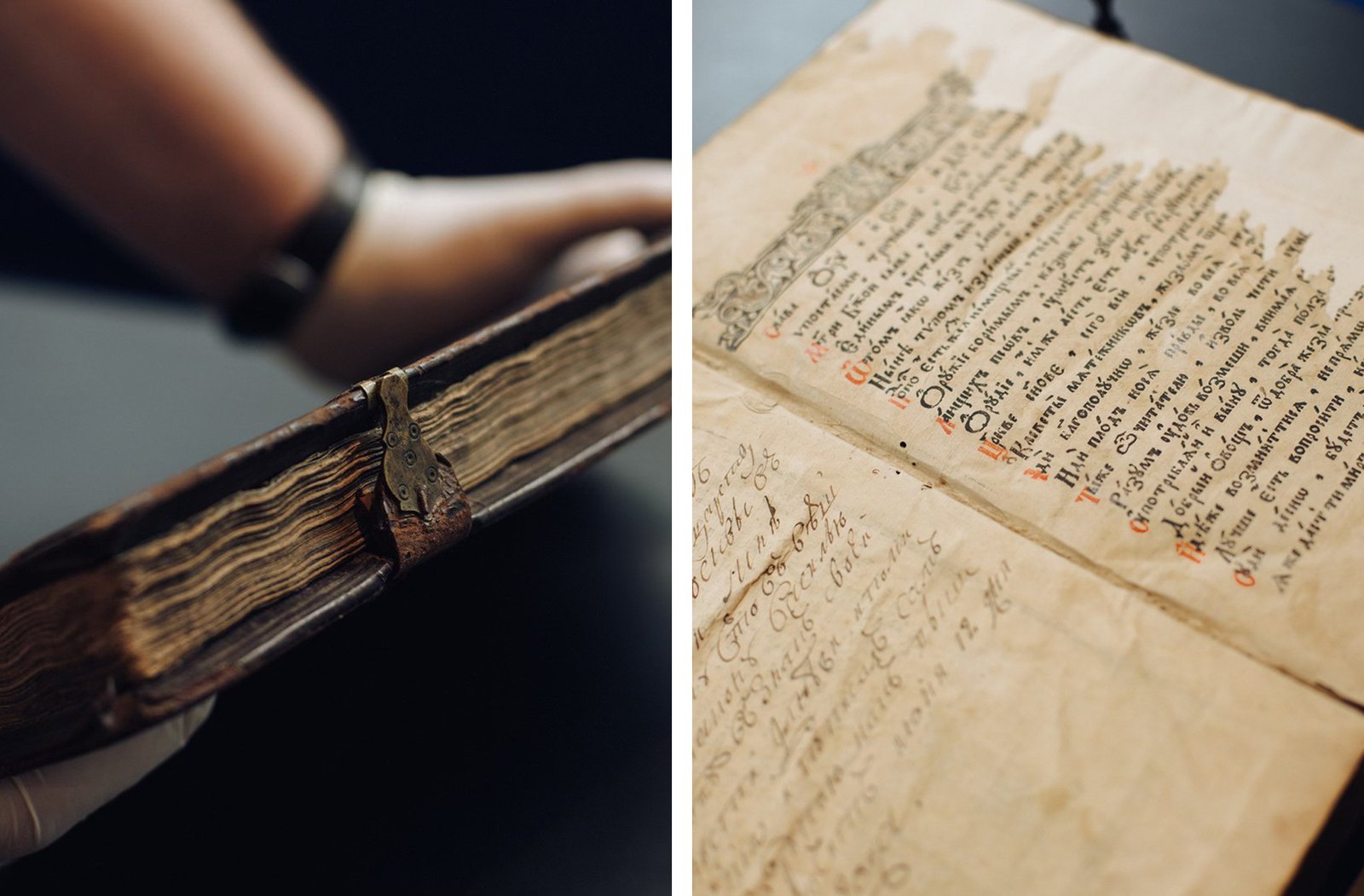
The cultural initiative Maldzis marked one year of existence. In 2025, Belarusian patrons acquired at least six artifacts of Belarusian cultural heritage, including first editions of the Third Statute of the Grand Duchy of Lithuania (1588), Simeon of Polatsk’s Scepter of Governance (1667), and a French translation of Kazimir Siemienowicz’s The Great Art of Artillery (1650). This trend indicates the emergence of individuals for whom Belarus is a value worth investing in. By preserving the past and thus they are investing in the future.
The OZ.BY portal, a major business inside Belarus, founded its own publishing house and announced a search for new local authors, citing the commercial success of fantasy publications from the Shuflyadka Pisatelya initiative. Perhaps we will soon see a distinct, more independent face of Belarusian fantasy.
One of the major events within the field of literary analysis was Alhierd Bacharevič’s essay titled “People, fairytales and utopias”, which was written in German and appeared at the end of August in the Frankfurter Allgemeine Zeitung newspaper. In his essay, Bacharevič highlights his unsympathetic view toward the popularity of fantasy fiction and calls the genre “the mummy of a fairy tale”. The writer identified fantasy as a dominant humanitarian threat—a way of thinking that returns society to archaic narrative models. At the same time, he notes in The Paper Golem (2025) that “every real writer must write a fairy tale.”
The Association of Belarusian Publishers was founded in Poland. For Belarusian authors and readers, the Cyrillic alphabet now begins with an important abbreviation. For more than a decade, there had been talk about the need to unite in order to improve the conditions of book publishing and book distribution, yet only in emigration did a real structure emerge, chaired by Valentina Andreeva. In this way (after the example of the Belarusian Book Institute), the most necessary and crucial aspects of the national literary process are finally becoming institutionalized. Under the chairmanship of Valentina Andreeva, a long-discussed need for institutional unity finally materialized in emigration.
The poetry almanac Kruciel-Trava was published, featuring new works by authors who remain in Belarus (Tsymberau Publisher). The collection reflects philosopher and poet Ihar Babkou’s effort to infuse cultural space with a sense of “local metaphysics,” which he explored in public lectures at the Maksim Bahdanovich Museum throughout 2025.
The appointment of Vladimir Karanik, a pro-regime official and medical scientist, as Chairman of the National Academy of Sciences of Belarus and, as probably as a consequence, the appointment of Volha Papko, Doctor of Art History and an expert in the restitution of lost cultural heritage, as Director of the Centre for Research of Belarusian Culture, Language, and Literature. Such a rejuvenation of the academic establishment offers hope for a more adequate humanitarian approach within the official cultural discourse in the near future.
The reviews were prepared with the support of ArtPower Belarus and the European Union.